JERRY Firewood Processor vs Commercial Bar-Saw Processors: Deck, Saw and Conveyor
A firewood processor is three systems in one frame: a deck that feeds, a saw that cuts, and a conveyor that clears. The JERRY 30T publishes 30 tons of splitting force, a 610 mm cut length, a 500 mm maximum log diameter and a 3.2 m discharge conveyor. Commercial bar-saw machines publish longer decks and faster cycles in a heavier, road-towed package. Compare the three systems, not the badge.
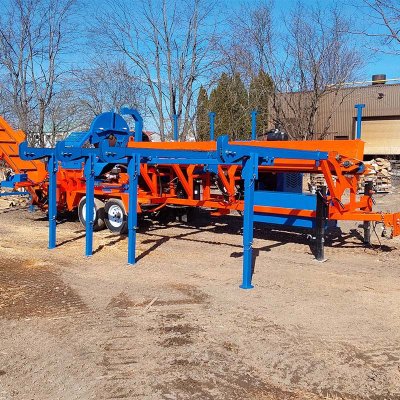
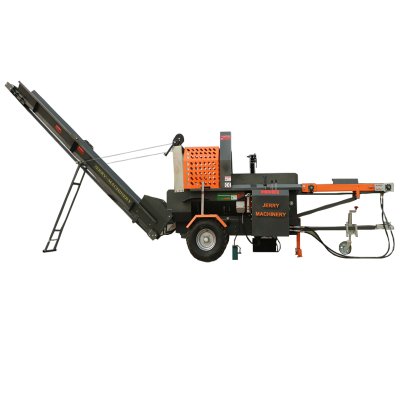
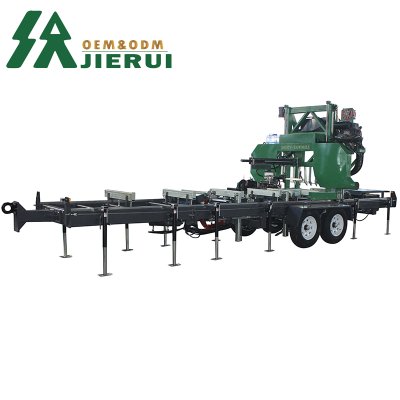
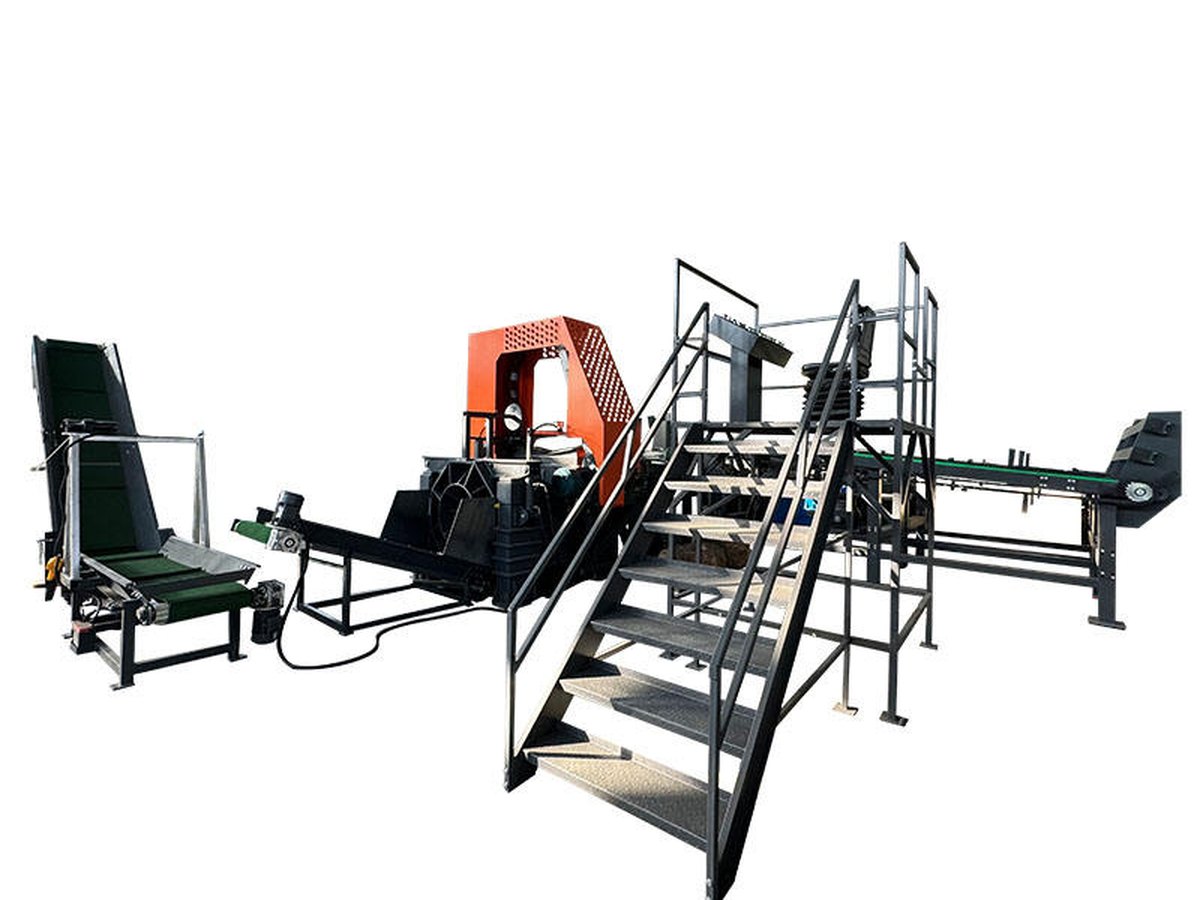
This comparison uses published specifications only. JERRY figures come from our 30T automatic firewood processor page. The two reference machines, the Cord King M18-20R and the DYNA SC-15, are described exactly as their manufacturers publish them. Where a maker does not publish a value, the cell says Not published — no estimate has been substituted. Photographs in this article show the JIERUI processor line; the reference specification is the 30T automatic model.
Published specifications side by side
Three bar-saw processors, three different design priorities. The table below is a specification comparison, not a ranking.
| Parameter | JERRY 30T automatic | Cord King M18-20R | DYNA SC-15 |
|---|---|---|---|
| Splitting force | 30 ton | 24 ton (29 ton and 34 ton optional) | Not published (cylinder 4.5 × 26 in is published) |
| Rated log diameter | 500 mm max (approx. 19.7 in) | 20 in max | 16 in rated, 22 in max |
| Log length handled | 610 mm cut length (approx. 24 in) | 20 ft with butt on the deck | 22 ft |
| Published cycle time | 8 s | 4 s (cut and split) | 6 s (splitting cycle) |
| Saw | 22 in chain saw bar, 7,000 rpm, adjustable sawing speed; STIHL guide bar and chain imported from Germany | Hydraulically driven .404 harvester bar and chain with pressure relief system; bar length not stated on the model page | 25 in harvester bar (752HSFN104), .404 harvester chain (18HX089E) |
| Log deck and infeed | Hydraulic automatic log clamping; 1 set hydraulic rotator; automatic feed conveyor available as an option | 12 ft infeed conveyor with continuous chain drive; 6 ft two-leg manual folding live deck or two-leg log lifting system with twin 2 in cylinders | Hydraulic deck lifter, standard equipment |
| Discharge conveyor | 3.2 m (approx. 10.5 ft); belt width 370 mm; chute width 420 mm | 12 ft or 16 ft integrated offloading conveyor optional; 16 ft to 40 ft standalone radial stacking conveyor optional | 16 ft integrated conveyor |
| Hydraulic pump flow | 22 GPM, two-stage | Not published | 30 GPM |
| Hydraulic reservoir | Not published | 40 gal | Not published |
| Engine | LIFAN 27 HP gasoline, 560 cc; 6.5 L fuel tank | 35 HP Briggs & Stratton Vanguard twin gasoline, electric start, low-oil shutdown; 10 gal tank | 38 HP EFI Kohler gasoline or 49 HP Tier 4 CAT diesel |
| Wedge | 4-way standard; 6-way or 8-way option | 4-way or 6-way fixed standard; 8-, 12- or 16-way hydraulically adjustable optional | 4-way standard; 6-way optional; 8-way optional for logs up to 12 in diameter |
| Weight | 1,100 kg (approx. 2,425 lb) as published for net and gross | 5,800 lb (approx. 2,630 kg) | 9,060 lb (approx. 4,110 kg) transport weight |
| Transport dimensions | Packing 2,800 × 1,720 × 1,650 mm; 50 mm tow hitch | 7 ft 0 in wide × 23 ft 0 in long × 12 ft 8 in high | 84 in wide × 321 in long × 130 in high |
| Production rate | 4–8 CBM/h as published by JIERUI | Up to 1.5–2 full cords/h as published by Cord King | Up to 3 full cords/h as published by DYNA |
| Published price | Quoted per configuration | Not published on the model page | Not published on the model page |
Cord King specification as published on cordking.ca, November 2026. DYNA specification as published on dyna-products.com, November 2026. JERRY specification as published on forest-machinery.com, November 2026. Values are reproduced as published; conversions in parentheses are arithmetic, not manufacturer statements. Production rates are manufacturer-stated capabilities, not tested output.
The log deck decides how smooth the day is, not how fast the saw is
A deck that keeps the saw fed beats a faster saw that waits. All three machines solve the same problem — getting a round onto the saw table without lifting it — with different mechanisms, and the mechanism determines how many people the machine needs.
The DYNA SC-15 makes the decision simplest: a hydraulic deck lifter is standard equipment. The Cord King M18-20R offers a 6 ft two-leg manual folding live deck as standard, or a two-leg log lifting system with twin 2 in hydraulic cylinders, and a 12 ft infeed conveyor with continuous chain drive feeding the saw. The JERRY 30T uses hydraulic automatic log clamping with one hydraulic rotator set, and an automatic feed conveyor is available as an option rather than being part of the base specification.
What that means in practice: a live deck holds a reserve of rounds next to the saw, so the operator loads in batches and never leaves the control position. A log lifting system raises one log at a time, which suits tree-length work and clean stems. A clamping arrangement holds the log rigid during the cut, which is what protects cut length consistency when diameters vary. If you process mixed lengths and diameters rather than uniform stems, ask specifically how the log is held during the cut, not just how it is lifted.
The saw: bar length sets the diameter ceiling
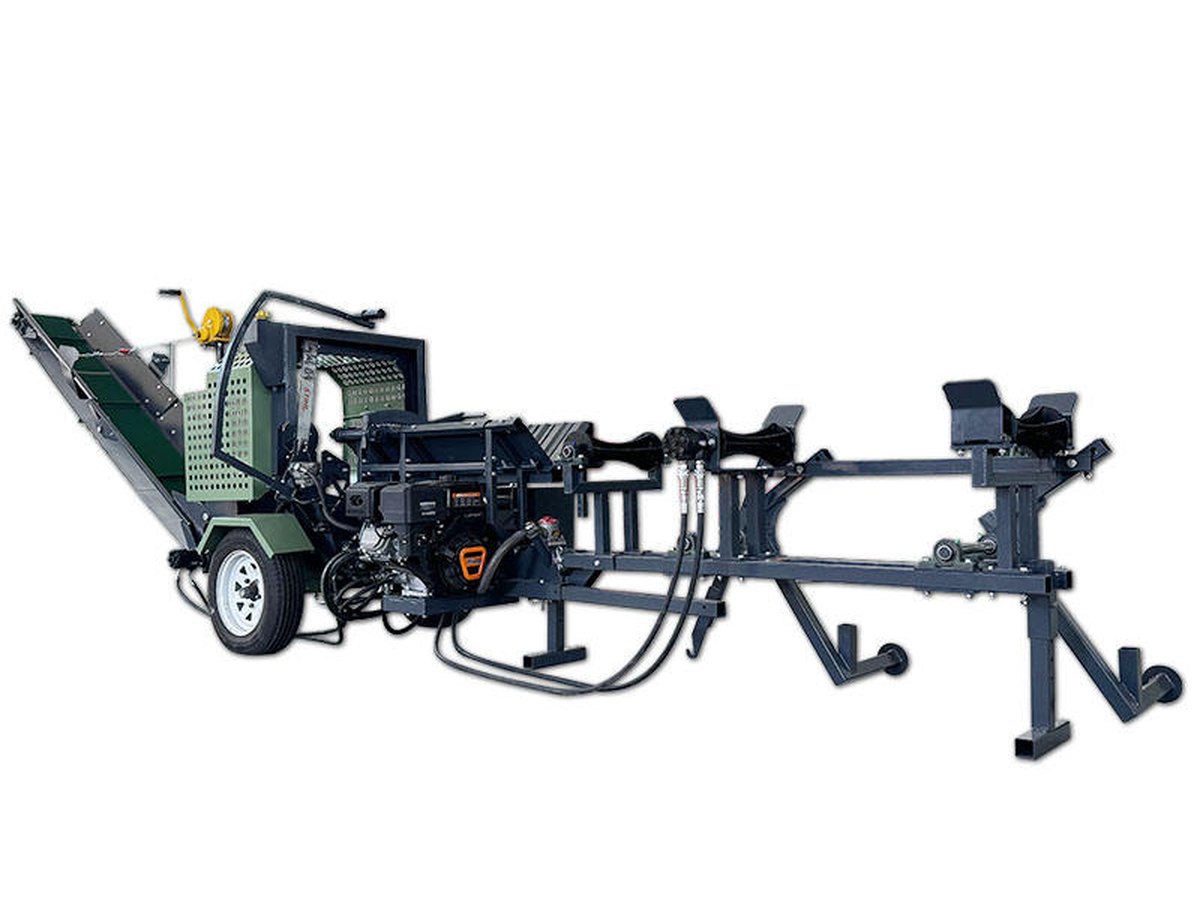
On a bar-saw processor, the bar is the diameter limit. Published saw specifications in this group are a 22 in chain saw bar running at 7,000 rpm with adjustable sawing speed on the JERRY 30T, a .404 harvester bar and chain on the Cord King M18-20R, and a 25 in harvester bar with .404 harvester chain on the DYNA SC-15.
Two details are worth reading closely. First, bar length is not the same as maximum log diameter: the bar must pass through the log and still clear the table, and the manufacturer's rated diameter is the figure to quote. On these three machines the published maximum diameters are 500 mm (JERRY), 20 in (Cord King M18-20R) and 22 in (DYNA SC-15 maximum, 16 in rated). Second, chain type changes the maintenance schedule. A .404 harvester chain and a standard 22 in chain saw bar are sharpened and tensioned differently, and harvester bars are built for continuous hydraulic feed rather than intermittent manual pressure.
Bar oiling is the part buyers forget to ask about. The Cord King model page lists an electric bar oiler with a 1.5 gal reservoir; the 30T uses a chain-saw lubrication arrangement matched to its STIHL bar and chain. Hydraulic-driven saws with a pressure relief system, as Cord King specifies, protect the chain when the bar pinches — worth confirming on any machine you buy, because a pinched bar is the most common cause of a bent bar and a ruined afternoon.
The discharge conveyor is where throughput is actually lost
A processor can only split as fast as it can clear. Published conveyor figures are 3.2 m with a 370 mm belt and 420 mm chute on the JERRY 30T, an optional 12 ft or 16 ft integrated offloading conveyor on the Cord King M18-20R (with 16 ft to 40 ft standalone radial stacking conveyors available), and an integrated 16 ft conveyor on the DYNA SC-15.
Conveyor length is really a question about where the split wood lands. A 3.2 m conveyor discharges into a trailer, a crate or a pile beside the machine — enough for one operator filling boxes at the machine. A 16 ft conveyor clears the working area and drops into a second trailer or a stack that a loader can reach, which is what makes a two- or three-person crew work without the splitter stopping to move wood.
Two specifications decide whether a conveyor is adequate for your yard: discharge height and whether the belt is fixed or radial. Discharge height determines whether you can fill a high-sided trailer or only a low one; a fixed belt serves one drop point, while a radial stacking conveyor can build a pile in an arc. Our 30T publishes conveyor length, belt width and chute width; if you need a specific discharge height for an existing trailer fleet, ask for it in writing with the trailer dimensions.
Cycle time: the three published numbers measure different things
Read the definition before you read the number. The published figures in this group are 4 seconds (Cord King M18-20R, stated as cut and split), 6 seconds (DYNA SC-15, stated as splitting cycle time) and 8 seconds (JERRY 30T, published as cycle time). These are not the same measurement, and treating them as one ranking would be a mistake.
A splitting cycle time covers the ram travel out and back. A cut-and-split cycle covers saw engagement, log drop onto the table, ram travel and return. A machine can therefore publish a shorter number than another and still take longer per finished piece.
An illustrative calculation with a stated assumption — 20 seconds of handling per log (positioning, clearing, restacking):
8 s cycle + 20 s handling = 28 s per log, about 128 logs per hour.
6 s cycle + 20 s handling = 26 s per log, about 138 logs per hour.
4 s cycle + 20 s handling = 24 s per log, about 150 logs per hour.
These are arithmetic examples, not tested output. They make one point: with 20 seconds of handling in the loop, a four-second difference in cycle time changes hourly output by roughly one log in six. Deck capacity, conveyor clearance and how the wood is stacked change it far more. That is why the deck and conveyor sections above matter more than the cycle-time row.
Which machine fits which operation
None of these three is a general-purpose best choice; each is shaped around a working pattern.
Farm, estate and small commercial firewood (a few hundred cubic metres a year, one operator): the JERRY 30T is sized for this — 1,100 kg towable on a 50 mm hitch, 27 HP gasoline, 4-way standard wedge, 3.2 m conveyor into a trailer. It splits up to 500 mm diameter and 610 mm length, which covers stove and boiler wood.
Two- to three-person commercial firewood with tree-length stems: the Cord King M18-20R is built for it — 20 ft logs on the deck, 12 ft infeed conveyor, 40 gal reservoir, 5,800 lb frame, 35 HP with electric start and low-oil shutdown.
High-volume yards that need conveyor clearance and a diesel option: the DYNA SC-15 fits — 22 ft logs, 16 ft integrated conveyor, 30 GPM pump, 38 HP gasoline or 49 HP Tier 4 diesel, 9,060 lb transport weight.
Above this band, the constraint stops being the processor and becomes log supply, transport and labour. Machines at that scale sit outside this comparison.
What is not published
Buyers comparing processor specifications will hit gaps, on our page and on the other makers' pages. Rather than fill them with estimates, we list them:
JERRY 30T: hydraulic reservoir capacity, hydraulic system pressure, warranty term and discharge conveyor height are not published on the product page.
Cord King M18-20R: the model page does not state its own bar length, hydraulic pump flow, or a published price.
DYNA SC-15: splitting force in tons, hydraulic reservoir capacity and price are not stated in the specification table; the cylinder size is published instead.
Where a number decides your purchase, ask for it in writing with the model and the date — including from us.
Frequently asked questions
Do I need a live deck or is a log lift enough?
A log lift raises one log at a time and suits clean, uniform stems. A live deck holds a batch of rounds beside the saw so the operator loads in blocks and stays at the controls. If your wood arrives as mixed lengths and diameters, a deck or a clamping infeed saves more time than a faster cycle.
What bar length do I need for 20-inch logs?
The bar must pass through the log and clear the table, so quote the manufacturer's rated maximum diameter rather than the bar length. In this group the published maxima are 500 mm (JERRY 30T), 20 in (Cord King M18-20R) and 22 in maximum with a 16 in rating (DYNA SC-15). For 20 in logs, confirm the rated figure, not the bar size.
How long should the discharge conveyor be?
Long enough to clear the operator's working area into whatever receives the wood. A 3.2 m conveyor fills a trailer or crate at the machine; a 16 ft conveyor drops into a second trailer or a stack a loader can reach. Check discharge height against your trailer sides before ordering.
Why do published cycle times differ so much between makers?
Because they measure different things. A splitting cycle counts ram travel only; a cut-and-split cycle includes saw engagement and log drop. Compare definitions, then compare handling: with 20 seconds of handling per log, a few seconds of cycle difference moves hourly output by about 10–15 percent.
What certifications and trade terms are available?
CE documentation can be supplied for the applicable ordered configuration. EPA and Stage V documentation are available on request for the applicable engine configuration. The factory is TÜV Rheinland audited and holds Verified Custom Manufacturer status. MOQ is 1 set, shipment is from Qingdao, and FOB, CFR, CIF and EXW terms are quoted. The factory is in Zibo, Shandong, China.
Key facts
Model: JERRY 30T automatic firewood processor
Splitting: 30 ton; 610 mm cut length; 500 mm maximum log diameter; 8 s published cycle time
Wedge: 4-way standard; 6-way or 8-way option
Saw: 22 in chain saw bar, 7,000 rpm, adjustable sawing speed; STIHL guide bar and chain imported from Germany
Log handling: hydraulic automatic log clamping, 1 set hydraulic rotator; automatic feed conveyor optional
Discharge: 3.2 m conveyor, 370 mm belt, 420 mm chute
Hydraulics and engine: 22 GPM two-stage pump; LIFAN 27 HP gasoline, 560 cc, 6.5 L tank
Weight and packing: 1,100 kg; packing 2,800 × 1,720 × 1,650 mm; 50 mm tow hitch
Compliance: CE documentation for the applicable configuration; EPA and Stage V on request; TÜV Rheinland audited factory; Verified Custom Manufacturer
Trade: MOQ 1 set; Qingdao port; FOB, CFR, CIF, EXW; factory in Zibo, Shandong, China
Next step
Send your maximum log diameter and length, wood species, the finished firewood length you sell, how many cubic metres or cords you need per week, and the trailer or crate height you discharge into. We will confirm whether the 30T with a 4-way, 6-way or 8-way wedge and a 3.2 m conveyor fits your yard, or recommend a larger frame, and quote FOB, CFR or CIF from Qingdao.
Email jerry@jerry-sawmill.com or visit forest-machinery.com. For the operator-side detail behind this machine class, see our earlier piece on firewood processor safety zones: feed table, splitter and discharge, and the full specification on the 30T automatic firewood processor page. If you are also cutting your own lumber, our sawmill range is on forest-machinery.com/sawmill.