JERRY 15T Log Splitter vs Timberwolf TW-2: Cycle Time, Wedge and Operator Position
Short answer: these two machines solve the same problem — getting a heavy round to the wedge — with different mechanisms. Timberwolf's TW-2 keeps the beam horizontal and adds a hydraulic log lift rated to 250 lb, at a published 30.375 tons and 9-second cycle. JERRY's 15T keeps the machine small at 125 kg and rotates the beam 90 degrees so the log stays on the ground, at a published 15 tons and 15-second cycle.
Two design answers to one problem: weight at the wedge
A green hardwood round 40 cm across can weigh more than most operators want to lift onto a beam all day. There are only two ways to avoid that lift, and each machine picks one.
The TW-2 is a horizontal splitter with a hydraulic log lift. Timberwolf publishes a lift capacity of 250 lb (113 kg) and describes a self-centering splitting chamber that aligns the block as the lift dumps it. The operator stays standing, the beam stays at working height.
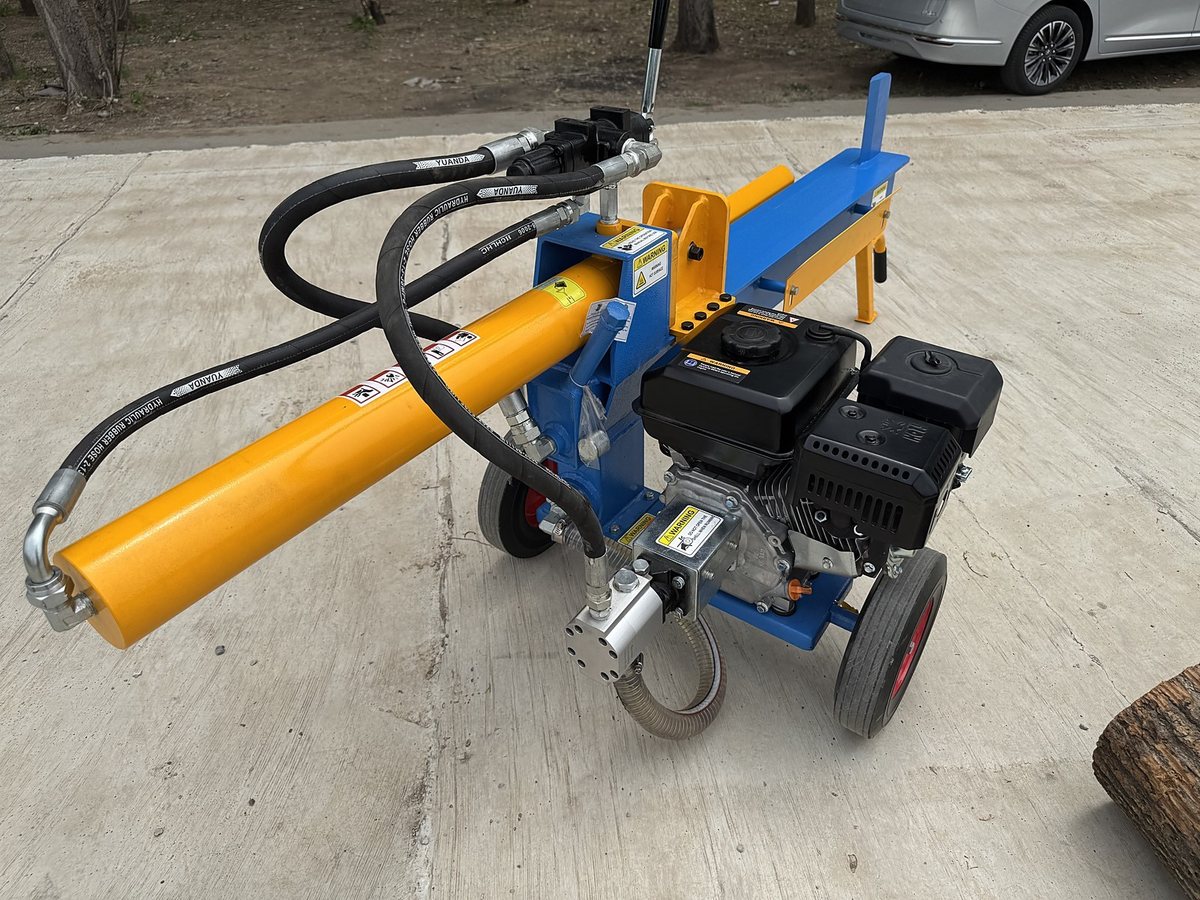
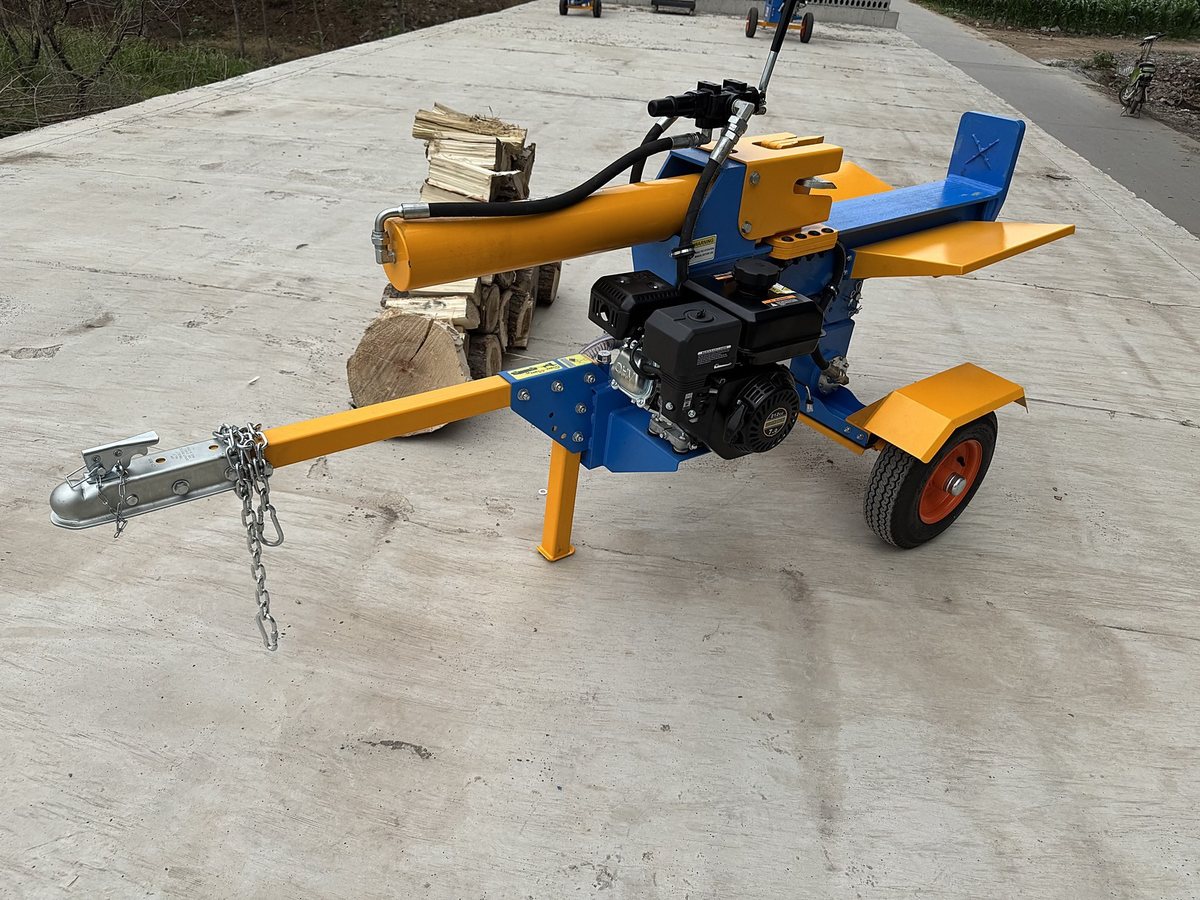
The JERRY 15T is a horizontal/vertical splitter. The beam rotates through 90 degrees, so the machine can be stood upright and the round rolled to the wedge at ground level. There is no hydraulic lift on this model, and none is published.
Both are valid. The difference shows up in the work cycle, the transport weight and how much of the day is spent handling wood rather than splitting it.
Published specification comparison
Every figure below is taken from the manufacturer's own published page in November 2026. Where a maker does not publish a value, the cell says so rather than carrying an estimate.
| Parameter | JERRY 15T horizontal/vertical | Timberwolf TW-2 |
|---|---|---|
| Rated splitting force | 15 ton | 30.375 ton |
| Working position | Horizontal and vertical; 90-degree position change | Horizontal, with hydraulic log lift |
| Cycle time | 15 s | 9 s |
| Splitting stroke | 520 mm / 20.5 in (customizable) | 26 in / 660 mm |
| Cylinder bore | 70 mm / 2.76 in | 4 in / 101.6 mm |
| Hydraulic pump | CBT1/4.2 | 16 GPM |
| Working pressure | 16–22 MPa | Not published |
| Engine | Runtong 180 cc air-cooled four-stroke, OHV, cast-iron sleeve | Honda GX270, 8.5 HP |
| Starting | Electric start and manual recoil start | Recoil standard; electric start listed as an upgrade option |
| Wedge | 2-way or 4-way, selected with the order | 12 in tall × 1 in thick step wedge, slide-on 4-way standard (about 4 in material, 6 in when flipped) |
| Log lift | Not published / not offered on this model | Hydraulic, up to 250 lb / 113 kg |
| Table grate | Not published | Standard |
| Net weight | 125 kg / 276 lb (gross 145 kg) | 1,000 lb / 454 kg |
| Machine dimensions | 1,430 × 520 × 1,160 mm | Not published |
| Published output | Not published | Up to 1 cord per hour (manufacturer's figure) |
| Mobility | 4.1-3.5-4 tyres, transport handle, tow bar | Not published |
JERRY figures: forest-machinery.com 15T horizontal/vertical log splitter product page, November 2026. Timberwolf figures: Specification as published by Timberwolf official site (timberwolfequip.com, TW-2 product page), November 2026.
Cycle time: what 9 seconds and 15 seconds mean per hour
Cycle time is stroke length divided by flow, plus valve response. The TW-2 runs a 26 in stroke on a 16 GPM pump with a 4 in bore; the JERRY 15T runs a 520 mm stroke on a CBT1/4.2 pump with a 70 mm bore. Longer stroke and bigger bore at higher flow is what buys the TW-2 its 9 seconds — it is buying tonnage and speed with hydraulic capacity, not with a different splitting principle.
The arithmetic on the two published cycle times, assuming a machine never stops loading:
9-second cycle: 3,600 ÷ 9 = 400 full cycles per hour
15-second cycle: 3,600 ÷ 15 = 240 full cycles per hour
That is a 1.67:1 difference in theoretical cycles, and it is exactly why published hourly output matters more than cycle time. Timberwolf publishes up to 1 cord per hour for the TW-2 under ideal conditions. JERRY does not publish an hourly output figure for the 15T, so no cord-per-hour comparison is made here — the honest answer is that one side of that comparison does not exist.
Two practical modifiers apply to both machines. A 4-way wedge removes one cycle from every piece that can take it, which compresses the gap between a fast 2-way machine and a slower 4-way one. And a round heavy enough to need two people to lift will cost more seconds than any difference in stroke time.
Wedge design: step wedge plus slide-on 4-way versus selected 2-way or 4-way
Timberwolf's TW-2 uses a step wedge: a 12 in tall, 1 in thick wedge with a small step at the bottom that starts the crack before the full wedge face enters the log. The 4-way attachment slides over that wedge without tools and splits into roughly 4 in pieces, or 6 in pieces when flipped. This is a fixed-geometry system the operator changes by hand, not by ordering a different machine.
JERRY's 15T is ordered as either 2-way or 4-way. The wedge is set by the configuration the buyer specifies, together with engine choice, colour, logo and splitting stroke through the factory's OEM/ODM service. For a dealer stocking one specification, that means the wedge decision is made once at order; for a buyer whose firewood market changes size, the TW-2's flip-over attachment is a change the operator makes in the yard.
Neither arrangement is a defect. They answer different questions: fixed configuration for repeatable production runs, tool-free changeover for mixed retail sizes.
Operator position and daily fatigue
With the TW-2 the operator stands beside a horizontal beam, controls the lift with hydraulics, and never bends to pick up a round. The published lift limit is 250 lb, so rounds above that weight still have to be dealt with some other way — typically by rolling them or by reducing them first.
With the JERRY 15T the operator changes the machine, not the log: rotate the beam to vertical, roll the round to the wedge, split downward. Bending is reduced by geometry rather than by hydraulics, and the 125 kg net weight means the whole machine can be repositioned by one person on flat ground.
For a two-person crew splitting all day from a pile, the horizontal-plus-lift pattern keeps a steady rhythm. For one person working alone on irregular rounds in a yard, cottage lot or farm stack, the vertical pattern removes the lift entirely instead of mechanising it.
Weight, transport and site access
125 kg net against 1,000 lb is the single largest number in this comparison, and it is not a quality statement. It is a statement about what the machine is built to do: the 15T is a compact unit on 4.1-3.5-4 tyres with a transport handle and tow bar, sized to move between stacks and to load into a small trailer or a shared container. The TW-2 is a 454 kg machine with commercial hydraulics, which normally means it stays where it is put and is moved by vehicle.
That weight difference also sets the shipping maths for export buyers. A 15T unit packs at 780 × 420 × 1,170 mm and 145 kg gross, so several units can share a container with other forestry equipment. Timberwolf does not publish TW-2 packing dimensions, so no container comparison is offered here.
What neither page publishes
A specification comparison is only useful if the gaps are visible. These dimensions are missing from the manufacturers' published pages as of November 2026:
Timberwolf TW-2: maximum log diameter, maximum log length, working pressure, CE / EPA / Stage V status, machine dimensions, tow or transport method, and a single stable list price (the model page and the catalogue page showed different figures on the day of checking).
JERRY 15T: maximum log diameter, maximum log length, hourly output in cords, and a published cycle-output curve above 22 MPa.
No value in this article was estimated to fill one of those cells. If a number you need is in that list, ask the supplier for it in writing before you compare quotations.
Which machine fits which job
| Working pattern | The 15T configuration is the one to price | The TW-2 configuration is the one to price |
|---|---|---|
| Single operator, irregular rounds, yard or farm | Vertical mode removes the lift; 125 kg moves between stacks | Requires a second person or a mechanical way to get large rounds to the 250 lb lift |
| Firewood sales, one machine, one spot, all day | 15 s cycle and 15 ton put a ceiling on throughput | 9 s cycle, published 1 cord per hour, hydraulic lift |
| Mixed retail sizes, 4 in and 6 in splits | Order the 4-way wedge; changeover means a different configuration | Flip the slide-on 4-way between 4 in and 6 in in the yard |
| Export order, small container share, dealer stock | 145 kg gross, 780 × 420 × 1,170 mm packing, OEM/ODM logo and colour | 454 kg machine; packing dimensions not published |
| Hardwood above the published lifting limit | Roll the round to a vertical wedge at ground level | Reduce the round first, or lift within the 250 lb limit |
Prices are not compared here. Each supplier quotes its own configuration, freight and terms, and a list price on a product page is not a delivered price. JERRY quotations are available FOB, CFR, CIF or EXW from Qingdao, with MOQ 1 set.
Questions buyers ask before choosing between these two
Is 15 ton enough for hardwood?
Tonnage is one variable out of three. Log diameter, species density and knot content decide whether a 15 ton wedge will take a round in one pass, and no manufacturer can answer that from tonnage alone. Send the maximum log diameter and length, the species and the finished piece size, and the configuration can be confirmed against those numbers.
Why is the TW-2 cycle time shorter?
Because it moves more oil through a bigger cylinder over a longer stroke: 16 GPM into a 4 in bore with a 26 in stroke, published at 9 seconds. The JERRY 15T uses a CBT1/4.2 pump and a 70 mm bore over a 520 mm stroke, published at 15 seconds. Shorter cycle time in this class comes with higher weight and higher hydraulic capacity, not with a different splitting method.
Can the JERRY 15T split in a vertical position?
Yes. The beam changes position through 90 degrees, and the rated 15 ton splitting force applies in both positions. Horizontal is used for rounds that can be placed on the beam; vertical is used for rounds that cannot be lifted.
Does the JERRY 15T have a hydraulic log lift?
No. This model does not carry a log lift and none is published for it. Vertical operation is the alternative for heavy rounds. If a hydraulic lift is a fixed requirement, that is a different machine class and should be quoted as such.
What documentation can be supplied with the 15T?
CE, EPA and Stage V documentation for the ordered configuration, plus TÜV Rheinland factory audit records and Verified Custom Manufacturer status. Certification is issued against the specification actually ordered, including engine choice, so the documents are confirmed at order stage rather than assumed from the model name.
Key facts
| Item | Detail |
|---|---|
| JERRY 15T splitting force | 15 ton, horizontal and vertical (90-degree rotation) |
| JERRY 15T cycle time | 15 s; stroke 520 mm, cylinder bore 70 mm, working pressure 16–22 MPa |
| JERRY 15T engine | Runtong 180 cc air-cooled four-stroke, OHV, electric and recoil start, 3.6 L tank |
| JERRY 15T weight and size | 125 kg net / 145 kg gross; 1,430 × 520 × 1,160 mm; packing 780 × 420 × 1,170 mm |
| Wedge | JERRY: 2-way or 4-way at order. Timberwolf: step wedge with standard slide-on 4-way |
| Timberwolf TW-2 published | 30.375 ton, 9 s cycle, 8.5 HP Honda GX270, 16 GPM, 26 in stroke, 1,000 lb, up to 1 cord/hour |
| Trade terms | MOQ 1 set; FOB / CFR / CIF / EXW from Qingdao; factory in Zibo, Shandong |
| Compliance | CE, EPA, Stage V documents for the ordered configuration; TÜV Rheinland factory audit; Verified Custom Manufacturer |
Next step
Send the maximum log diameter and length, the wood species, the finished split size and the destination country. You will get a configuration recommendation and a FOB, CFR, CIF or EXW quotation for the 15T, or a straight answer that a higher-tonnage class is the correct match.
Email jerry@jerry-sawmill.com or WhatsApp +86 188 6612 6681. Specifications and the full product line: forest-machinery.com/log-splitter. For the earlier comparison against a two-way commercial splitter, see JERRY 15T vs Split-Fire 2265.