Two-Hand Safety Control on Log Splitters: What CE Requires
Short answer: Where a wedge log splitter carries a CE mark and is fitted with a two-hand control device, EN 609-1 requires that device to be the only designated control that runs the splitting stroke. Both hands must initiate the stroke, and releasing either hand stops it. The machine does not keep working after a hand comes off.
What EN 609-1 actually requires
EN 609-1, Agricultural and forestry machinery — Safety of log splitters, is the harmonised European standard for wedge splitters: the machine class where a hydraulic or flywheel-driven ram pushes a log through a fixed wedge. Its treatment of the two-hand control is narrow and specific, and that is the part buyers ask about most.
The requirement is not that every splitter must have a two-hand control. It is that if a two-hand control device is fitted, it must be the only designated control for the splitting process. Three practical consequences follow:
No parallel control may also be able to run the stroke. A foot pedal, a single-hand hold-down lever or a handle that can be locked or tied open is not an acceptable second path.
The stroke stops when either hand leaves its control. A machine that completes the cycle after one hand is released fails the intent of the clause.
Restarting requires a fresh two-hand initiation — the operator cannot simply hold one button and tap the other to keep the ram moving.
The rest of the standard covers the parts that hurt people when they are missing: the guard around the wedge and the splitting zone, the stability of the machine under load, the routing and shielding of hydraulic lines, and the marking and instruction requirements that go into the CE technical file.
Which CE route applies, and when it changes
CE marking for forestry machinery currently runs through the Machinery Directive 2006/42/EC. From 20 January 2027 it is replaced by the Machinery Regulation (EU) 2023/1230. Until that date manufacturers may continue to comply with the Directive; the essential health and safety requirements are carried across, and the two-hand clause in EN 609-1 keeps its role as the fastest route to a presumption of conformity for that specific hazard.
What a compliant two-hand circuit looks like on our machines
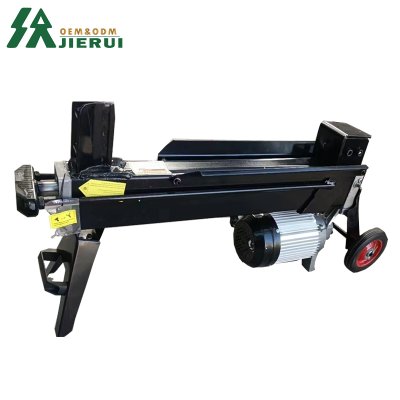
JERRY builds log splitters from 8 to 50 tonnes, and the two-hand interlock is offered across the range together with the shields that the European market asks for. The clearest example is the 8T electric model, which is the machine most often specified for the German and French markets:
Hydraulics — 3 HP single-phase motor, 110 V or 220 V, 3.15 in cylinder bore, 46# hydraulic oil at 0.8 gal, cycle time 13 s on the standard circuit and 9 s on the tuned circuit.
Splitting range — logs from 0.2 in to 15.8 in in diameter.
Two-hand interlock — both safety switches must be pressed for the ram to advance; releasing one switch returns the ram immediately, so the operator’s hands cannot be in the wedge zone while the ram is travelling.
Shield version — identical hydraulics and performance, with a steel mesh guard over the splitting zone, which is the version to quote when the buyer names the EU as the destination.
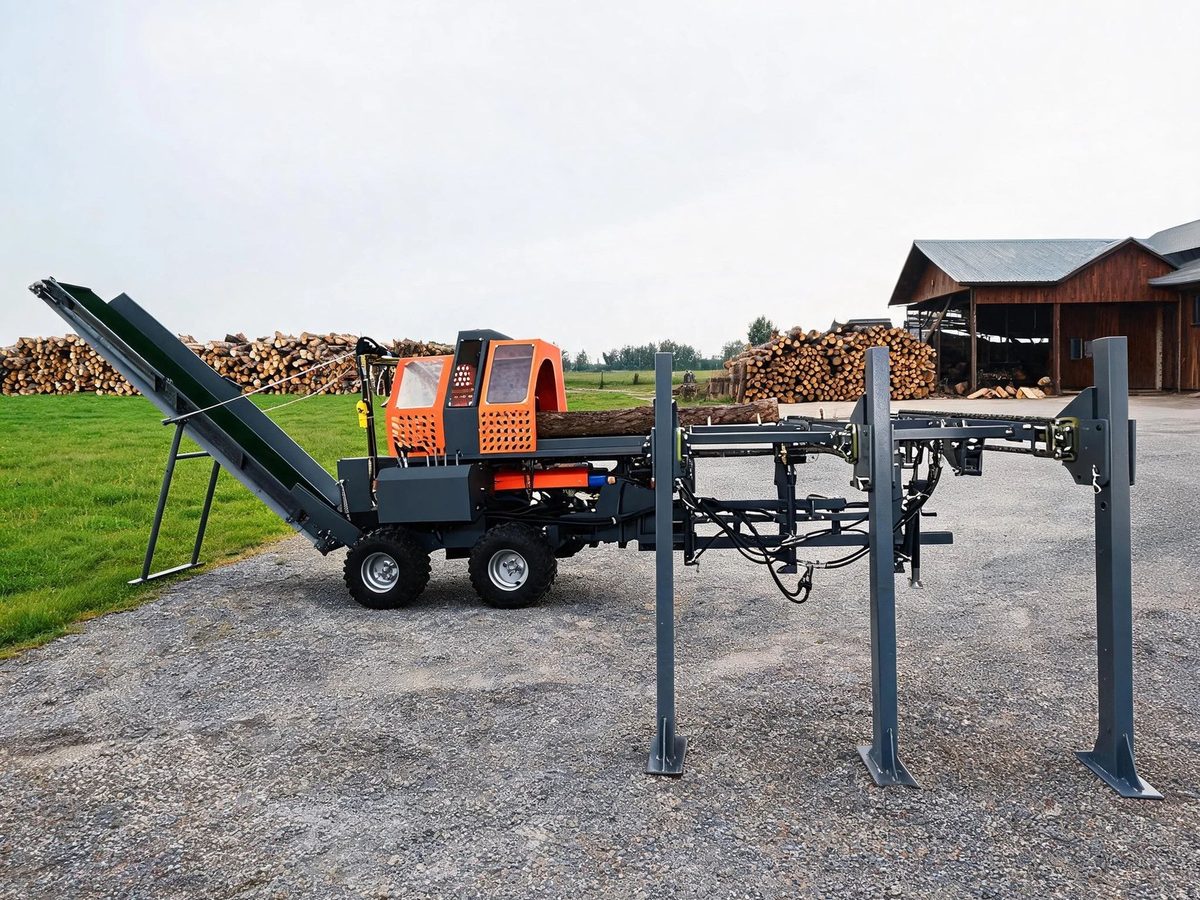
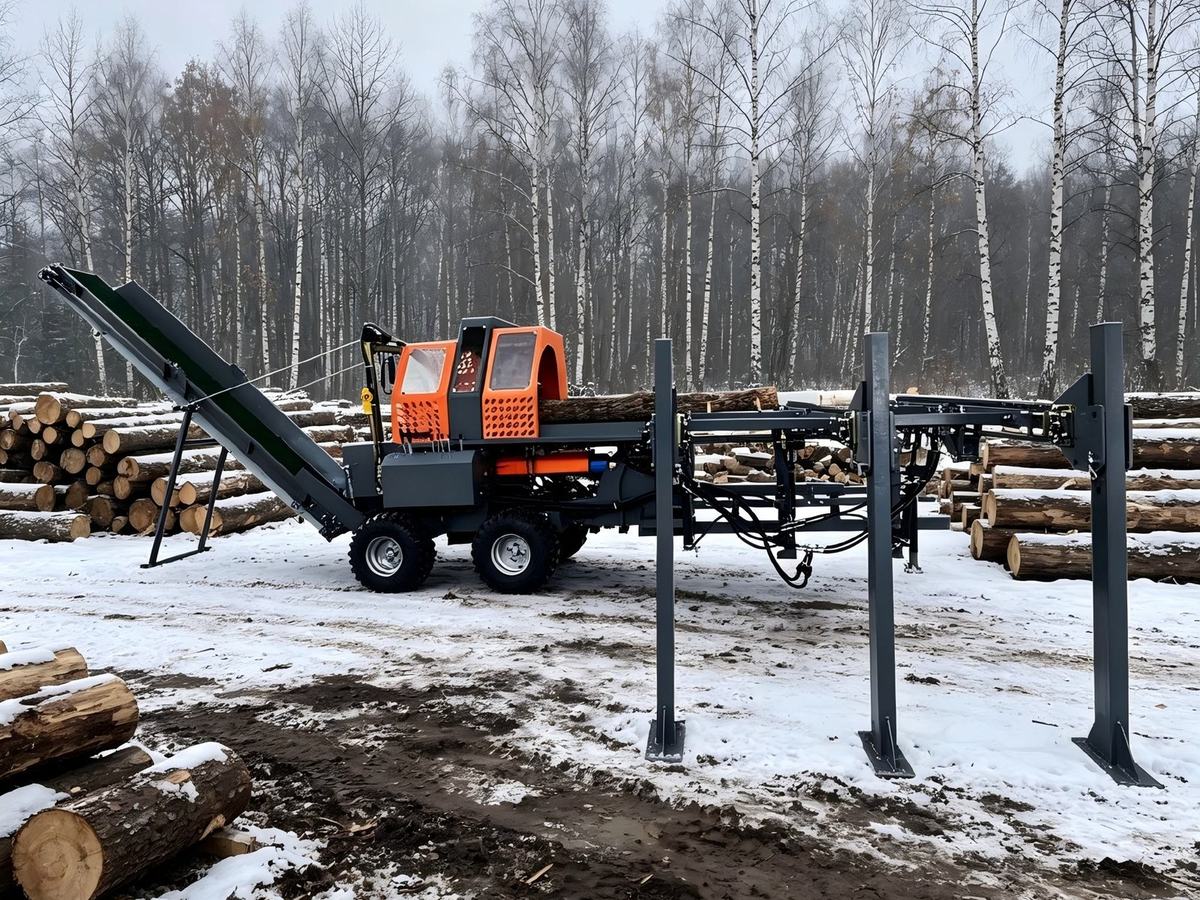
Above 8 tonnes the same logic is applied to heavier frames: the 15T and 25T rotating machines that swing between vertical and horizontal working positions (so heavy rounds are split on the ground rather than lifted), the 18T twin-cylinder model where the wedge height is adjusted hydraulically instead of by hand, and the 50T reciprocating machine whose dual-way wedge splits on both the forward and the return stroke. Petrol models in the range are supplied with engines certified to EPA and Stage V; diesel models are supplied with Stage V engines.
Does a two-hand control slow the operator down?
Less than most buyers expect. The control changes who may start the stroke, not the hydraulics. If the 8T circuit can complete a cycle in 13 s, it still completes it in 13 s with a two-hand control fitted; what changes is that the operator is standing at the machine with both hands on the controls instead of holding a log with one hand and working a lever with the other. In practice the labour saving comes from the machine, not the operator, which is why the larger models add log lifters and step-feed decks rather than trying to make the operator faster.
Questions we get from importers
Is a two-hand control mandatory for CE?
Not universally. What the standard controls is the situation where a two-hand control is fitted: then no other control may run the splitting stroke. Because a two-hand control is one of the cleanest ways to answer the crushing hazard at the wedge, it is the arrangement most often chosen — and then the exclusivity rule binds.
What is the difference between the standard and the shield version?
Hydraulics, motor and cycle times are the same. The shield version adds a steel mesh guard over the splitting zone. The two-hand switch and the shield answer different hazards and are usually specified together for the EU.
Can the two-hand control be bypassed for a faster workflow?
Not on a machine we ship as compliant, and the trained instruction set says the same thing. A bypassed two-hand control turns a compliant machine into a non-compliant one, and that is the first thing an accident investigation looks at.
Which models are normally quoted for Germany and France?
The 8T with the two-hand interlock and the shield, in 220 V single phase. Where the buyer also splits heavy hardwoods, the 15T or 25T rotating machine is quoted with the same control arrangement.
Do you supply the technical file for the CE marking?
We supply the documentation package that goes with the machine — declaration of conformity, marking and the instruction set in the buyer’s language. JERRY is a Verified Custom Manufacturer whose factory has been audited by TÜV Rheinland.
Key facts
Range: log splitters 8T to 50T; 8T electric runs on single-phase 110 V / 220 V
8T hydraulics: 3 HP motor, 3.15 in bore, 46# oil (0.8 gal), cycle 13 s / 9 s, log diameter 0.2–15.8 in
Safety: two-hand interlock switch (both hands to advance, release one to stop), steel mesh shield on the shield version
Standard: EN 609-1 — two-hand control, where fitted, must be the only designated control for the splitting stroke
CE route: Machinery Directive 2006/42/EC; Regulation (EU) 2023/1230 applies from 20 January 2027
Engines: petrol models EPA and Stage V; diesel models Stage V
Trade: MOQ 1 set, FOB / CFR / CIF / EXW, shipped from Qingdao
Factory: Zibo, Shandong, China — TÜV Rheinland audited; Verified Custom Manufacturer
Related reading
Sizing a Log Splitter: 8T to 50T by Wood Diameter and Species
Vertical vs Horizontal Log Splitter: When the 90° Rotate Design Pays Off
Choosing the right splitter for your market
Tell us the maximum log diameter you handle, the wood species, whether you split on the ground or on the beam, and the destination country — we will come back with the model and the control arrangement that matches your market’s requirements.
jerry@jerry-sawmill.com
forest-machinery.com