How a 0.3–0.5 mm Cutting Tolerance Is Achieved and Checked
A commercial sawmill holds 0.3–0.5 mm board thickness tolerance when the mill head travels on a stable, hardened datum and the blade cannot wander between cuts. Tolerance is not one feature — it is the sum of the rail, the guide blocks, the tensioning system and the dust control around them.
Where the 0.3–0.5 mm figure comes from
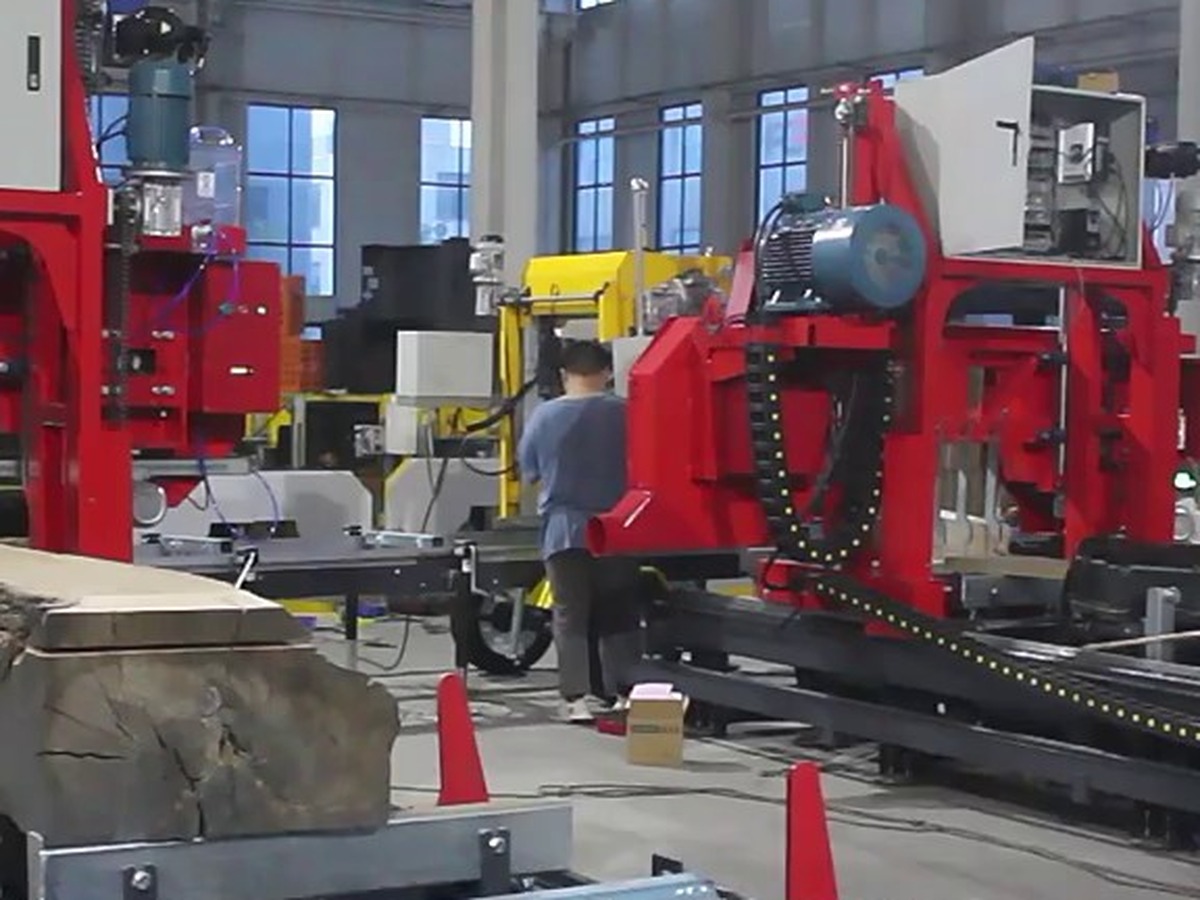
Finished board thickness tolerance is a tolerance on the result, not on a single part. On a JERRY commercial mill the published figure is 0.3–0.5 mm across the length of the board, measured on the finished face. To hold that, every element in the cutting chain has to be tighter than the final number, because errors add up rather than cancel out.
Link 1: the rail is hardened and machined, not just hardened
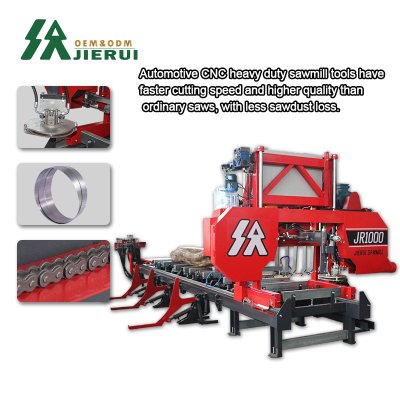
The vertical and horizontal guide rails are precision-hardened to 58–63 HRC. Hardness alone is not enough: the mounting surface under the rail is fully machined, with a thickness tolerance of 0.01 mm or better on the mounting face. If that face is not machined flat, a hardened rail simply transfers the same error to the mill head. (For the hardness side of this, see our note on what HRC rail hardness means for board tolerance.)
Link 2: the head is guided, not just supported
The up-and-down travel runs on guide columns with bronze bushings. Bronze absorbs the small misalignments that a rigid steel-on-steel slide would amplify, and it keeps the head square as it descends. The blade itself is held by wear-resistant ceramic guide blocks — a heat-resistant ceramic that keeps its geometry when the blade runs hot, which a plain steel block does not.
Link 3: tension has to stay constant over a whole shift
A blade that loses tension mid-cut changes kerf and the board drifts. Tensioning is available in three steps: manual screw, hydraulic, and servo-electric automatic tensioning, which holds the setting without an operator re-checking it between logs. A blade breakage sensor stops the feed if the blade fails, so a broken blade does not score the bed or ruin the log.
Link 4: dust is a tolerance problem
Powder and chips under the rail or on the main wheel change the effective height of the head by fractions of a millimetre — which is exactly the tolerance band. Scraper plates are fitted to the rail, the blade and the main wheel to keep the running surfaces clear. A stainless auxiliary hydraulic tank also keeps oil temperature down, so hydraulic feed speed does not drift as the machine heats up over a long shift.
How to check tolerance on your own machine
You do not need a metrology lab to verify the figure. Three checks tell you whether the chain is healthy:
Cut three boards, measure each at three points — both ends and the middle. The spread between the highest and lowest reading is your real tolerance. Wipe the rail first; dust alone can account for a few tenths of a millimetre.
Measure a board from the start of a shift and again at the end. If the spread grows, the problem is heat or tension, not the rail — check oil temperature and blade tension before touching anything mechanical.
Check the blade guide blocks for play. Ceramic blocks hold their geometry well, but they are a wear item. Any visible movement in the guide is directly transferred to board thickness.
Buyer questions
Is 0.3–0.5 mm a guaranteed figure on every log? It is the figure the machine is built and set up to hold on a correctly tensioned blade with a clean rail and a properly supported log. Logs that are not held against the bed, or blades run past their service life, will open that band.
Do I need the automatic tensioning option to hit the tolerance? No — manual and hydraulic tensioning can hold the band if the operator re-checks tension as the blade heats. Servo-electric tensioning removes that operator dependency, which matters on longer shifts and in training situations.
Where does dust control actually pay off? On machines that run all day. On short runs you may never notice. Once the rail packs with powder, thickness drifts and the operator starts compensating — the scraper plates exist to remove that variable.
What log diameter can the machine handle? Please tell us your typical and maximum log diameter and the species, and we will confirm the bed configuration that best holds the tolerance band for your logs.
Key facts
Board thickness tolerance: 0.3–0.5 mm
Guide rail hardness: 58–63 HRC, mounting surface fully machined to 0.01 mm
Head guidance: bronze bushing guide columns
Blade guidance: wear-resistant ceramic guide blocks
Tensioning: manual screw / hydraulic / servo-electric automatic
Protection: blade breakage sensor, dual infrared probes, dust scraper plates on rail, blade and main wheel
Hydraulics: stainless auxiliary tank for oil cooling
Certification: CE; EPA and Stage V available on the relevant engine options
Factory: Zibo, Shandong, China — TÜV Rheinland audited, Verified Custom Manufacturer
MOQ: 1 set · Shipment: ex Qingdao, FOB / CFR / CIF / EXW all quoted
Next step
Tell us your log diameter range, species and the board sizes you sell, and we will recommend the bed length, tensioning option and guide setup that holds your tolerance target in daily production.
jerry@jerry-sawmill.com | forest-machinery.com