What Japanese Buyers Check During a Forestry Machinery Factory Visit
What Japanese Buyers Check During a Forestry Machinery Factory Visit
A forestry machinery factory visit is where drawings and quotations become measurable facts. Buyers from Japan typically walk the assembly floor, watch a machine run, measure the parts that decide board quality, review conformity documents, and then discuss packing and shipping terms before placing an order. This article explains what a visit covers and what a buyer should prepare.
A factory visit normally covers six areas: assembly floor, machine demonstration, accuracy verification, conformity documents, packing and loading, and commercial terms.
Buyers should bring their real log diameters, wood species, target board sizes and required output per shift.
Step-by-step documents a visitor can ask for: rail hardness report, guide clearance check, conformity declarations, packing list and shipping plan.
1. The assembly floor walkthrough
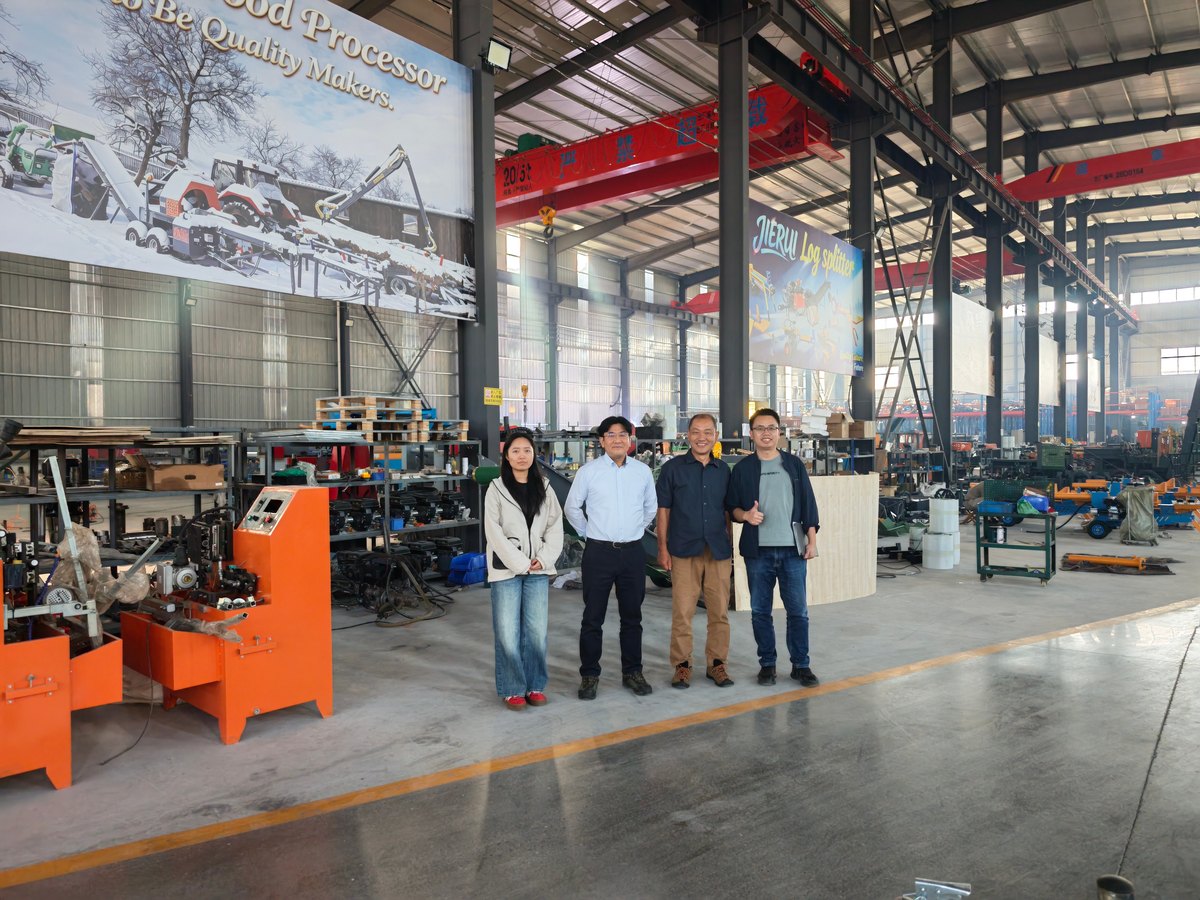
The first stop is the production hall, because it shows what is actually being built rather than what is printed in a catalogue. Buyers usually look at three things: the frames and weldments in progress, the machining stations that prepare the guide rails, and the number of machines in assembly at the same time.
A thorough walkthrough also covers the warehouse and the packing area, because packing quality decides whether a machine arrives in the same condition it left the workshop. Overhead lifting equipment is a useful indicator here: heavy components such as long rails and hydraulic assemblies require crane capacity and safe handling procedures on site.
2. Machine demonstration and operation checks
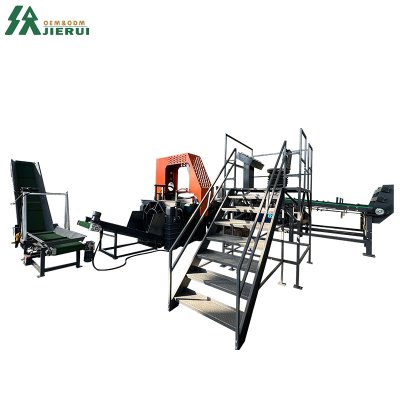
A demonstration should follow the buyer's own material, not a prepared sample. Portable and commercial sawmills are typically shown cutting a log to the buyer's target board thickness, while log splitters are shown completing a full splitting cycle and firewood processors are run through feeding, sawing, splitting and conveyor output.
Useful checks during the demonstration include the cutting cycle time for one pass, the finish of the sawn face, the stability of the log on the bed, and how easily the operator changes the cutting height. Buyers should also ask which functions are standard and which are optional on the exact configuration being quoted.
3. Accuracy verification: the numbers that decide board quality
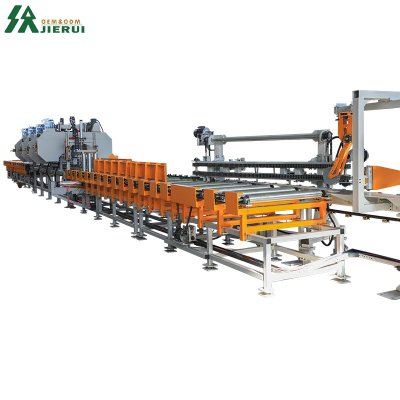
Accuracy is the part of a factory visit that separates a serious buyer from a casual visitor. On our commercial sawmills, hardened tracks are rated at 58–63 HRC, the machined rail mounting surface is controlled to a thickness tolerance within 0.01 mm, and the machine is designed for a finished-board cutting tolerance in the 0.3–0.5 mm range when correctly installed, adjusted and operated.
On portable designs, precision linear guide rails and replaceable slider blocks can hold a minimum guide-to-slider clearance of 0.02 mm on selected models. Buyers should confirm these figures against the specific model quoted, and should test with their own timber before shipment.
| Check | What the buyer verifies | Evidence to request |
|---|---|---|
| Track hardness | Hardening treatment and rated hardness value | Specification sheet for the quoted model |
| Guide clearance | Sliding smoothness and replaceable wear parts | On-site measurement during the visit |
| Cut quality | Board thickness consistency on the buyer's timber | Test cut during the demonstration |
| Powder coating | Coating type on non-wearing surfaces | Visual inspection of frames and covers |
| Galvanized contact surfaces | Rust protection on friction and bolted surfaces | Visual inspection of rails, supports and log-contact parts |
4. Construction details buyers ask about
Non-wearing surfaces on our machines use powder coating rather than liquid paint, while friction surfaces, bolted joints and log-contact rails use galvanized treatment for corrosion protection in wet forest conditions. Hydraulic systems on heavy machines can include an auxiliary stainless steel tank, which increases oil volume and adds cooling surface for long working days.
For logs with abrasive or dirty bark, commercial sawmills can be equipped with our patented pre-cut debarker, which opens the contaminated bark layer before the main blade reaches it. The device is patented; the verified patent number is not published here.
5. Conformity documents and destination-market requirements
Buyers exporting to Europe or North America should confirm engine and conformity configuration during the visit rather than after shipment. Available options across our configurations include CE conformity, Stage V emission-compliant engines and EPA-certified engine options, depending on the ordered model and destination market.
Our factory holds a TÜV Rheinland factory audit and Verified Custom Manufacturer status. Buyers who need documents for their own import clearance should request the relevant declaration matching their exact order configuration.
6. Packing, loading and shipping from Qingdao
The last stage of a visit is usually the packing area and the shipping discussion. Confirm how the machine is fixed inside the container or on the flat rack, how hydraulic parts and blades are protected, and what documentation accompanies the shipment.
For our export orders, Qingdao is available as the port of shipment, and orders can be discussed under FOB, CFR, CIF or EXW terms. Minimum order quantity can start from 1 set, subject to the selected configuration.
7. What a buyer should prepare before the visit
Maximum and typical log diameter and length.
Wood species, including any hard or abrasive species.
Target board dimensions and the thickness tolerance you sell to your own customers.
Required output per shift and the number of operators available.
Power supply on site: voltage, frequency, phase, or generator capacity.
Loading method available at your yard.
Destination country, so emission and conformity configuration can be matched.
Samples of your sawn output, if you need to reproduce an existing board quality.

Buyer Q&A
Can international buyers visit the factory before ordering?
Yes. Factory visits can be arranged for overseas buyers, including buyers from Japan and other export markets. Scheduling, travel support and a demonstration plan are agreed in advance so that the correct models and materials are ready on the day.
Can we test our own logs during the visit?
Whenever possible, yes. Demonstrating with the buyer's own timber gives a realistic result, because species, moisture content and log shape all affect sawing behaviour and cycle time.
Do you support OEM and custom configurations?
Yes. Colour, logo, power source and selected machine functions can be configured. The exact scope should be confirmed in writing before production, together with the conformity documents required for the destination market.
Which conformity marks apply to my order?
Conformity depends on the model and the importing market. CE conformity, Stage V emission-compliant engines and EPA-certified engine options are available across different configurations. Confirm the combination for your order rather than assuming it from a catalogue.
What commercial terms are available?
Orders can be discussed under FOB, CFR, CIF or EXW terms, with Qingdao available as the shipment port. MOQ can start from 1 set, depending on the selected configuration.
Key facts
Factory location: Zibo, Shandong, China.
TÜV Rheinland factory audit; Verified Custom Manufacturer.
Commercial sawmill hardened track: 58–63 HRC.
Commercial rail mounting-surface tolerance: within 0.01 mm.
Designed finished-board tolerance on the commercial system: 0.3–0.5 mm under correct setup and operation.
Portable linear guide clearance on selected designs: 0.02 mm.
Patented pre-cut debarker available on commercial sawmills; verified patent number not published.
Conformity options include CE, Stage V and EPA according to model and destination market.
MOQ: 1 set; shipment port: Qingdao; terms: FOB, CFR, CIF or EXW.
Product range: portable sawmills, commercial sawmills, log splitters, firewood processors, board edgers and log trailers with crane.
Book a factory visit or request the visit checklist
Send your log diameter and length, wood species, target board sizes, required output per shift, power supply and destination country. We will prepare the model list and demonstration plan for your visit, and send a written visit checklist in advance.
Email: jerry@jerry-sawmill.com
Website: forest-machinery.com