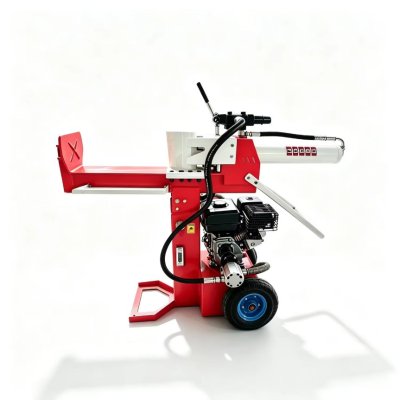
Board Edger Basics: Recovering Value from Wany Edges
A board edger trims both long edges of a sawn slab in a single pass, so the board leaves with two parallel, square faces at the width you asked for. Without that step, the bark-covered edges stay on the board, the piece has no true width, and the value it could have carried as lumber drops to firewood value.
What a wany edge actually is
A wany edge is the rounded, bark-bearing surface of the log left on the side of a board. It is not a defect in the log and it is not a mistake by the saw operator. It is a direct consequence of how a band sawmill opens a log: the head cuts two parallel faces, top and bottom, and everything outside those two planes stays where the log put it — on the edges.
A slab straight off the mill therefore has four surfaces, and only two of them are machined. The other two still carry bark, grit and the natural taper of the tree. That slab cannot be stacked square, cannot be graded to a width, and cannot be sold as dimension lumber until both edges are cut back to clean wood.
The loss is easy to underestimate. The board is already sawn, already handled, already dried or stacked — and it is worth a fraction of its potential because two edges were never squared. Edging is the cheapest operation in the whole chain to recover that value.
What the edger does in one pass
The operator lays the slab on the infeed table and pushes it into a set of circular blades mounted on a common arbor. The blades are spaced to the target board width, the board is held down through the cut, and it exits with both edges square and parallel.
Four details decide whether that pass works or wastes the board:
Dual red laser guide lines. Two laser lines are projected on the infeed, one for each cut. Before the board is pushed, the operator can see whether both bark edges will clean up in this pass, or whether the wane is too deep on one side and the board has to be turned. This is the difference between edging to a target width and edging by guesswork.
Anti-kickback safety chain. A heavy stainless chain hangs across the infeed. It keeps the slab tracking straight instead of drifting into the blades at an angle, and it blocks the blade from throwing the board or chips back at the operator.
Stainless infeed rollers. Rollers that rust or bind drag the board off line. Stainless rollers keep the feed smooth on wet timber and in rainy yards, which is where most edging actually happens.
Handwheel winch for blade spacing. Width changes happen between orders, not during them. A geared handwheel moves the blade set to the new spacing quickly, so a short run of a different width does not become a reason to skip edging.
The two-pass rule, and why the return rollers matter
Not every board can be edged in one pass. If the slab is wider than the blade set can span, or if the wane runs deep on both sides, the first pass squares one edge and the second pass squares the other. That is normal practice, not a failure.
What makes it expensive is handling. On a plain edger, the board that comes off the outfeed has to be carried back around to the infeed — by a second person, or by the same person lifting it off the stack. That is where two-pass edging quietly stops happening.
Our edger carries idle return rollers across the top of the machine. The operator pushes the once-edged board back over the top and drops it into the infeed for the second pass, without lifting it and without a second operator. One person can run a two-pass job at a steady rate.
Matching the edger to your sawmill, not to a catalogue
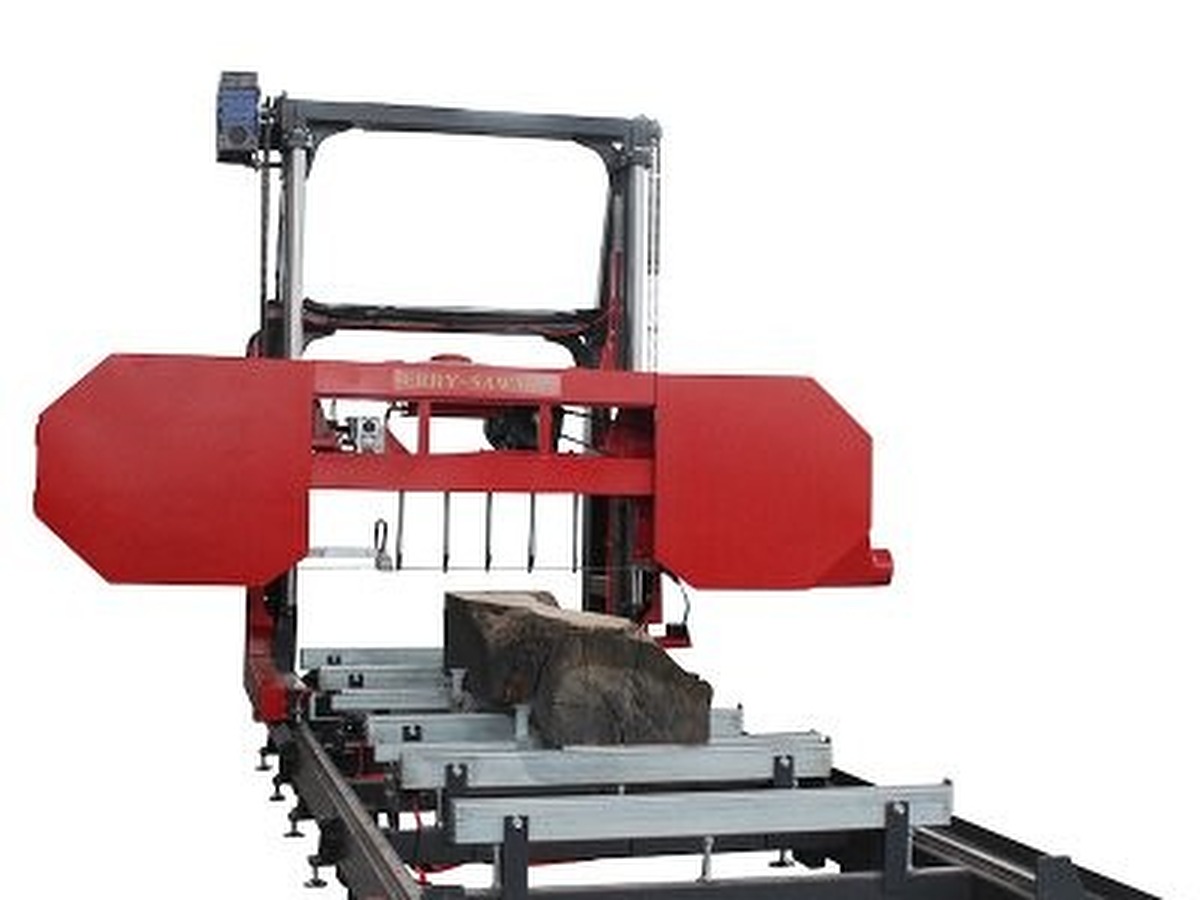
The edger is a downstream machine, so it should be sized from the mill's output, not from a specification sheet in isolation. Three numbers decide the match:
The widest board your mill produces. The edger's blade span has to cover it, otherwise the widest boards take two passes every time.
The narrowest width you actually sell. Blade spacing is set by handwheel, but very narrow target widths limit how many blades can be stacked on the arbor at once.
Boards per hour at the mill's real feed rate. An edger that outruns the mill just sits idle; one that lags becomes the bottleneck for the whole line.
Power follows the site, not the other way round. The edger is available with petrol, diesel or electric drive. An electric unit is the simplest choice where three-phase power is already at the yard; petrol or diesel units are what you run at a landing or a roadside setup with no supply.
Mobility matters more than it looks. Ours sits on a road-rated chassis with highway tyres rated to 60 km/h, so it can be towed between sites behind a pickup instead of being craned onto a trailer. If your mill moves, the edger should move with it — a stationary edger at the wrong site is the same as no edger.
Where the edger sits in a small line
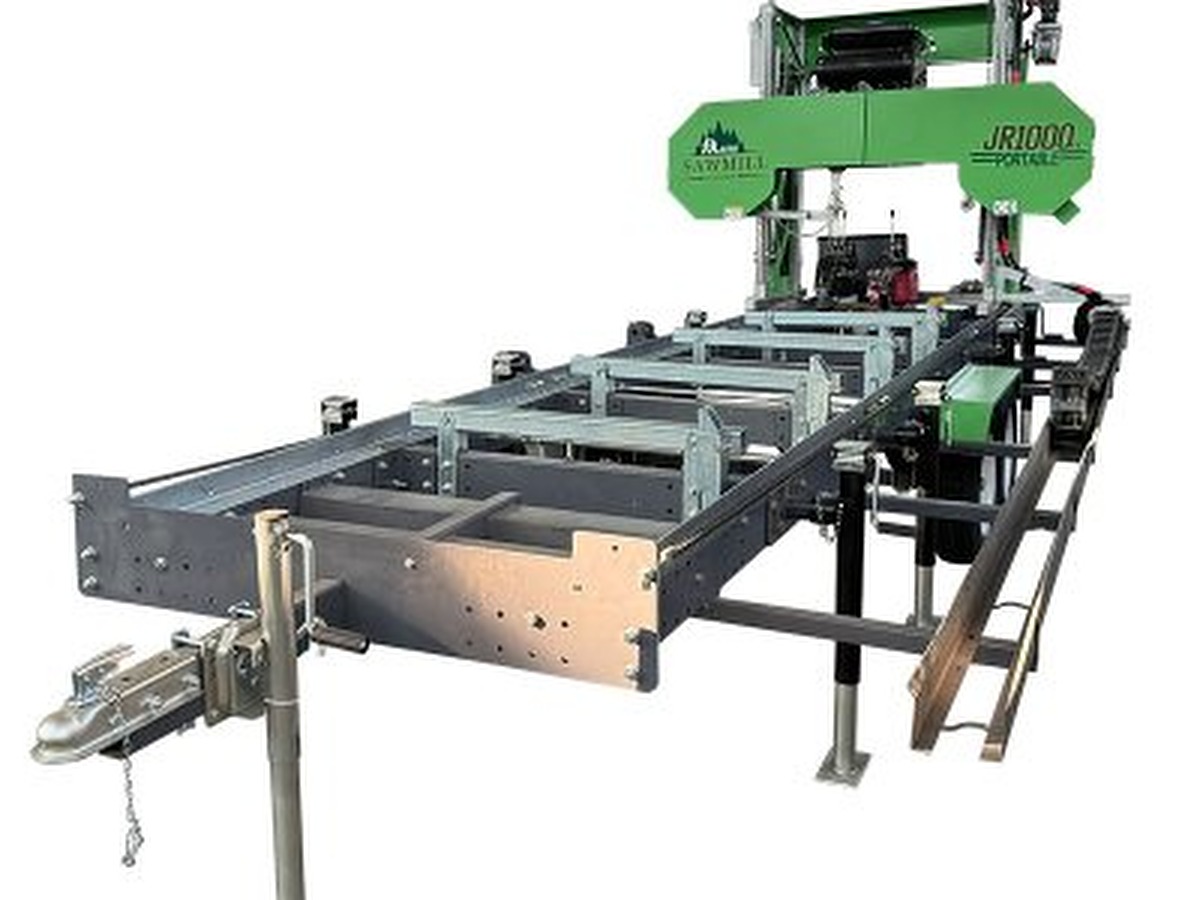
The practical sequence for a small operation is: sawmill opens the log and produces boards and slabs, the edger squares both edges of every piece that will be sold as lumber, and offcuts go to firewood. Skipping the edger does not save a step — it converts sellable boards into firewood and then makes you split them.
On the milling side, the same logic applies in reverse: the cleaner the sawmill's cut, the less material the edger has to remove to reach a square edge. Our commercial sawmills can be ordered with a patented pre-cut debarker, which opens the bark and grit layer ahead of the main blade so the main blade is not cutting through embedded stone.
Safety and compliance
An edger is an open-blade machine at chest height, so the guarding is not optional. The anti-kickback chain across the infeed is the primary control: it holds the board down and prevents the blade from lifting it. Guards cover the blade set outside the cut. Our machines carry CE certification, and our factory holds a TÜV Rheinland audit and Verified Custom Manufacturer status.
If the unit is engine-driven, the engine's emission certificate has to match the destination market. Petrol units are available with EPA (North America) and Stage V (EU) compliant engines; diesel units are supplied with Stage V compliant engines. Confirm the certificate for the country you are importing into before the order is placed, not after.
Questions buyers ask before ordering an edger
Do I need an edger if my sawmill already cuts square boards?
Yes, if the boards still carry bark on the edges. A band sawmill squares two faces — top and bottom. The two edges are whatever the log's surface was. An edger is what turns those edges into parallel faces at a known width.
Can one person run it?
Yes. The limiting factor is normally the return trip for a second pass, and the top-mounted return rollers remove that. Two operators only become necessary when you are feeding boards faster than one person can turn them.
How do I set the width for a specific order?
Set the blade spacing to the finished width, allowing for the kerf of each blade. Then check the laser lines against the actual board before pushing it through: if one line falls inside the wane, that edge will not clean up in this pass and the board should be turned or run in two passes.
What power option should I specify?
Electric where you have a permanent supply and want the lowest running cost. Petrol or diesel where the machine travels with the mill or works at a landing without power. Tell us the voltage and phase at the site when you request a quote.
Can the edger ship together with a sawmill?
Yes. Minimum order quantity is 1 set, and machines ship from Qingdao on FOB, CFR, CIF or EXW terms. Mixed orders of a sawmill plus an edger are quoted together so the loading plan is worked out before booking.
Key facts
Function: squares both long edges of a sawn slab in one pass; two-pass edging supported by top-mounted return rollers
Alignment: dual red laser guide lines at the infeed, one per cut
Safety: stainless heavy-duty anti-kickback chain across the infeed; guarded blade set
Feed: stainless infeed rollers; handwheel winch for blade spacing adjustment
Power: petrol, diesel or electric drive
Mobility: road-rated chassis, highway tyres rated to 60 km/h
Certification: CE on the machines; TÜV Rheinland factory audit; Verified Custom Manufacturer
Trade terms: MOQ 1 set, shipped from Qingdao, FOB / CFR / CIF / EXW
Next step
Send the widest and narrowest board you need to edge, the power available at your site, and whether the machine has to travel. We will come back with the blade configuration and a quote.
jerry@jerry-sawmill.com | forest-machinery.com