Firewood Processor vs Chainsaw and Splitter: The Throughput Math
Firewood Processor vs Chainsaw and Splitter: The Throughput Math
Short answer: a firewood processor wins on throughput because it removes handling, not because it cuts faster. A chainsaw cuts one round in seconds; the cost sits in bending, lifting, re-stacking and carrying each piece to a splitter. Once your weekly volume passes roughly two to three cords, that handling time dominates the job, and a processor that saws and splits at one station pays back in operator hours rather than in saw speed.
Where the time actually goes
Break a firewood shift into four blocks and the comparison becomes visible:
Cross-cutting. Bar and chain through a 40 cm round: a few seconds. Not the bottleneck.
Handling. Picking the round up, carrying it to the splitter, setting it down, and moving the split pieces to the pile. This repeats for every piece and is where most of the shift disappears.
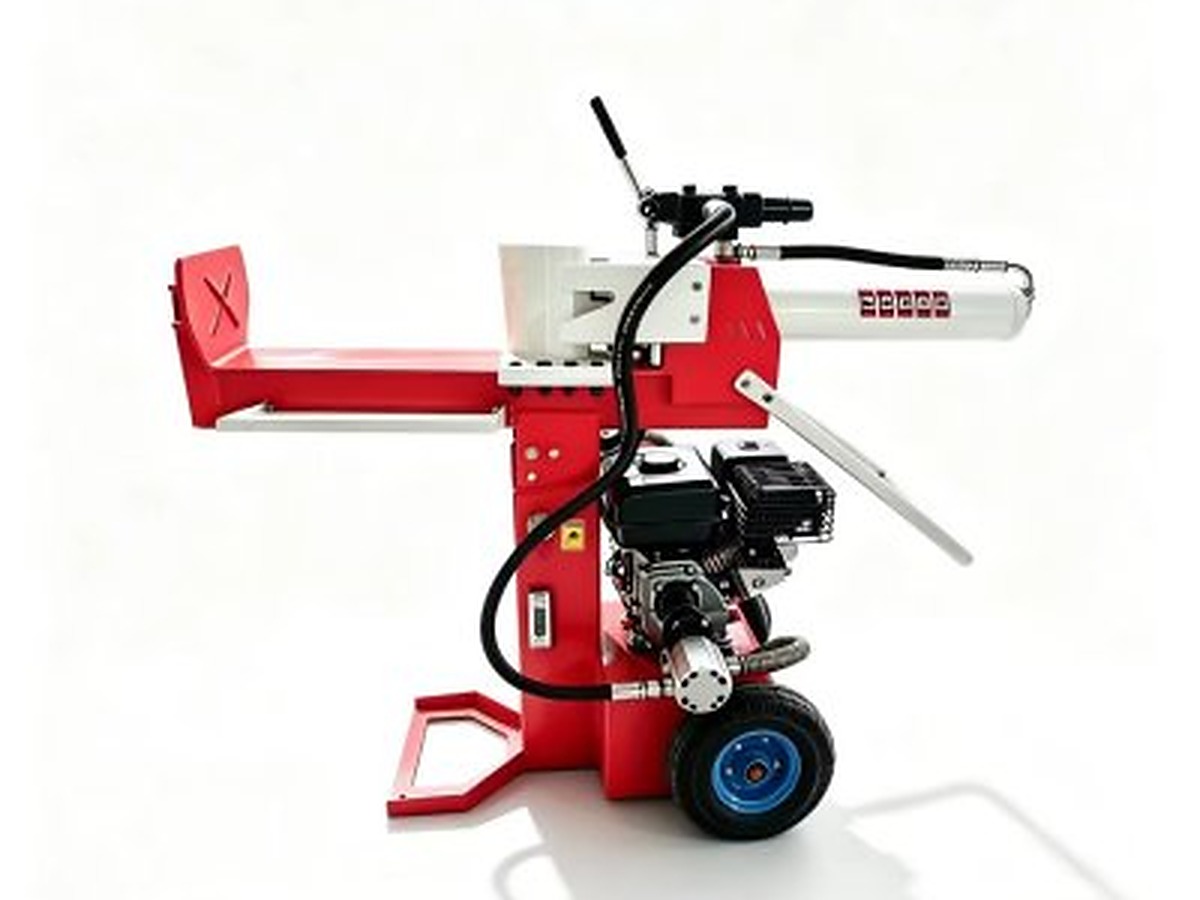
Splitting. A hydraulic splitter is quick once the round is on the beam; the cost is the loading and unloading around each cycle.
Re-handling. Split pieces that fall to the ground get picked up again, and offcuts that are too big go back through the wedge.
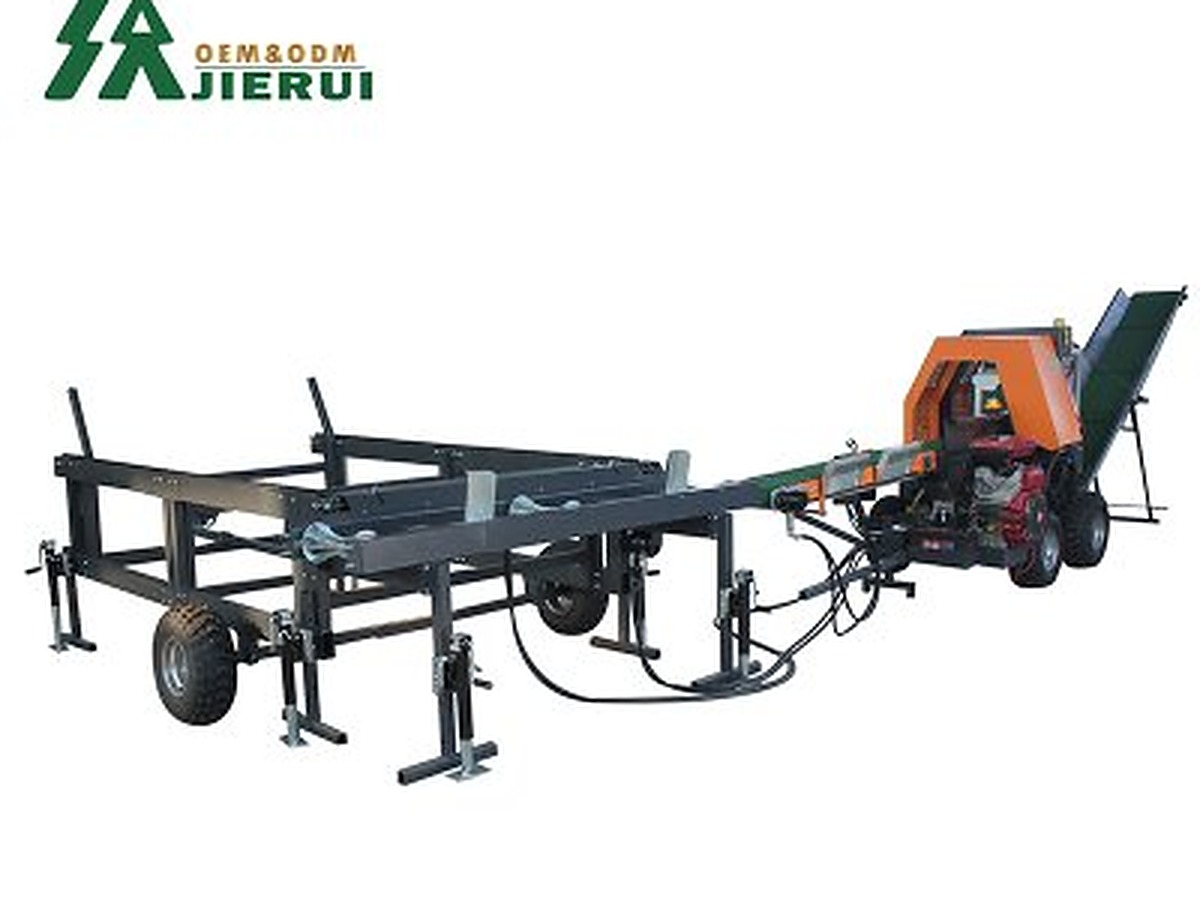
A processor collapses three of those blocks into one station: the log is lifted onto an infeed table or live deck, the saw cuts it to a set length, the wedge splits it in the same stroke sequence, and the outfeed conveyor carries the finished piece into a trailer or pile. The operator stands at the controls instead of walking the wood.
Run the arithmetic on your own wood
Do not take a throughput figure from a brochure, including ours. Build the number from your own inputs:
Pieces per cord. Take your finished length (say 30 cm or 40 cm) and your typical round diameter, and count how many split pieces make one cord for your stacking method.
Seconds per piece, by method. Time ten pieces with your current chainsaw-and-splitter routine, including walking. Then time ten pieces at a processor station, including loading and clearing the conveyor. The difference is handling, and it is usually a multiple, not a percentage.
Duty cycle. Nobody runs at the theoretical cycle for an hour. Fuel, sharpening, repositioning logs and moving the pile all take a share. A planning figure for continuous manual feeding is well below the arithmetic maximum.
Operator count. A chainsaw-and-splitter setup often needs two people to keep pace: one cutting, one splitting. A processor with an infeed deck is commonly run by one operator plus someone moving trailers, which changes the labour line in the calculation more than the cycle time does.
That is the honest version of the throughput math: the machine does not saw five times faster, it lets one person keep working without carrying every round twice.
When a processor is the right machine
Wood arrives in volume: full loads, crane-unloaded, or long logs you cut to length on site.
You sell firewood, so consistent finished length matters and a mechanical log length stopper removes a judgement call from every piece.
Labour is the constraint, not capital. One operator at a station replaces a two-person cutting and splitting routine.
You want the split pieces off the ground: a height-adjustable outfeed conveyor loads a trailer or builds a pile without a second pass.
When a chainsaw and splitter still win
Small annual volume, or firewood for one household. The capital tied up in a processor will not come back through saved hours.
Highly irregular wood: short offcuts, crotches, and mixed lengths that fight an infeed table.
Work spread across several scattered sites where moving a compact splitter is easier than moving a processing station.
You already own the saw and the splitter and the labour is your own time, not a paid shift.
What to specify on a processor
These are the choices that decide whether the machine actually removes handling at your site:
Saw unit. A standard Stihl bar and chain keeps consumables available locally instead of locking you into a proprietary cutter.
Wedge configuration. A 4-way wedge suits smaller finished sizes and softer wood; a 6-way wedge multiplies output per stroke but needs the hydraulic capacity to push it through knots. Match the wedge to the firewood size your market buys.
Log length stopper. Mechanical stop for a fixed finished length keeps the output uniform, which is what resale buyers check first.
Outfeed conveyor. Adjustable height and angle decides whether you fill a trailer directly or build a pile, and that is a handling cost you either remove or keep.
Infeed. For batch deliveries, a powered log deck (our JR300 live deck steps and indexes logs one at a time) turns the infeed into a queue instead of a task. Lower-cost roller racks (JR100) and gravity tables (JR200) suit smaller volumes.
Power. Petrol and diesel units are available with EPA and EU Stage V emissions certification; electric drive suits a fixed yard with reliable power.
Questions buyers ask
Is a firewood processor faster than a chainsaw and splitter?
On volume work, yes, and mainly because it eliminates carrying each round between two machines. On a few cords a year the saving in hours does not cover the capital cost.
Can one person run a processor?
Yes, with a log deck or infeed table that presents the log at working height. Without an infeed system, a second person loading logs usually sets the pace.
What log diameter can a processor take?
It depends on the model and the wedge. Confirm the maximum diameter against your largest rounds before ordering, and check that the saw unit can physically clear that diameter at the finished length you sell.
Do I still need a splitter?
Only for oversize rounds the processor cannot take, or for re-splitting pieces the wedge leaves too large. Many owners keep a small standalone splitter for exactly that.
Key facts
Model line: firewood processors with Stihl bar and chain, 4-way or 6-way wedge, mechanical log length stopper, height-adjustable outfeed conveyor.
Infeed options: JR100 roller rack, JR200 gravity table, JR300 powered live deck.
Patented pre-cut debarker available on JERRY sawmill units.
Certification: CE; petrol and diesel engines available with EPA and EU Stage V emissions certification. Factory audited by TÜV Rheinland. Verified Custom Manufacturer.
Trade terms: MOQ 1 set, FOB / CFR / CIF / EXW, shipped from Qingdao, China.
Send us your finished length, your typical round diameter and your weekly volume in cords, and we will tell you which configuration fits the work rather than the brochure. jerry@jerry-sawmill.com | forest-machinery.com