4-Way vs 6-Way Wedge on a Firewood Processor: Matching Split Size to Your Market
Short answer: the wedge decides how many pieces one round becomes in a single pass. A 4-way wedge turns a round into four splits; a 6-way wedge turns it into six. The right choice is the one that produces the split size your buyers already ask for, at the log diameter you actually get.
What the wedge number counts
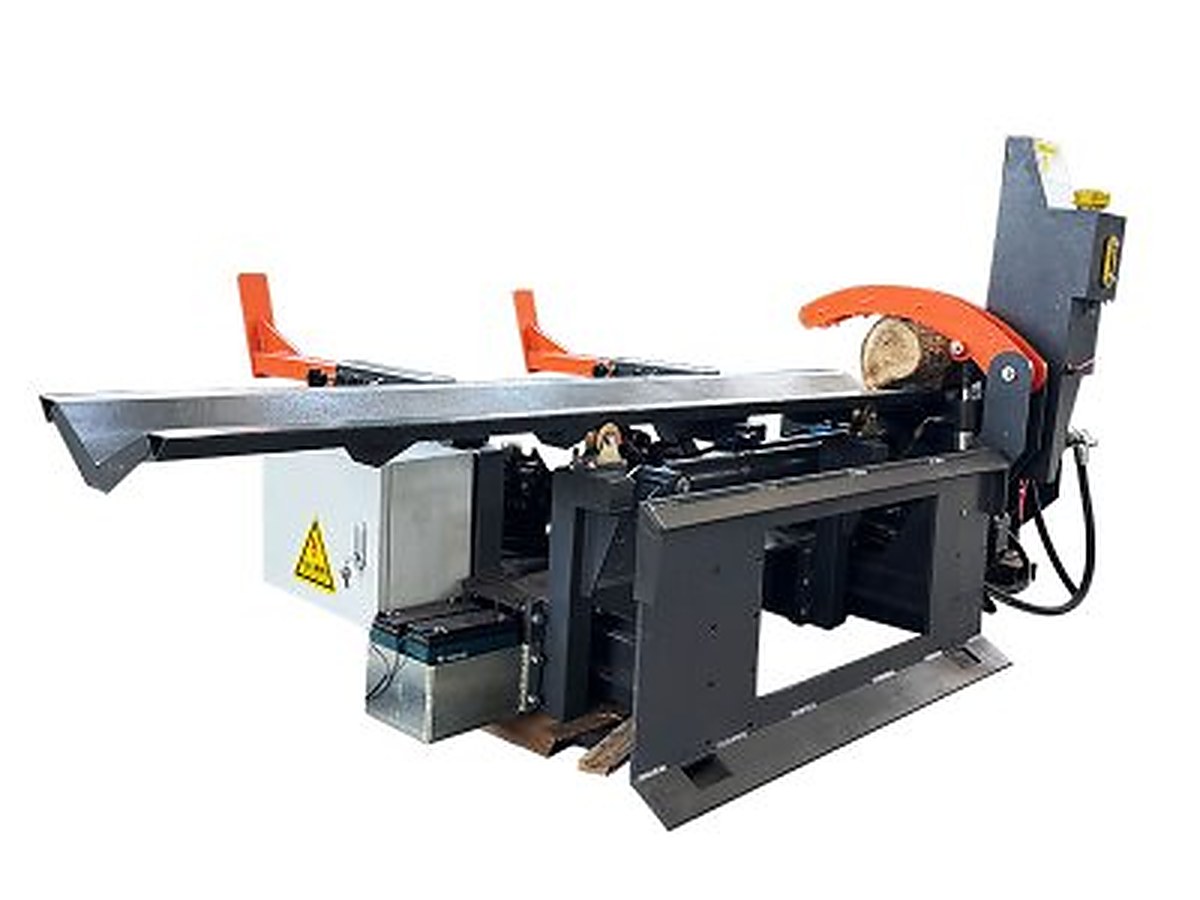
The number refers to the blades radiating from the centre of the wedge, not to hydraulic force. A 4-way wedge carries two crossing blades above the base wedge; a 6-way adds two more, so one push produces six pieces instead of four.
Nothing else about the machine changes. The cylinder, the pump, the log lift and the conveyor are the same. That is why the choice should be made from the market backwards, not from the spec sheet forwards.
Start from the split size your buyers ask for
Bagged retail firewood - sold by volume in net bags or small bundles, usually for stoves and fireplaces. Buyers expect uniform, hand-sized pieces. This is where a 6-way wedge earns its place: smaller pieces fill a bag evenly and dry faster.
Bulk truckload or crate sales - delivered loose to households that heat with wood all winter. Larger splits stack better, burn longer and are sold by the cord or cubic metre. A 4-way wedge matches this market.
Restaurants, pizza ovens and kiln-dried premium packs - small, very uniform splits with low moisture. Again a 6-way, fed with rounds that are large enough for all six blades to bite.
The diameter ceiling nobody mentions
A 6-way wedge only produces six pieces when the round is large enough for the outer blades to engage. Feed a small round into a 6-way and the outer blades pass through air; the round comes out as four pieces, or as two, depending on where it sits.
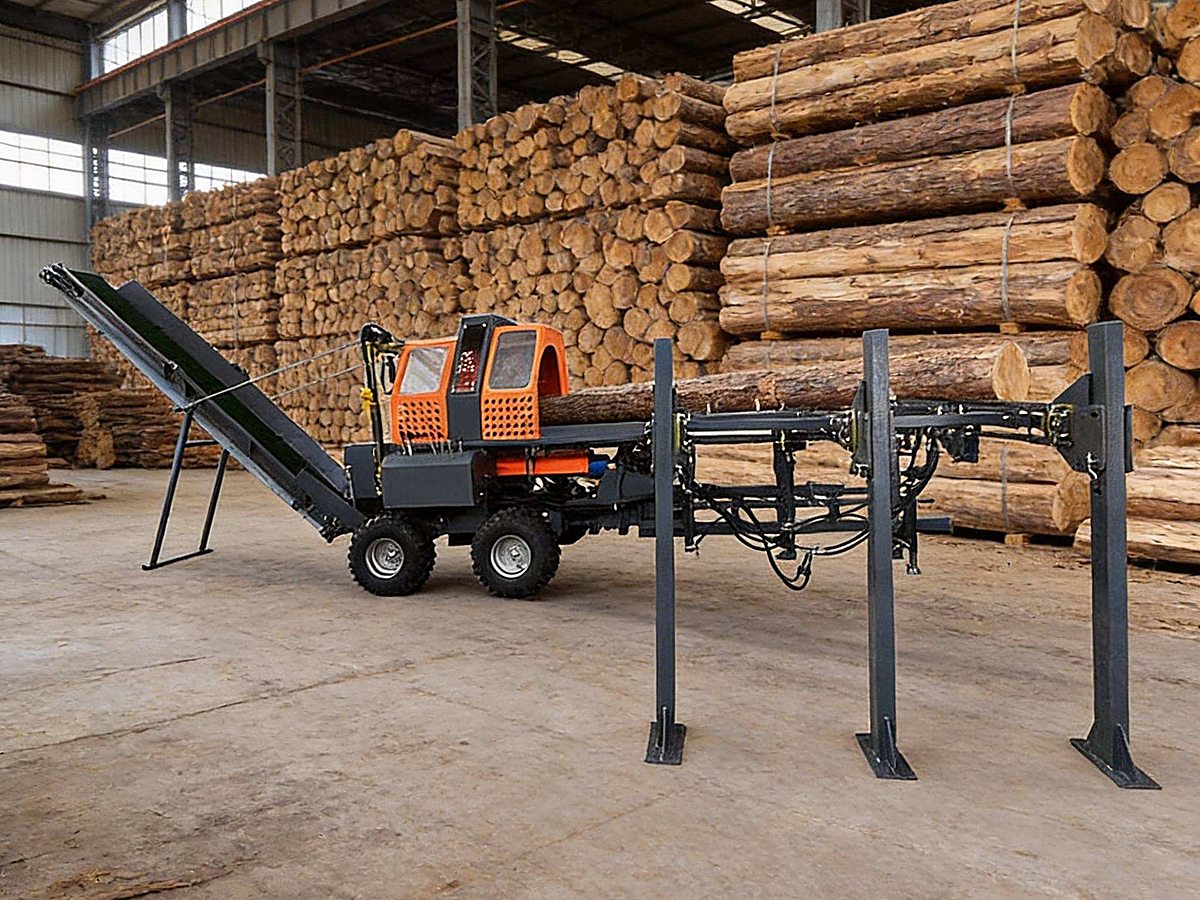
This is why wedge height adjustment matters as much as the wedge itself. On our firewood processors the wedge height is adjusted hydraulically as standard equipment (a manual version is available on some models), so the blade stack can be raised or lowered to sit at the centre of the round being fed. Combined with a mechanical log length stopper, which fixes the cut length before the round reaches the wedge, the operator controls both dimensions of the finished piece: length at the saw, cross-section at the wedge.
Throughput arithmetic, stated plainly
One pass on a 4-way wedge yields four pieces; one pass on a 6-way yields six, provided the round is big enough. What that does to your output per hour depends on cycle time, log supply and how fast the conveyor clears the wedge, so treat any "X times faster" figure you see quoted elsewhere with suspicion unless it comes with the test conditions attached.
What can be stated without qualification: the number of pieces per cycle is fixed by the wedge, and the split size for a given round is therefore fixed by the wedge as well.
Matching the wedge to the model
Wedge configuration is specified at the time of order, because the wedge and its mounting are built as one assembly. Our firewood processors are offered with a 4-way or 6-way wedge; the smaller hydraulic splitters in the range use a 2-way or 4-way wedge instead, since a 6-way on a light splitter would simply stall on hardwood.
If you are unsure, describe the market rather than the machine: what split size sells in your area, what diameter the log supply averages, and how the firewood is packed. Those three answers determine the wedge more reliably than any tonnage figure.
Questions buyers ask
Can I change the wedge after delivery?
The wedge is ordered with the machine as a matched assembly. Decide the market before the order is placed rather than after.
Does a 6-way wedge need more force than a 4-way?
The same cylinder force is divided across more splits, and each split has to be driven through the full length of the round. The practical consequence is that a 6-way belongs on a machine with the tonnage and the log supply to keep it fed, not on the smallest model in a range.
What split size do bagged-firewood buyers want?
Pieces that fill a bag evenly and fit a stove door without being split again by the customer. Six-way output from rounds in the 250-400 mm range is the usual starting point for that market.
Does wedge height adjustment change the split size?
Yes, within limits. Raising the wedge relative to the round pushes the blades closer to the centre line, which produces fewer, larger pieces from the same round; lowering it produces more, smaller pieces. It is the fine adjustment; the wedge itself is the coarse one.
Key facts
Wedge options on JERRY firewood processors: 4-way or 6-way, specified at order.
Wedge height adjustment: hydraulic as standard on processor models; manual on selected models.
Cut length set mechanically by a log length stopper before the round reaches the wedge.
Log handling: hydraulic log lifter, step-feed belt, hydraulic clamping during the cut.
Discharge: conveyor with hand-winch tilt and manual or hydraulic swing for stacking and loading.
CE certified; TUV Rheinland factory audit; Verified Custom Manufacturer; MOQ 1 set.
Shipping from Qingdao; FOB / CFR / CIF / EXW terms.
Tell us the market and we will specify the wedge
Send the split size that sells in your area, the average log diameter and how the firewood is packed, and we will confirm the wedge configuration and the model that carries it.
Email: jerry@jerry-sawmill.com
Site: forest-machinery.com