Stihl Bar and Chain on a Firewood Processor: A Maintenance Schedule That Fits a Working Day
A firewood processor runs its Stihl bar and chain harder than a handheld saw: same cutter, but the saw head is fed by a hydraulic ram, all day, in dust and grit. The schedule that keeps it cutting straight is short — check tension and oil every tank, file every 10 to 15 hours of cutting, flip the bar every 25 hours, and replace the chain when the cutters can no longer be brought back to length.
The bar and chain are the cheapest parts on the machine and the most expensive to neglect. A dull chain on a processor does not just cut slowly: it loads the ram, heats the bar, and puts a side load on the saw head that shows up later as a wavy board or a crooked firewood end.
Why the chain works harder on a processor
On a handheld saw the operator feels the cut. On a processor the log is clamped, the ram advances at a fixed rate, and nobody is watching the chips. Three things follow from that:
The chain never gets a rest. A full working day is closer to continuous cutting than the intermittent use a felling saw sees.
Grit arrives with the wood. Yard-stored logs carry sand and frozen dirt; a processor sitting in a log yard takes that straight into the bar groove.
Tension drift is invisible. The bar is buried in the cut. By the time the cut wanders, the chain has usually been loose for a while.
The schedule
| Interval | Action | What it prevents |
|---|---|---|
| Every tank of fuel | Check chain tension by lifting the chain at mid-bar; it should clear the bar by a few millimetres and snap back | Chain thrown off the bar, worn drive sprocket |
| Every tank of fuel | Check the chain oil tank and the visible oil level gauge; confirm oil is reaching the bar | Bar burnout, seized chain, blue bar rails |
| Every 10–15 hours of cutting | File the cutters and set the depth gauges | Rising ram load, overheated bar, ragged cut ends |
| Every 25 hours | Flip the bar, clean the groove and oil hole, check the nose sprocket | Uneven bar wear, a bar that no longer cuts straight |
| Every 25 hours | Check the drive sprocket for hooking; grease the nose sprocket if it has a grease hole | Chain breakage, sprocket wear that ruins new chains |
| Every 50 hours | Inspect the oil pump delivery, flush the tank, replace the fuel and oil filters | Starvation at the bar, contamination reaching the pump |
| Season start | New chain if the old one has been filed back to the wear mark, or has two or more broken or repaired cutters in a row | Cutting with a chain that cannot be tuned straight |
Oil is the part most owners get wrong
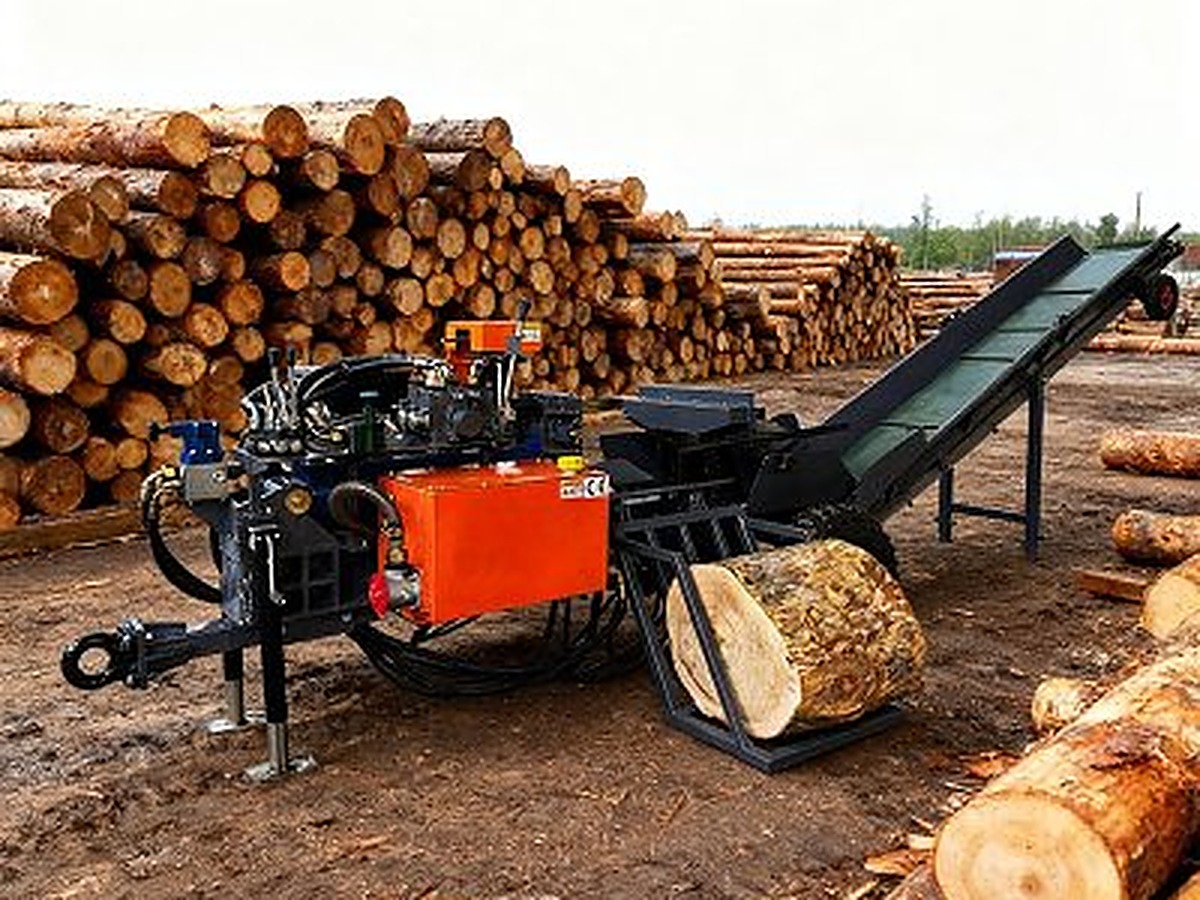
Every JERRY firewood processor ships with a genuine German Stihl guide bar and chain, and with an automatic chain oil tank that has a visible level scale and a dedicated flow-adjustment valve. The valve exists because bar oil demand changes with the wood: dry pine at −5 °C and green hardwood in summer do not need the same delivery.
Two habits cover most oil failures. First, fill the oil tank whenever you fill fuel — not when it looks low. Second, open the flow valve a step in cold weather and when cutting dry, resinous wood, then check the bar rails for a thin film of oil after a minute of cutting. A bar that runs dry turns blue at the rails and is finished; no amount of filing brings it back.
Tension, and what it does to the cut
Chain tension on a processor is set with the bar nuts and the tensioning screw, and it should be checked with the bar cool. A chain tensioned hot will be too tight once it cools, which loads the nose sprocket and the crank bearing. A chain that is too loose rides up out of the groove, wears the bar rails into a taper, and can derail under load.
The practical test is the same as on a handheld saw: with the machine off, lift the chain at the middle of the bar. It should come up a few millimetres and settle back into the groove without sagging underneath. If it hangs below the bar, tighten a quarter turn and re-check.
Sharpening: angle and depth gauge together
Filing only the cutters and leaving the depth gauges high is the most common reason a “sharp” chain still cuts slowly. The cutter has to be able to bite; the depth gauge sets how much it bites. File the cutters at the angle stamped on the chain, then bring the depth gauges down with a flat file and a gauge, and keep the rakers level across the chain.
A quick field check: cut one round and look at the chips. Fine dust means the chain is dull or the depth gauges are too high. Proper chips are short and blocky. Curling, ribbon-like chips mean the depth gauges are too low and the chain is over-loading the engine.
When to replace instead of sharpen
Replace the chain when the cutters have been filed back to the wear mark, when a cutter is missing or cracked, when the rivets are loose, or when the chain has been run hot enough to blue. Replace the bar when the rails are blue, when the groove is worn wider than the drive links, or when the bar no longer sits flat — a bent bar will keep throwing chains no matter how well they are tensioned.
Because the processor takes the same Stihl chain as a large handheld saw, spares are normally available locally. That is deliberate: a chain that can be bought in the nearest forestry dealer is a chain that gets replaced on time.
Questions buyers ask about bar and chain upkeep
How often should the chain be sharpened on a processor?
On clean logs, every 10 to 15 hours of cutting is a working figure. Dirty yard wood or frozen logs can halve that. Watch the chips rather than the calendar.
Can I run a different brand of chain instead of Stihl?
The bar and chain are matched to the saw head and the ram speed. A different chain pitch or gauge changes how the machine cuts and how the oiler performs, so it is worth confirming the specification before substituting.
Does the oil flow valve need adjusting for different wood?
Yes. Dry or resinous wood and cold weather call for more oil; the visible gauge makes it easy to confirm the tank is actually feeding the bar.
What kills a bar fastest?
Running with a loose chain and a dry bar. Both wear the rails into a taper, and once the rails are tapered the chain will not track straight even when tensioned correctly.
Key facts
Bar and chain: genuine German Stihl guide bar and chain on every JERRY firewood processor
Chain oiling: automatic oil tank with visible level gauge and dedicated flow-adjustment valve
Recommended intervals: tension and oil every tank, filing every 10–15 cutting hours, bar flip every 25 hours, pump and filter service every 50 hours
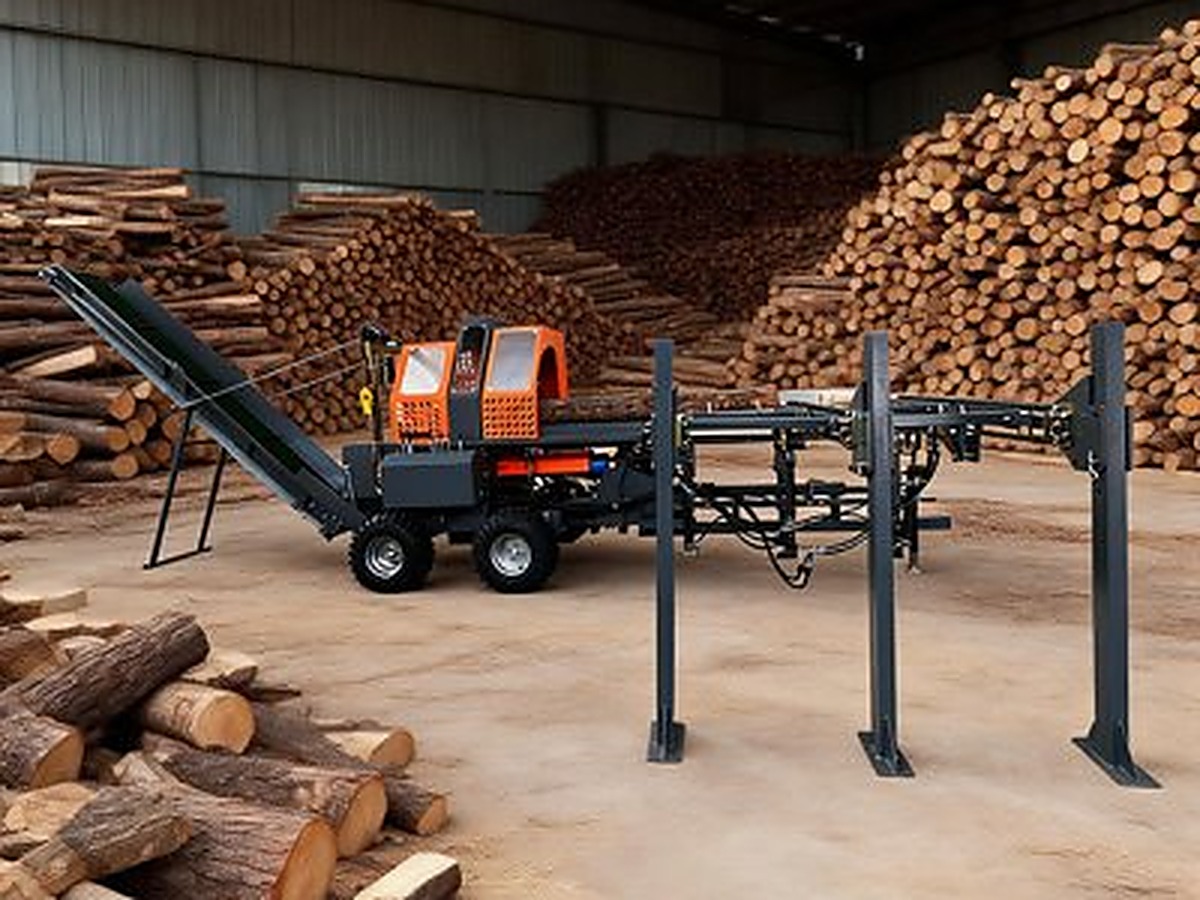
Splitting options on the same machine: 4-way or 6-way wedge, plus log decks for batch feeding
Certification and trade: CE certified; TÜV Rheinland factory audit; Verified Custom Manufacturer; MOQ 1 set; shipped from Qingdao on FOB / CFR / CIF / EXW terms
Ask about the setup, not just the saw
Tell us the log diameter, the species and how many cubic metres you process in a season, and we will confirm the bar and chain specification, the wedge configuration and whether a log deck is worth adding.
jerry@jerry-sawmill.com | forest-machinery.com