Firewood Processor vs Log Splitter: Which Is Right for Your Firewood Business?
For many firewood businesses, a chainsaw and log splitter are a practical way to get started. The equipment is relatively simple and can be enough for small-scale production.
As orders grow, however, cutting every log with a chainsaw, moving heavy rounds and handling finished firewood can require a significant amount of time and labor. This is where a firewood processor can offer a more efficient solution.
A log splitter is generally a good choice for small-scale and startup operations, while a firewood processor is better suited to businesses that need higher production, less manual handling and room to grow.
The right choice depends not only on production volume, but also on log diameter, wood species, required firewood length, labor costs and future business plans.
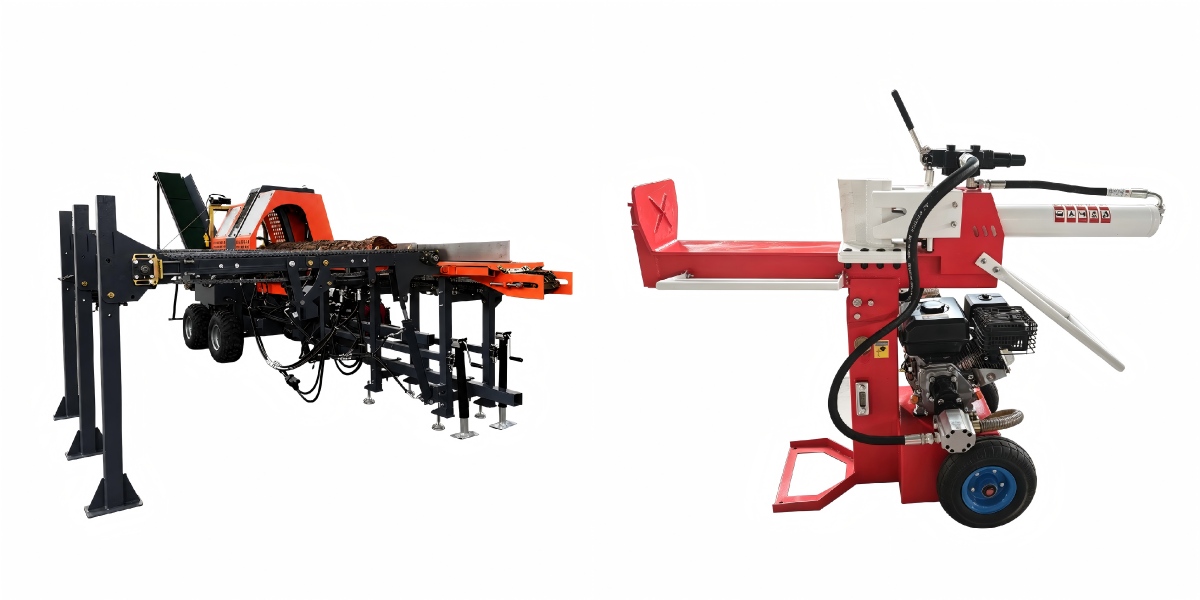
How Are They Different?
A log splitter is designed primarily to split logs that have already been cut to length. In a typical setup, an operator uses a chainsaw to cut the logs, moves the rounds to the splitter, positions them and removes the split pieces.
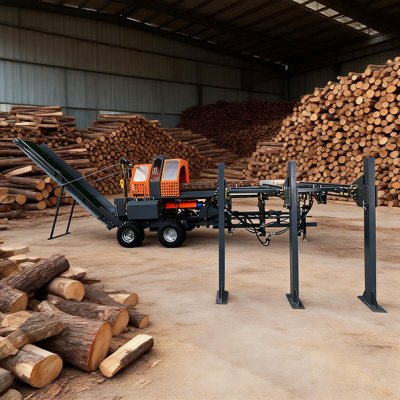
A firewood processor combines several of these steps into one workflow. Depending on the machine, full-length logs can be fed into the processor, cut to a preset length, split and discharged onto a conveyor.
The difference can be summarized simply:
Log Splitter + Chainsaw:
Cut → Move → Position → Split → Remove
Firewood Processor:
Feed → Cut → Split → Convey
For a small operation, the additional manual handling may not be a problem. For a commercial firewood business, reducing these repeated steps can make production more efficient.
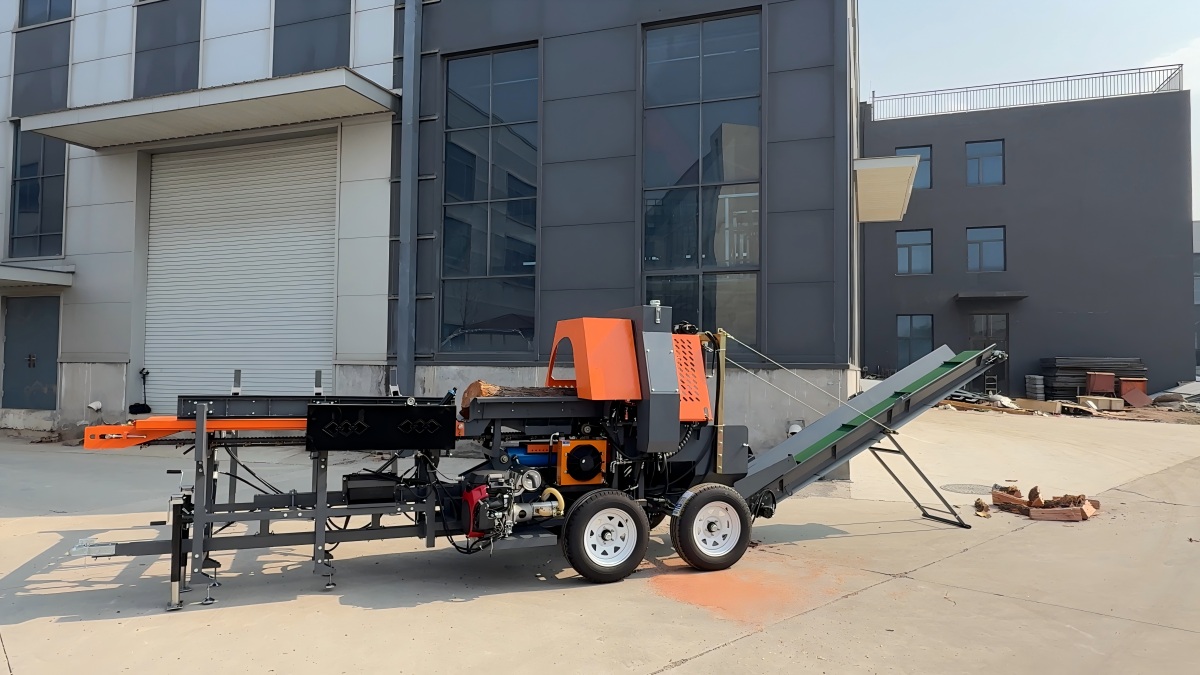
Production and Labor
A firewood processor generally provides higher production throughput because cutting and splitting are handled within the same workflow.
However, there is no single production rate that applies to every processor. Actual output depends on log diameter, wood species, log length, cutting length, knot structure, splitting system, feeding method and operator experience.
A machine processing small softwood logs may perform very differently from a heavy-duty processor handling large hardwood logs.
Labor is another important consideration. With a chainsaw and splitter, workers may repeatedly cut logs, move heavy rounds, load the splitter and handle finished firewood. A processor can reduce many of these manual steps.
For a growing business, this means production can potentially increase without increasing the workforce at the same rate.
When Is a Log Splitter the Better Choice?
A log splitter remains a practical option for many businesses.
It can be a good fit when:
· Production volume is relatively small
· The business is still building its customer base
· Labor costs are manageable
· The operator already owns a chainsaw
· There is no need for continuous commercial production
· Keeping the initial investment low is important
A log splitter is not an inferior alternative. It simply fits a different production scale and workflow.
When Should You Consider a Firewood Processor?
A processor becomes more attractive when manual production starts limiting the business.
Typical signs include:
· Customer demand exceeds current production capacity
· Labor is becoming expensive or difficult to find
· Hardwood makes up a larger share of production
· The business is moving into wholesale supply
· Manual handling is slowing production
· The business plans to expand significantly
There is no universal annual production threshold for buying a processor. For some businesses, evaluating a processor around 100 cords per year may make sense; for others, labor costs, wood type or customer demand may justify the investment earlier.
The most useful question is not simply how many cords the business produces, but whether the additional production capacity and labor savings can justify the equipment investment.
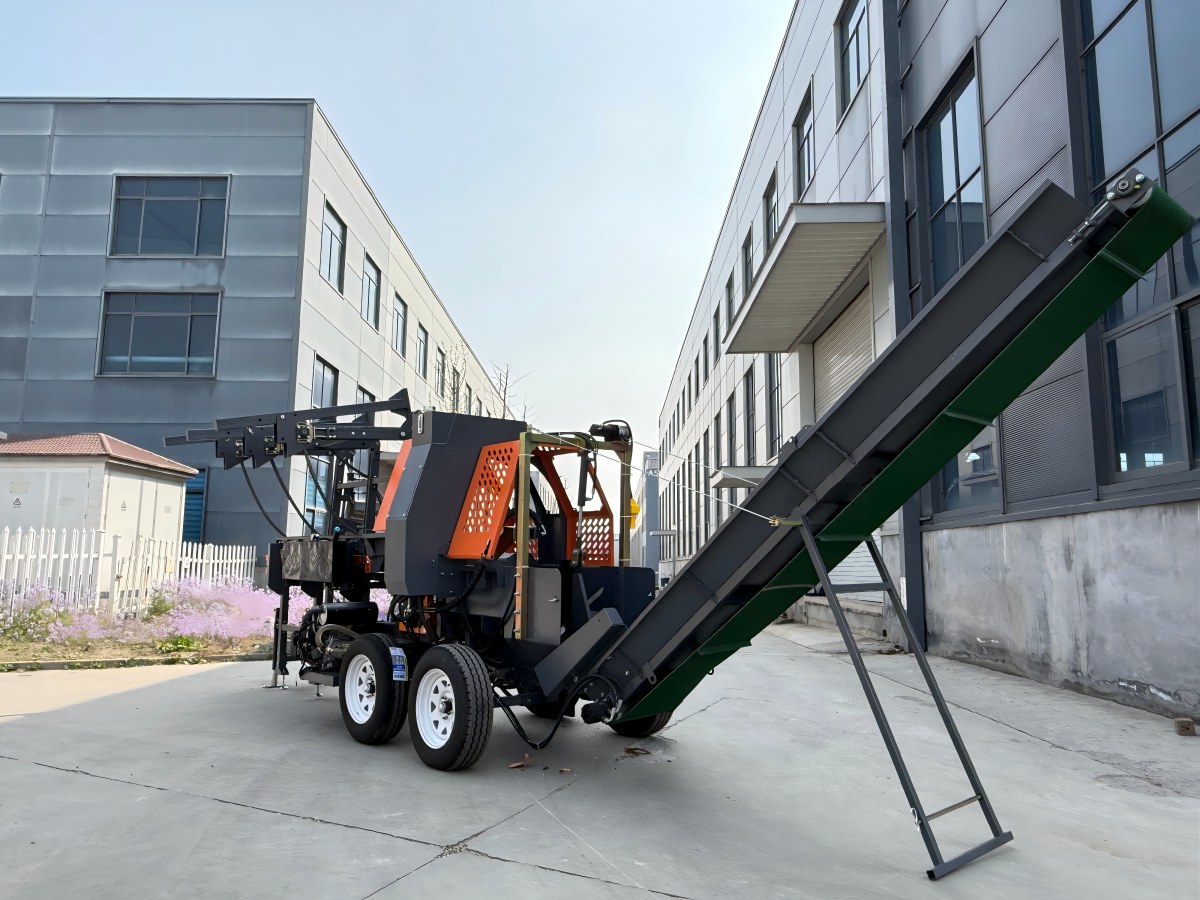
What Should You Consider When Choosing a Firewood Processor?
Once you decide to consider a firewood processor, look at the material and production conditions of your business.
Log diameter: Make sure the machine can handle the size of logs you process regularly, especially if large hardwood is involved.
Wood species: Hardwood and softwood can behave differently during cutting and splitting. Splitting force and machine construction should match the application.
Firewood length: Choose a machine that can consistently produce the lengths required by your customers.
Log feeding: A powered log deck can reduce manual handling and improve workflow as production increases.
Conveyor: A conveyor can move finished firewood away from the machine and reduce repeated handling.
Firewood Processor vs Log Splitter: Quick Comparison
| Log Splitter | Firewood Processor | |
| Main function | Splits pre-cut logs | Cuts and splits logs |
| Typical input | Cut rounds | Full-length logs |
| Cutting | Separate chainsaw/cutter | Integrated |
| Manual handling | Higher | Lower |
| Initial investment | Lower | Higher |
| Production scale | Small to medium | Medium to commercial |
| Best suited for | Startups and small suppliers | Commercial firewood businesses |
Frequently Asked Questions
Is a firewood processor better than a log splitter?
For commercial production, a firewood processor generally provides a more efficient workflow because it combines cutting and splitting and reduces manual handling. A log splitter is often more economical for small-scale operations.
Can I start with a log splitter and upgrade later?
Yes. Many firewood businesses start with a chainsaw and log splitter and upgrade when production demand and labor requirements increase.
Can a firewood processor handle hardwood?
Yes, provided the machine is designed for the required log diameter and splitting conditions.
How many cords can a firewood processor produce per hour?
Output varies by machine and operating conditions. Log size, species, cutting length, feeding method and operator experience all affect actual production.
Conclusion
A log splitter and a firewood processor can both be effective choices, but they serve different production needs.
For small-scale and startup firewood businesses, a log splitter is often the more economical choice. For commercial operations where production, labor or future growth has become a constraint, a firewood processor can provide a more efficient and scalable workflow.
The decision should consider more than annual production. Log diameter, wood species, firewood length, labor availability, customer demand and future growth all matter.
Jierui Machinery provides firewood processing equipment for firewood suppliers, forestry operations, farms and commercial wood-processing businesses. Our equipment can be configured according to log size, wood species, firewood length and production requirements.
Contact Jierui Machinery to discuss a firewood processing solution for your operation.