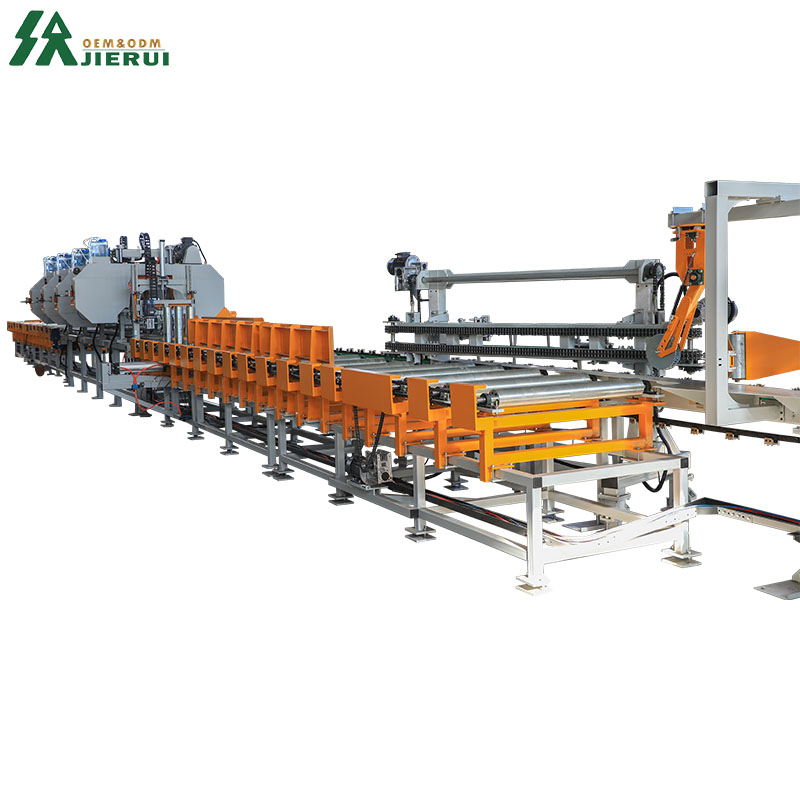
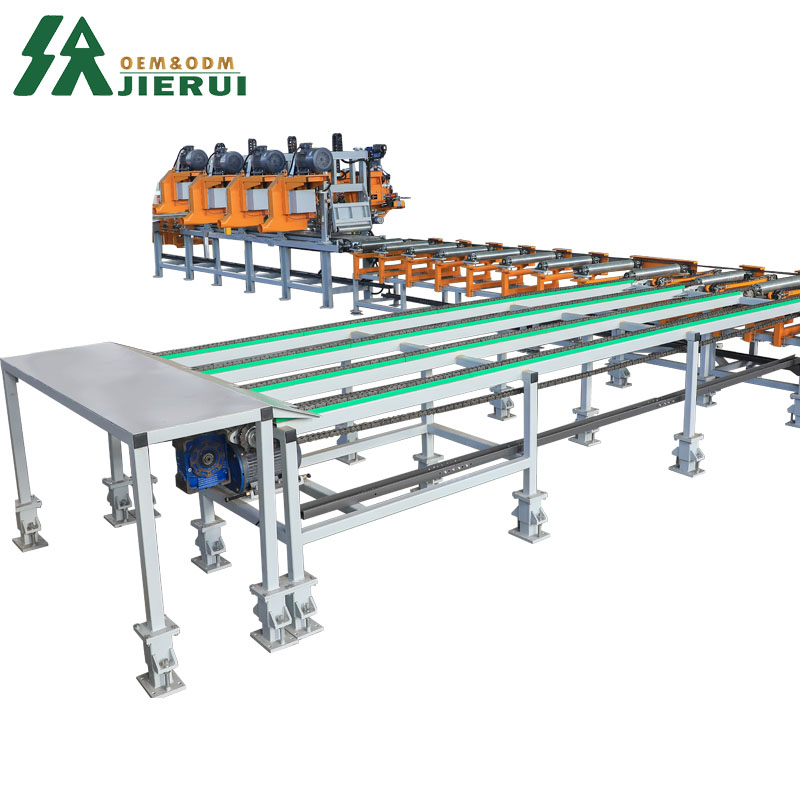
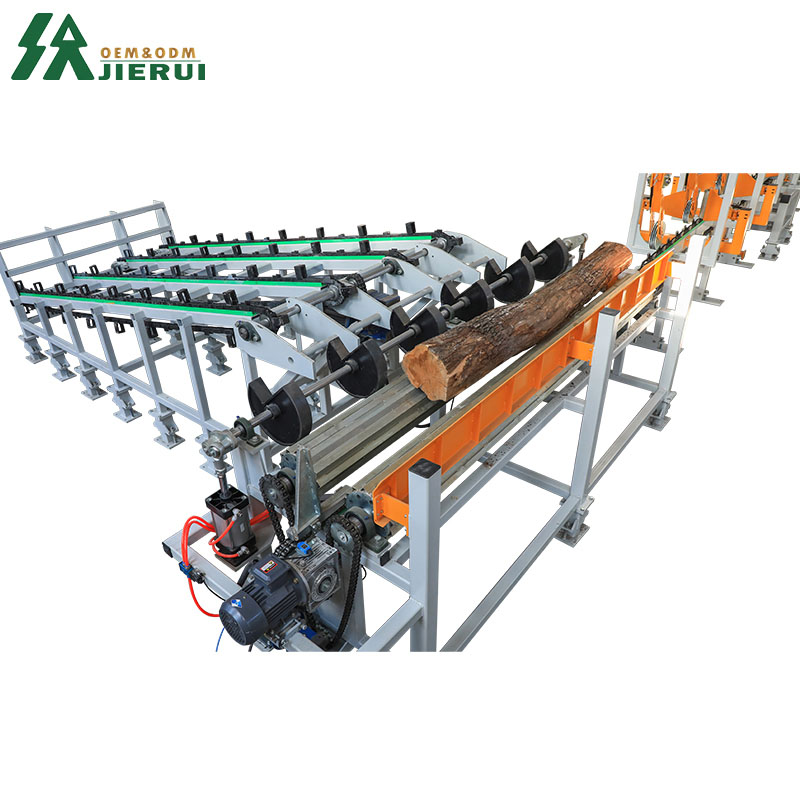
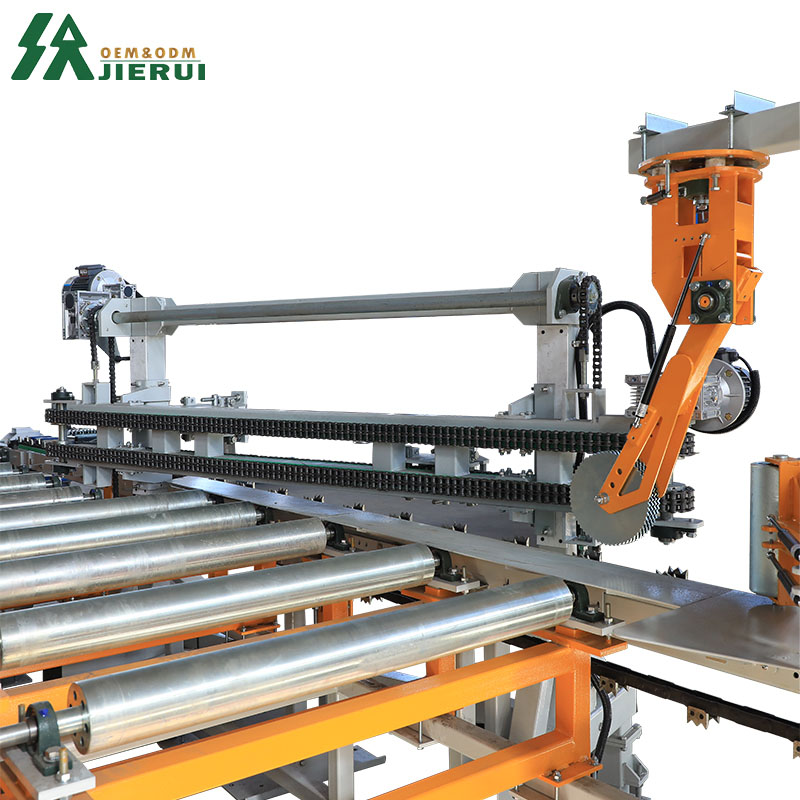
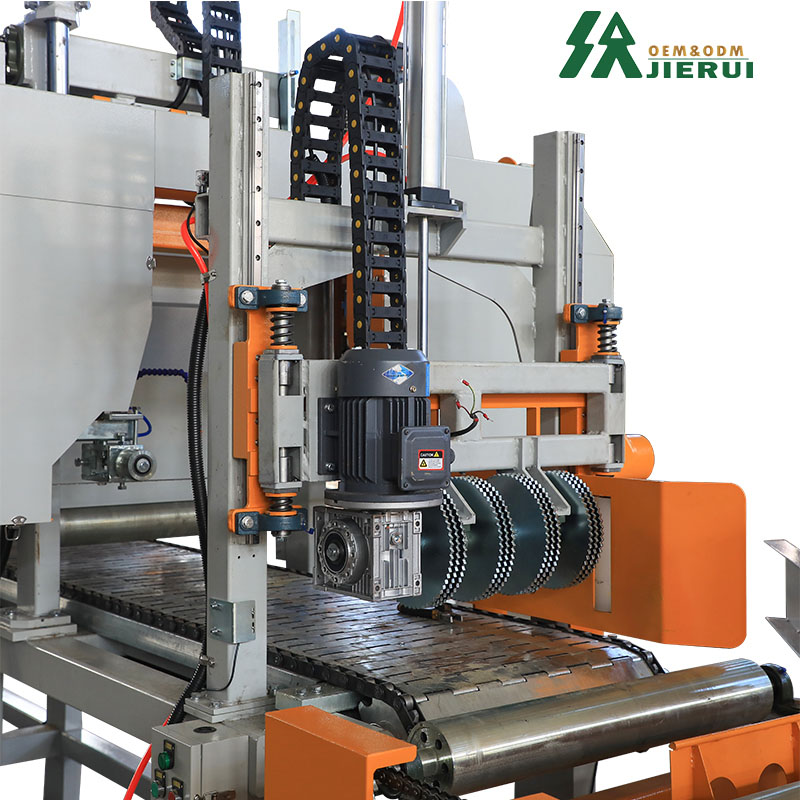
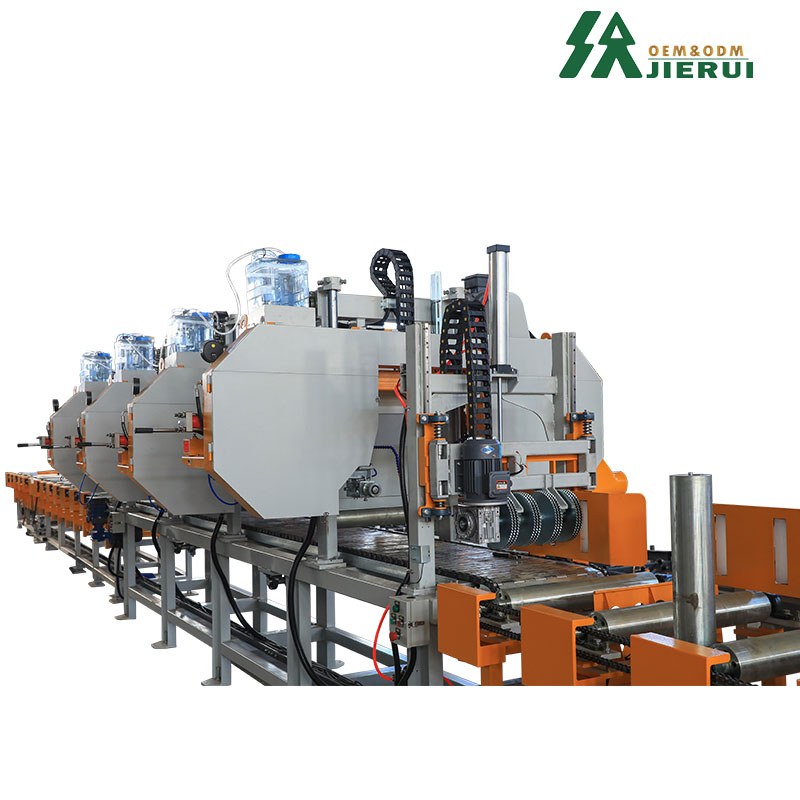
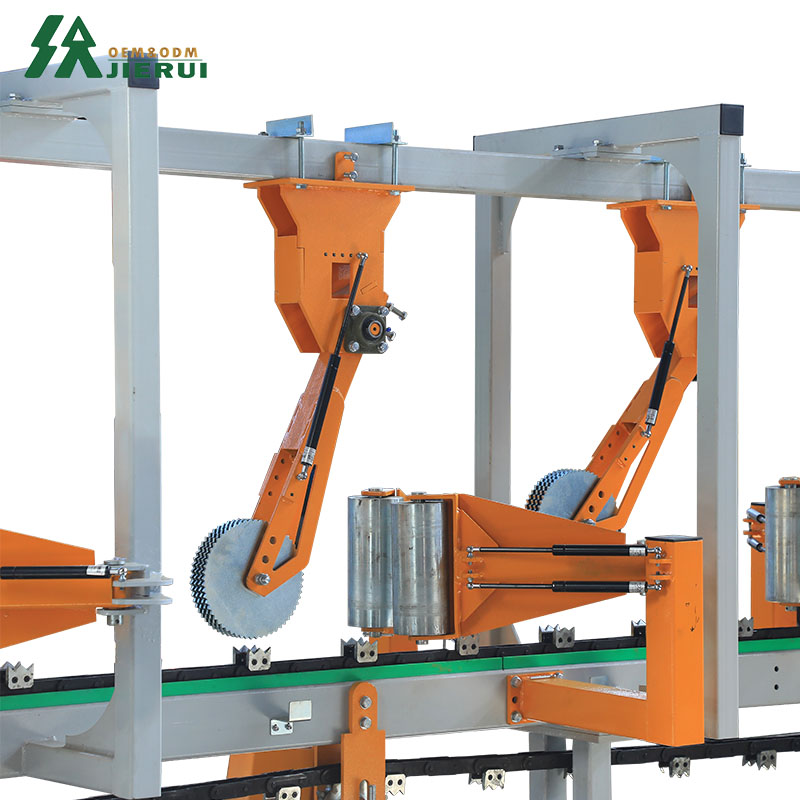
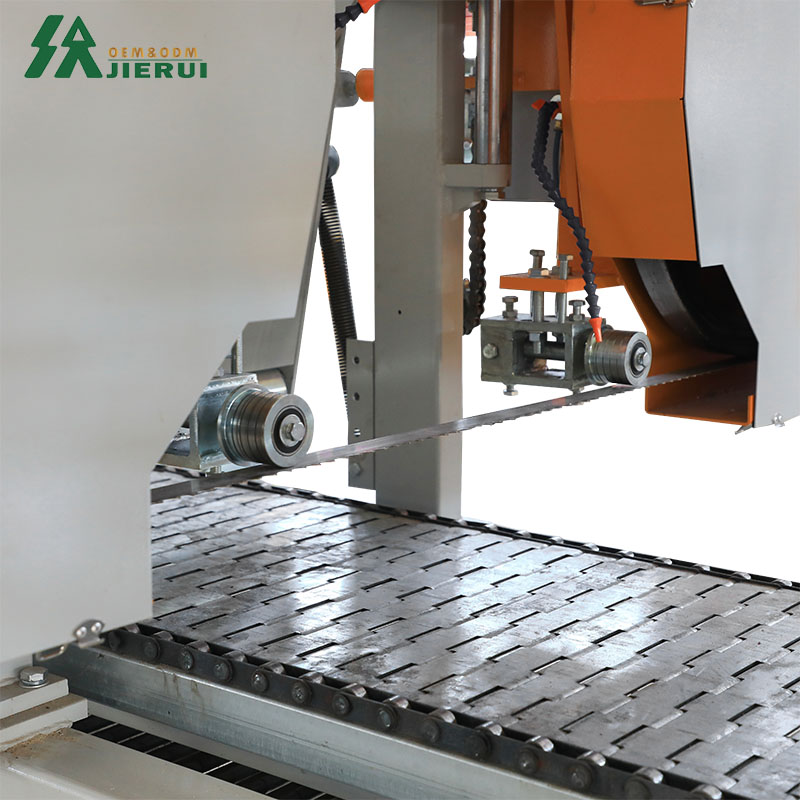
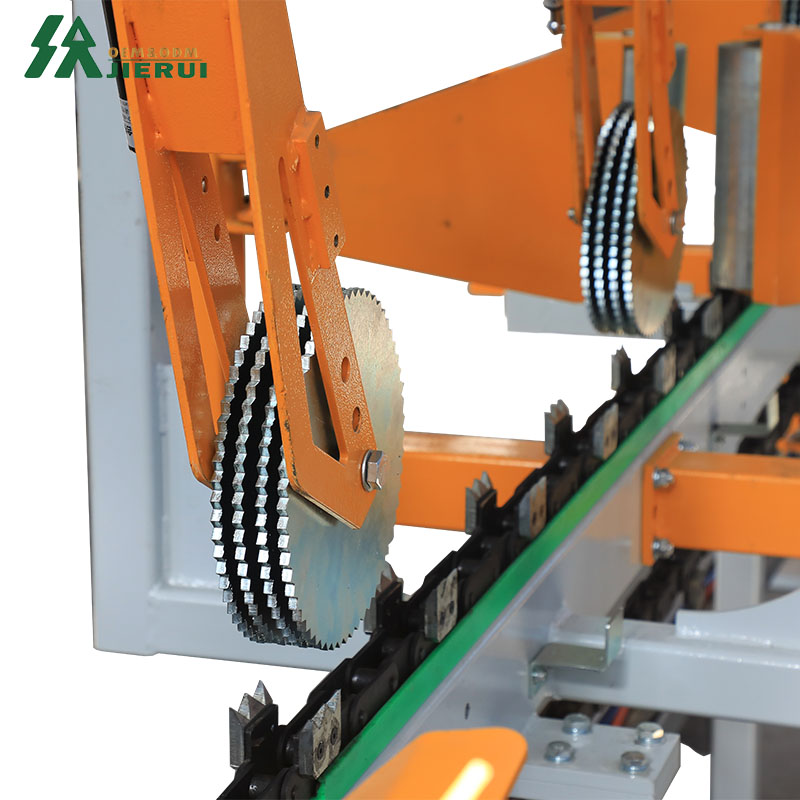
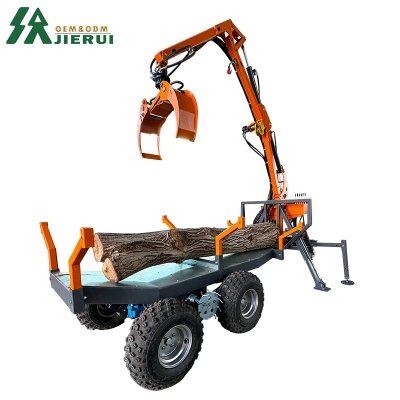
A log loading rack holds and organizes logs before they enter the sawmill line. It allows easy staging, stable positioning, and smooth transfer to the feeding system, reducing manual handling and improving workflow efficiency.
Large Automatic Sawmill Line For Wood Cutting Machine
Cost-Efficient: Streamlined design lowers energy use and production cost.
High Yield: Optimized cutting paths maximize usable lumber.
Simple Operation: Automated feeding, cutting, and conveying reduce manual involvement.
Customizable: Can be configured to match different production requirements.
Make an inquiry will get the best shipping quotation
JR1000
$100,000.00
JR1000
$100,000.00
Product Details
JIERUI Sawmill Line – Industrial High-Yield Wood Processing Solution
JIERUI’s industrial sawmill lines are engineered for high-volume, high-precision, and low-cost log processing. Designed for factories, timber yards, and large-scale wood production operations, our complete lines integrate cutting, conveying, sorting, and automation to deliver maximum output with minimal labor.
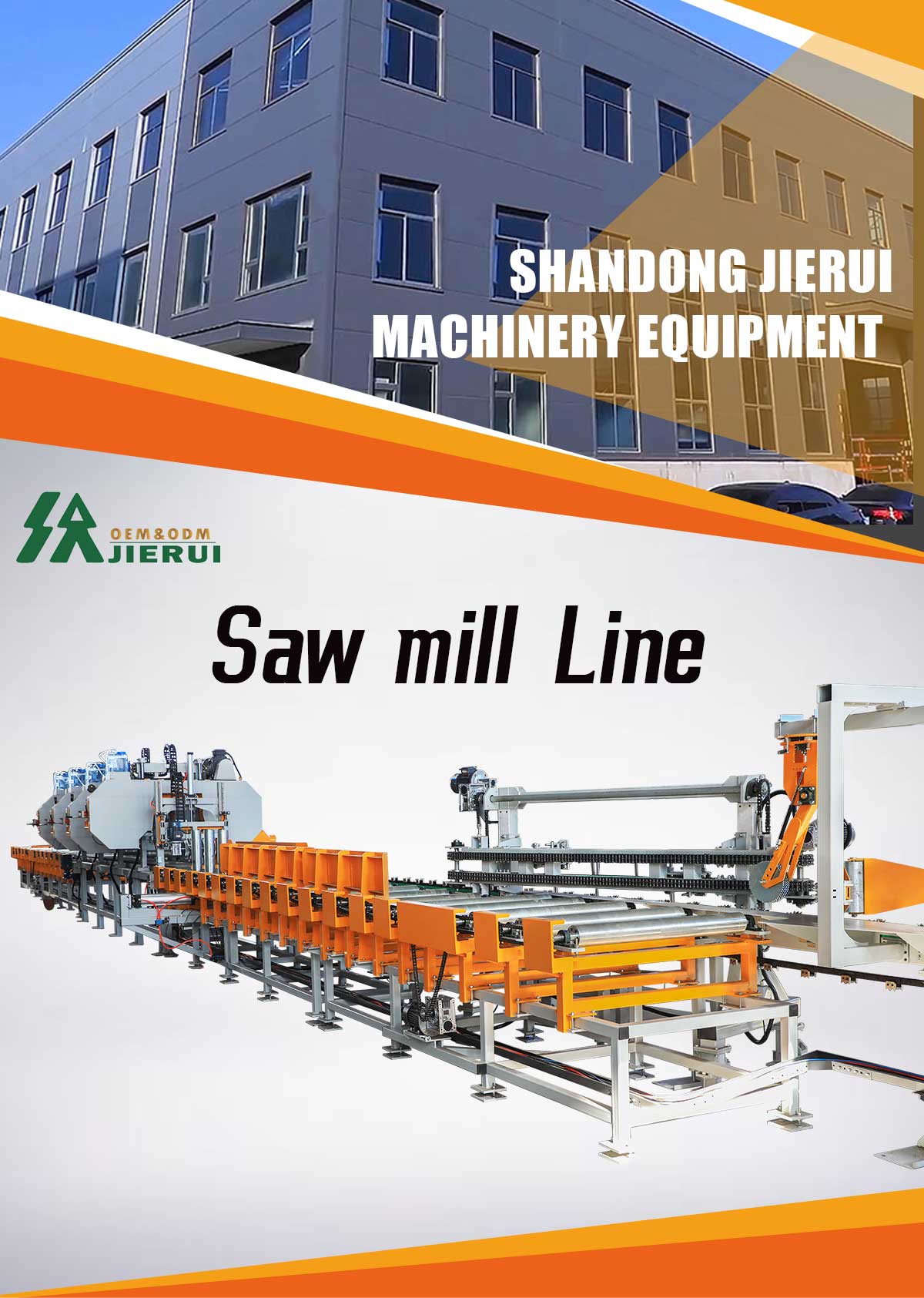
Increased Efficiency With High-Volume, Simple-Design, Low-Cost Sawmill Line Equipment
JIERUI industrial sawmilling equipment delivers high yield, simple design, and low production cost, providing a complete sawing solution that can process logs without sorting or peeling. The JIERUI industrial sawmill line is ideal for operations with limited production space, offering low energy consumption and significantly improved high-volume sawing efficiency.
The JIERUI industrial engineering team has extensive global experience in designing, manufacturing, and installing custom sawmilling production lines. With strong international project capabilities, we help clients build reliable and efficient high-volume wood processing systems tailored to their specific needs.
Advantages of the JIERUI Saw mill Line
1. Increased Log Diameter Capacity – Up to 45 cm
The JIERUI industrial sawmill line can process logs up to 45 cm in diameter, while many competitors are limited to around 35 cm.
Processing larger logs provides major benefits:
Lower cost per cubic meter
Higher yield per log
Greater flexibility in sourcing raw materials
2. No Log Sorting Required
The production line can process logs ranging from 15 cm to 45 cm in diameter without any pre-sorting.
This eliminates the need for:
Additional sorting equipment
Maintenance and repair costs
Extra labor for sorting
Additional space for a sorting area
3. Significant Labor and Cost Savings
Because the system can process unsorted logs with bark, operators benefit from:
Reduced labor requirements
Lower energy consumption
Lower setup and equipment costs
Simplified material flow
Product details
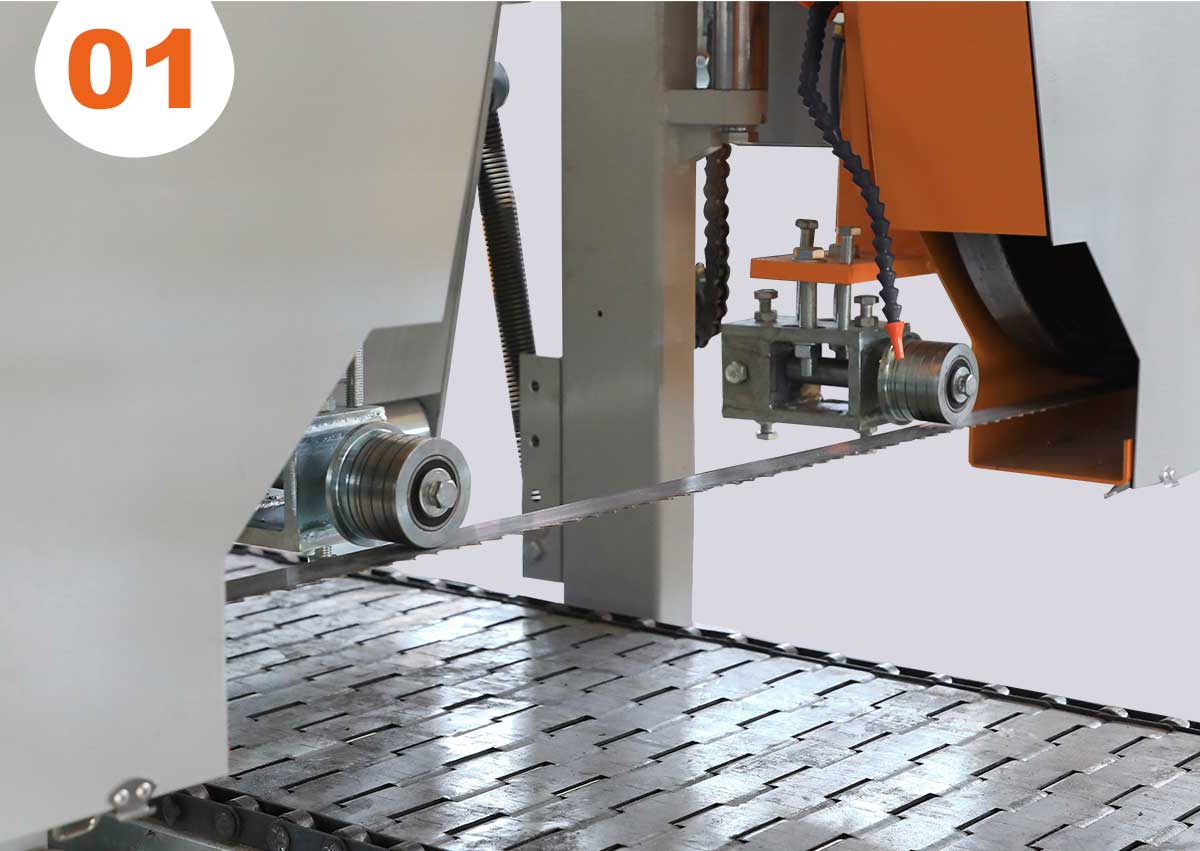
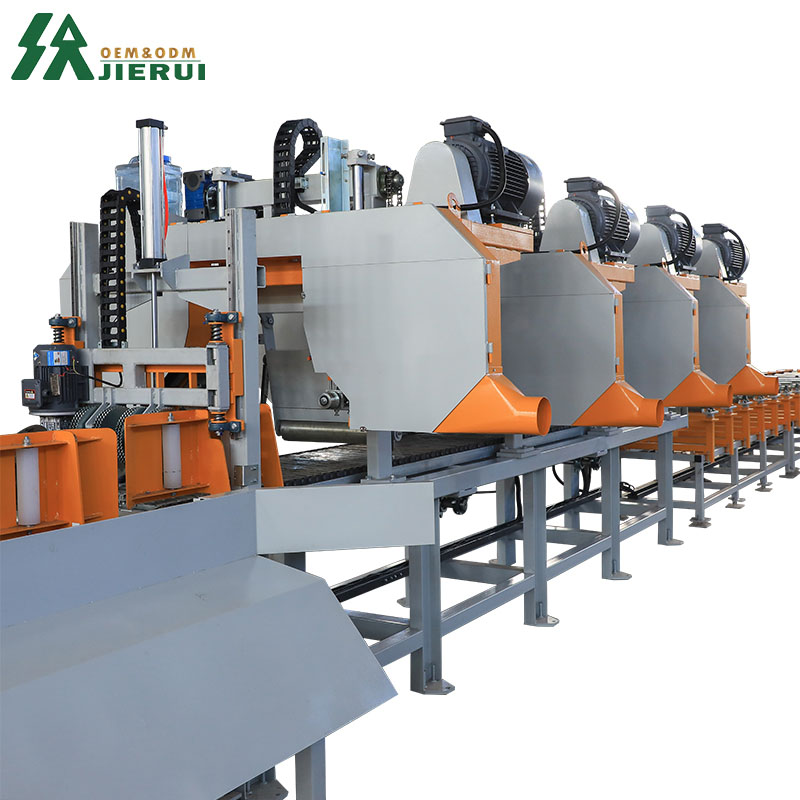
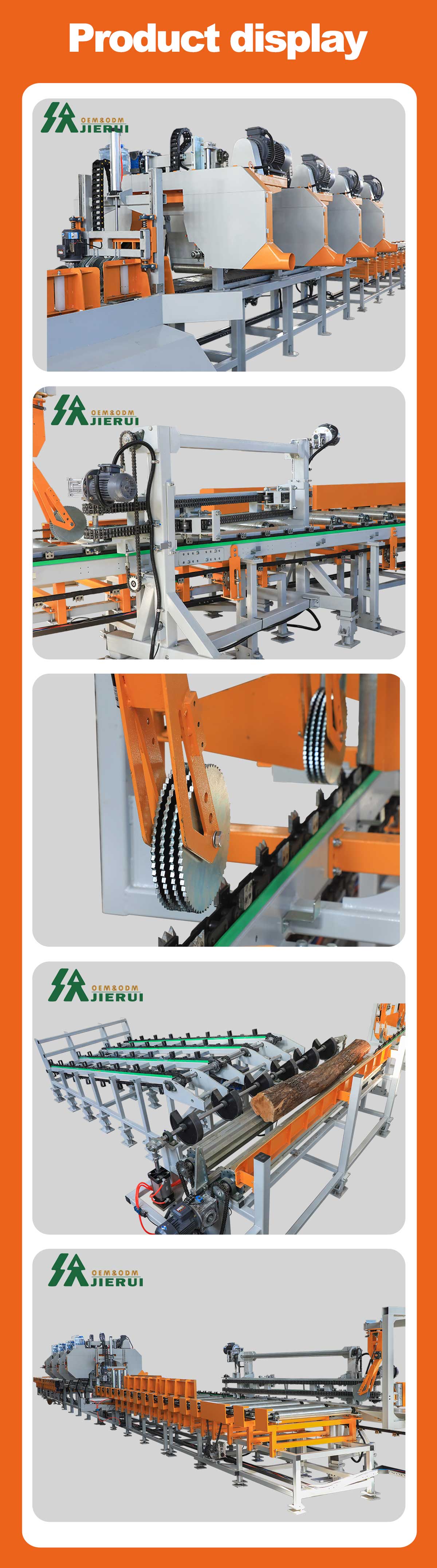
Saw blade roller guide device,Band saw blade cooling system
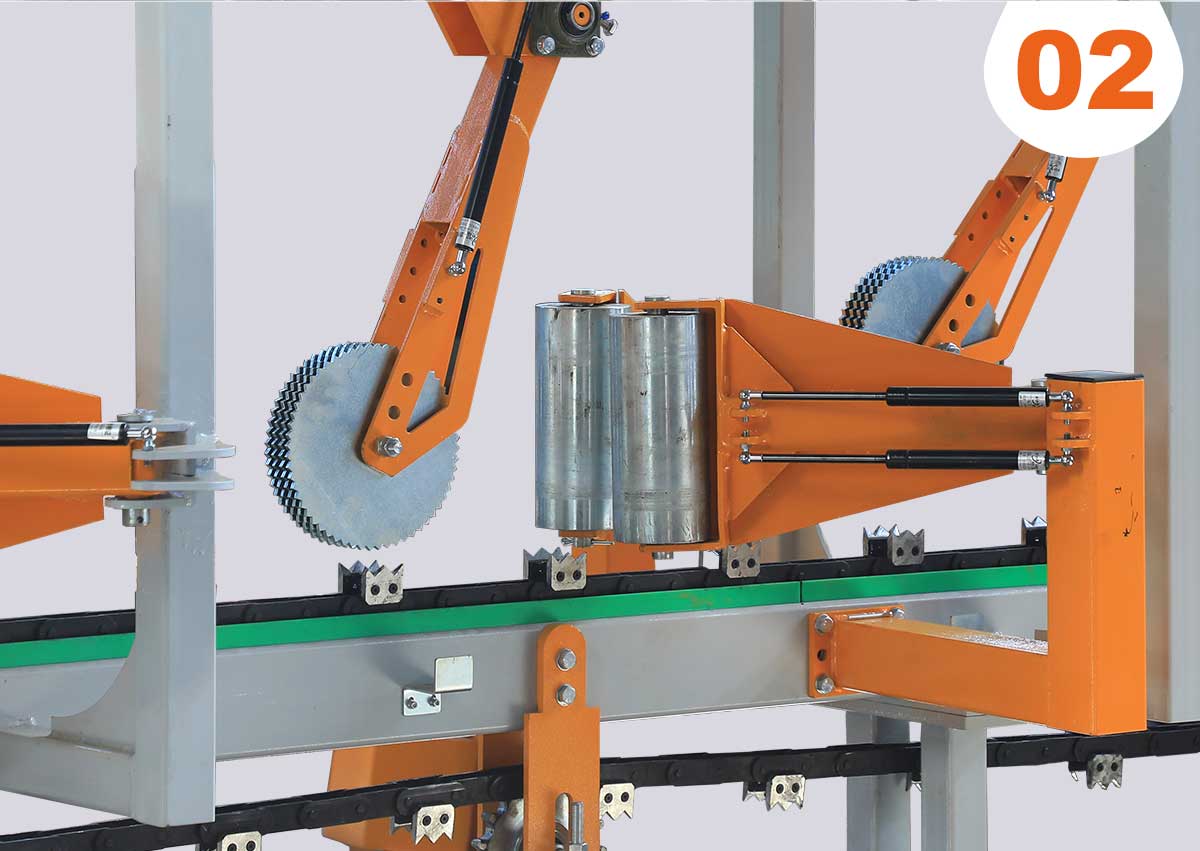
Log Press Wheel
A hydraulic press wheel stabilizes the log during cutting. It applies consistent downward pressure to prevent log movement, ensuring smooth feeding, accurate cuts, and increased safety. The wear-resistant wheel maintains reliable grip even on irregular or bark-covered logs.
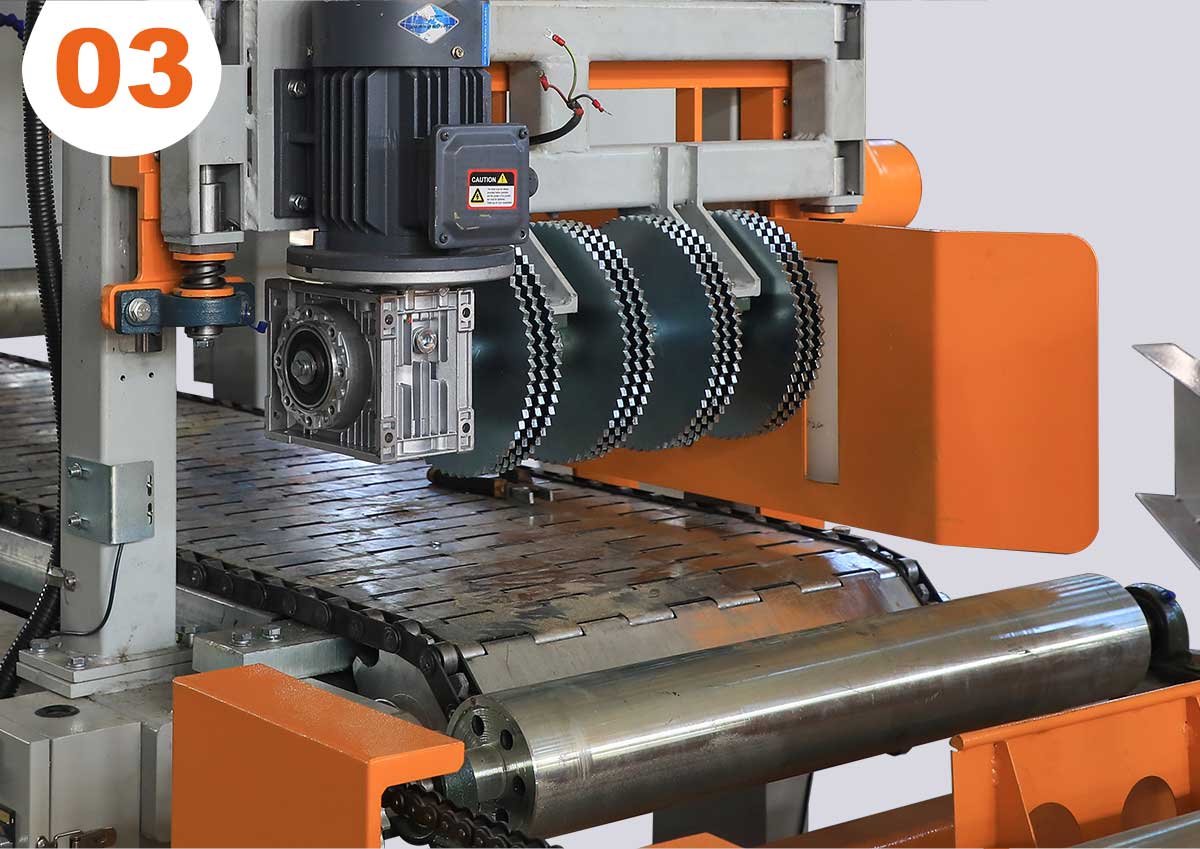
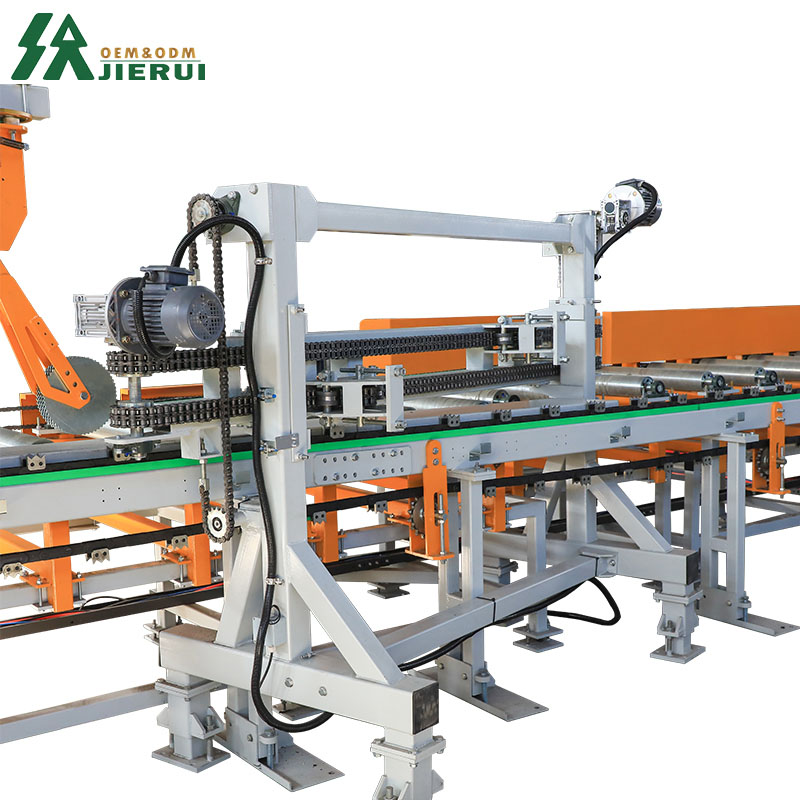
Automatic Log Feeding
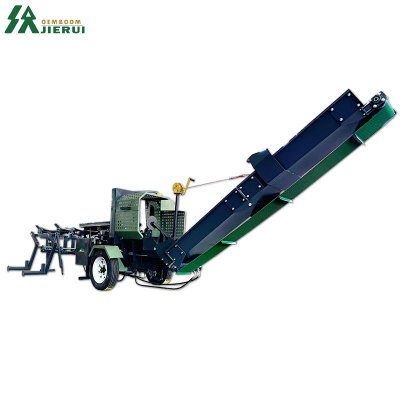
An automatic feeding system uses hydraulic rollers to move logs steadily into the cutting area. It ensures consistent speed, reduces manual handling, improves cutting accuracy, and increases overall production efficiency.
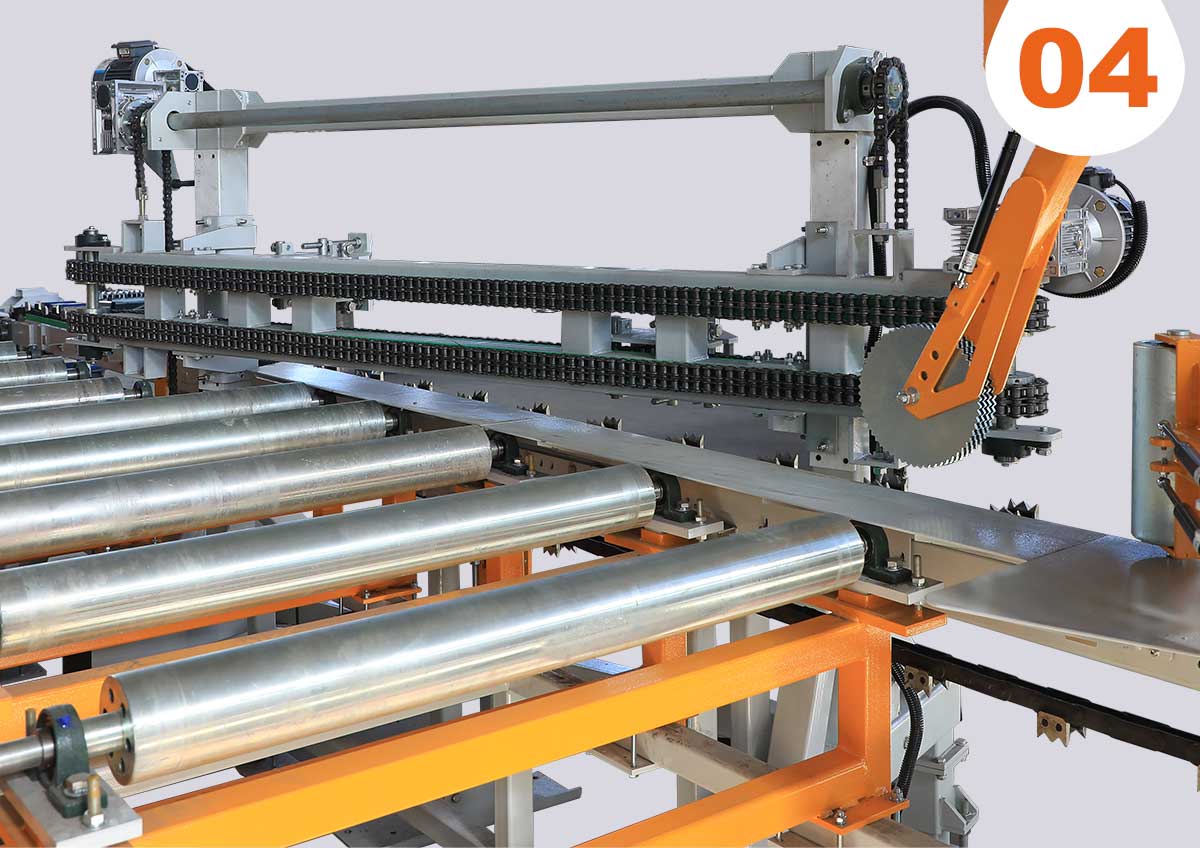
Bark Separator
A bark separator removes loose bark and debris from the log before cutting. This improves cutting accuracy, protects the saw blade from damage, reduces wear, and helps maintain cleaner, more efficient operation throughout the sawing process.
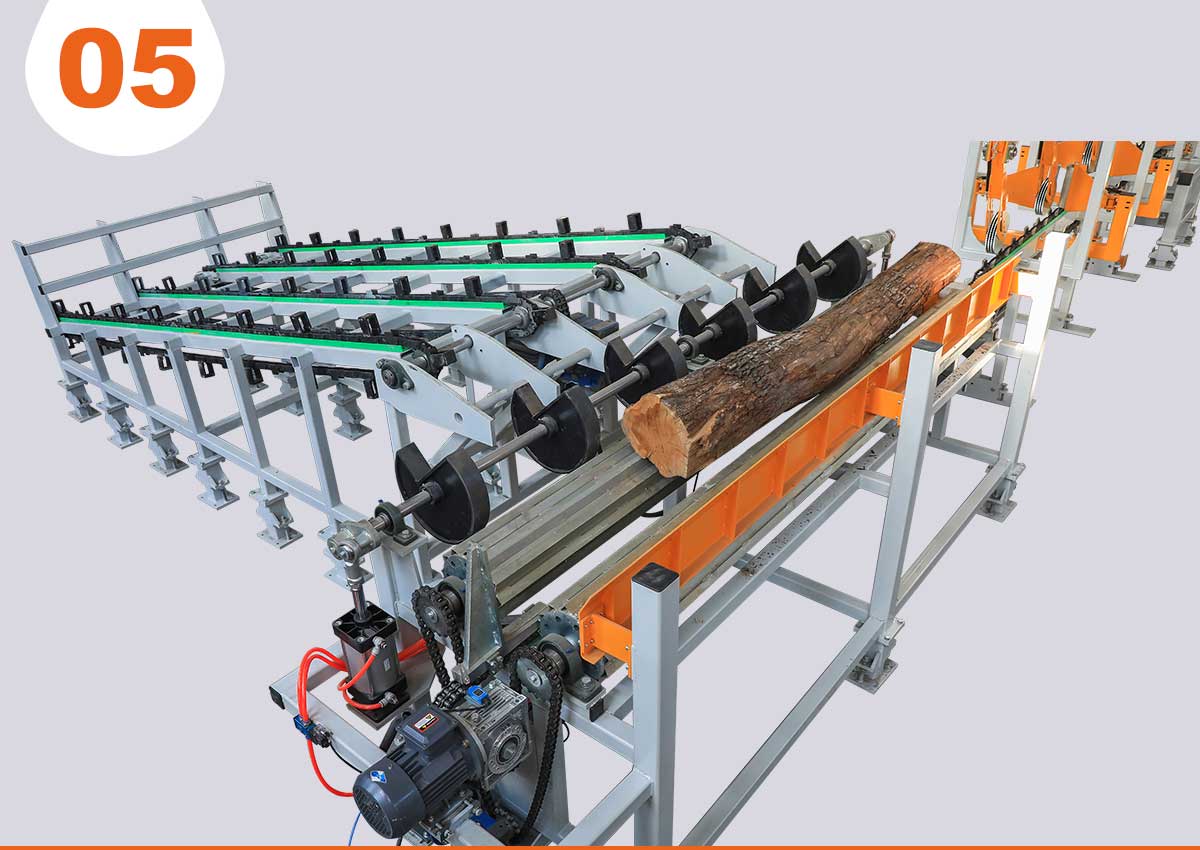
Log Loading Rack
Workflow
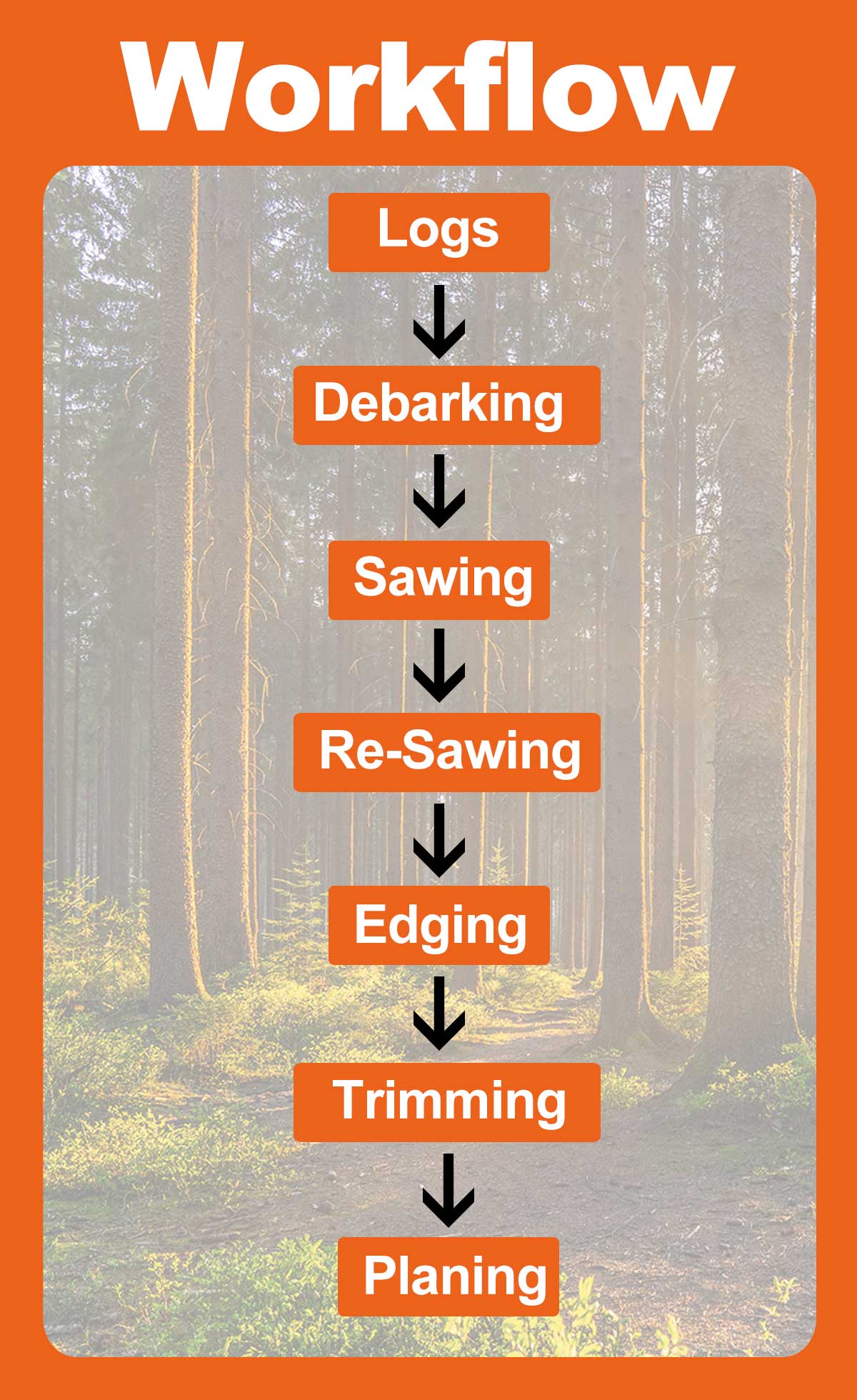
Sawmill Line Workflow: Logs
1. Debarking
* Purpose: Remove the outer bark from the logs. This is essential for clean, high-quality lumber and to prevent debris from
affecting saw blades.
* Process: Logs are fed into a debarking machine, which uses rotating rollers or a mechanical scraper to strip off the bark.
2. Sawing
* Purpose: Cut the logs into rough boards or billets. This is often the first step in transforming a log into usable lumber.
* Process: The log is passed through a sawmill, which can be a band saw, circular saw, or frame saw, depending on the
equipment.
3. Re-Sawing
* Purpose: Further reduce the thickness or dimensions of the boards produced in the sawing step to achieve desired sizes.
* Process: The rough-cut boards are reprocessed in a re-sawing machine, which cuts them into thinner sections or planks.
4. Edging
* Purpose: Trim off the irregular or rough edges of the boards to create a uniform width and improve appearance.
* Purpose: Remove the outer bark from the logs. This is essential for clean, high-quality lumber and to prevent debris from
affecting saw blades.
* Process: Logs are fed into a debarking machine, which uses rotating rollers or a mechanical scraper to strip off the bark.
2. Sawing
* Purpose: Cut the logs into rough boards or billets. This is often the first step in transforming a log into usable lumber.
* Process: The log is passed through a sawmill, which can be a band saw, circular saw, or frame saw, depending on the
equipment.
3. Re-Sawing
* Purpose: Further reduce the thickness or dimensions of the boards produced in the sawing step to achieve desired sizes.
* Process: The rough-cut boards are reprocessed in a re-sawing machine, which cuts them into thinner sections or planks.
4. Edging
* Purpose: Trim off the irregular or rough edges of the boards to create a uniform width and improve appearance.
* Process: The boards are passed through an edging machine that cuts off the excess, often producing straight-edged lumber ready for further processing.
Product display

Come to us for pricing!
Contact us today for a free product brochure containing detailed product information, inspiration and insights.
Leave your messages
Related News
Submitted successfully
We will contact you as soon as possible
Close