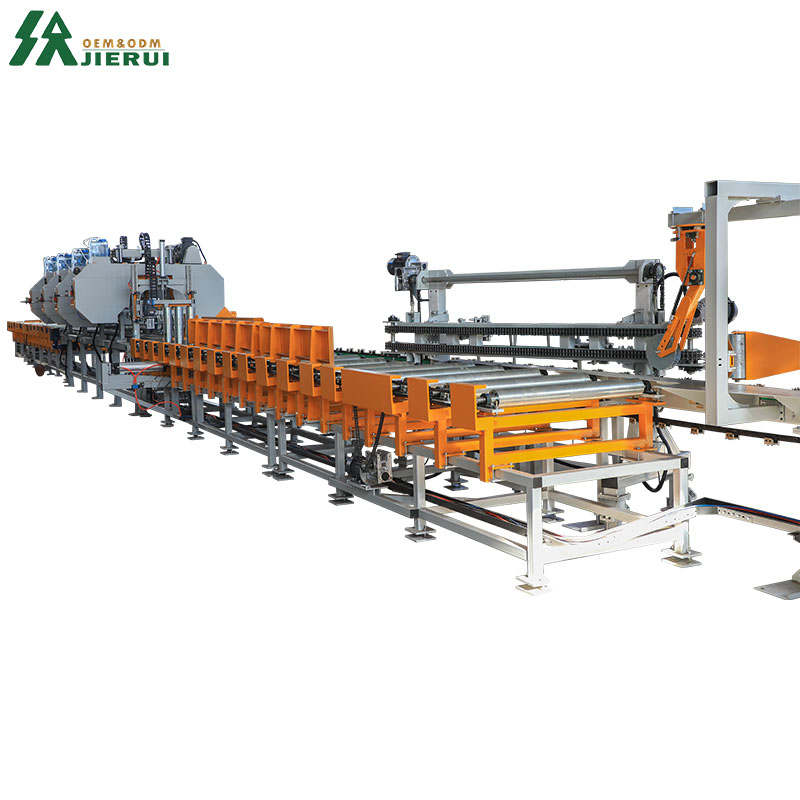
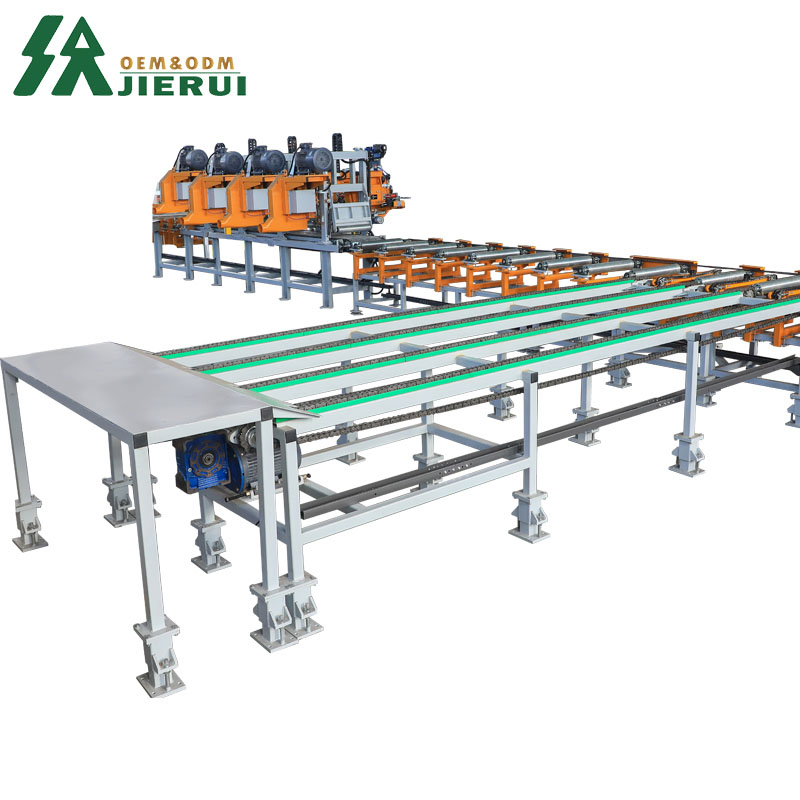
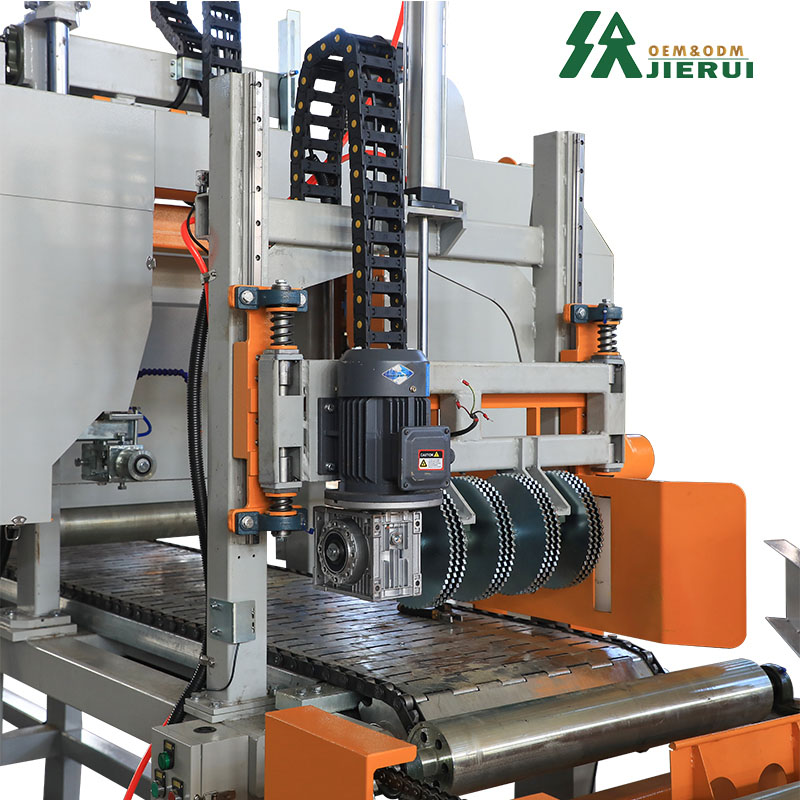
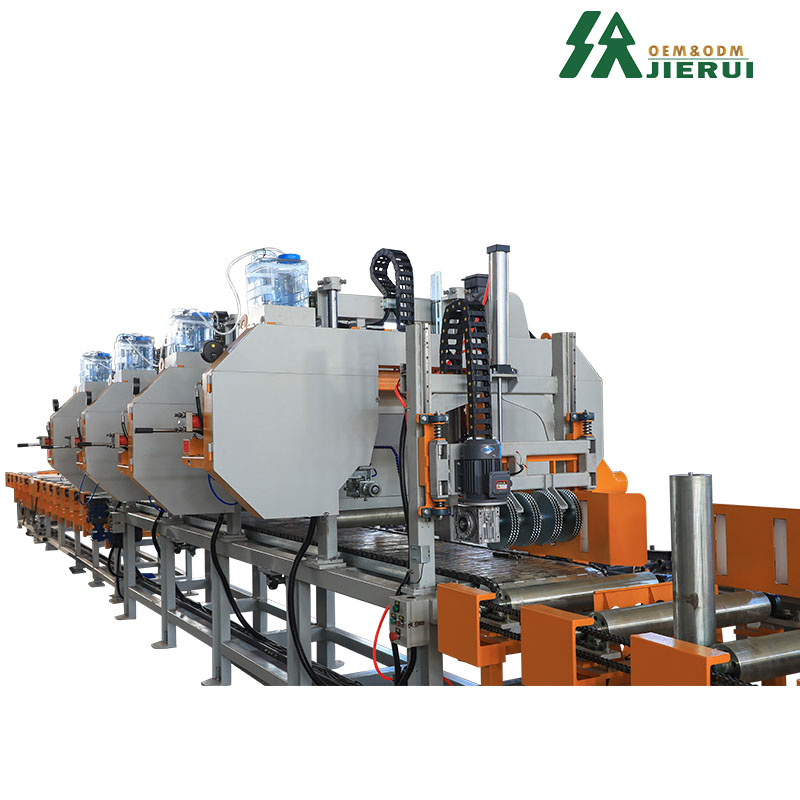
High-Quality Sawmill Line Blade For Wood
Labor Cost Savings
Automation reduces the need for a large workforce, minimizing wage and training costs.Reduced Material Waste
Intelligent optimization ensures maximum yield from each log, reducing scrap and improving sustainability.Lower Maintenance Costs
Built with industrial-grade components and designed for durability, reducing downtime and part replacement.
Make an inquiry will get the best shipping quotation
Sawmill Line – High-Performance Industrial Wood cutting
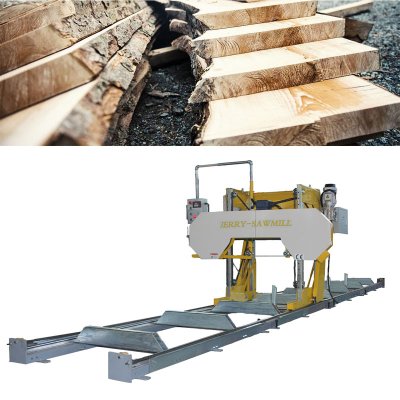
The Sawmill Line is a fully integrated, heavy-duty wood processing solution engineered for high-volume industrial applications. Designed to handle everything from log loading to final lumber output, this automated line combines advanced technology, robust construction, and intelligent systems to maximize efficiency, reduce labor, and improve yield quality.
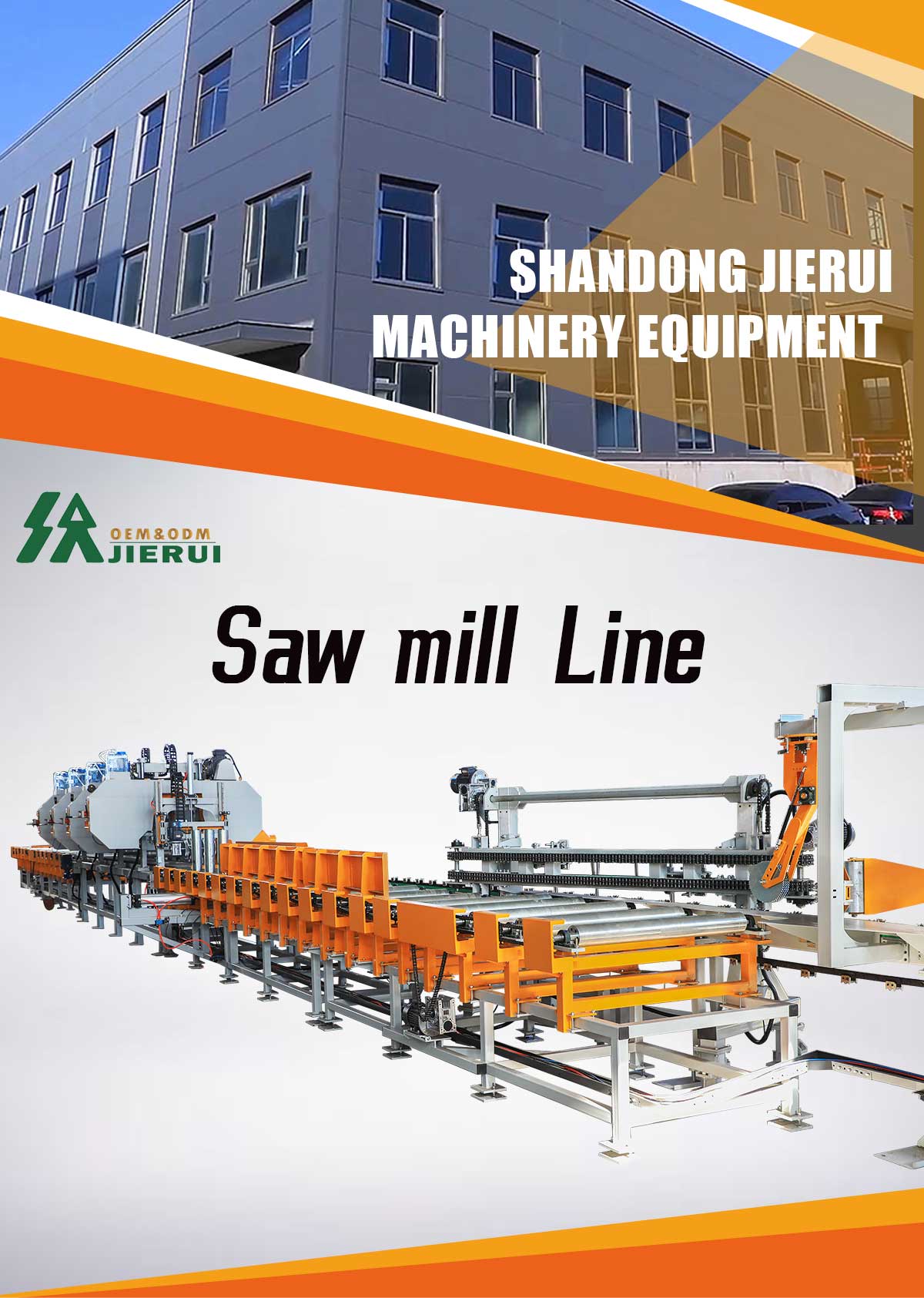
JIERUI Industrial Sawmill Line
High Yield • Simple Design • Low Cost • Maximum Efficiency
JIERUI’s Industrial Sawmill Line is designed for high-volume wood processing with minimal investment and space requirements. Built on the principles of efficiency, simplicity, and profitability, our systems are ideal for sawmill operators seeking to reduce production costs, save energy, and maximize output.
Unlike traditional systems, JIERUI sawmill lines do not require log sorting or peeling, reducing setup complexity and cost. Whether you're operating in a compact facility or aiming to upgrade an existing line, JIERUI’s equipment is engineered for low energy consumption, high yield, and reliable operation.
Key Advantages of the JIERUI Industrial Sawmill Line
1. Increased Log Diameter Capacity – Up to 45 cm
Most sawmill lines on the market are limited to processing logs up to 35 cm in diameter. JIERUI equipment increases that threshold to 45 cm, allowing you to process larger logs that produce more wood per piece—significantly lowering cost per cubic meter and increasing total output.
2. No Log Sorting Required
Process mixed log sizes from 15 cm to 45 cm in diameter without pre-sorting. Eliminate the need for costly sorting systems, save on energy and maintenance, and free up valuable space that would otherwise be used for sorting operations.
3. Lower Labor and Operational Costs
JIERUI systems process logs with bark intact, avoiding the need for debarking equipment or additional labor. This translates to:
Reduced personnel requirements
Lower equipment maintenance costs
Smaller production footprint
Substantial savings in energy and overhead
Product details
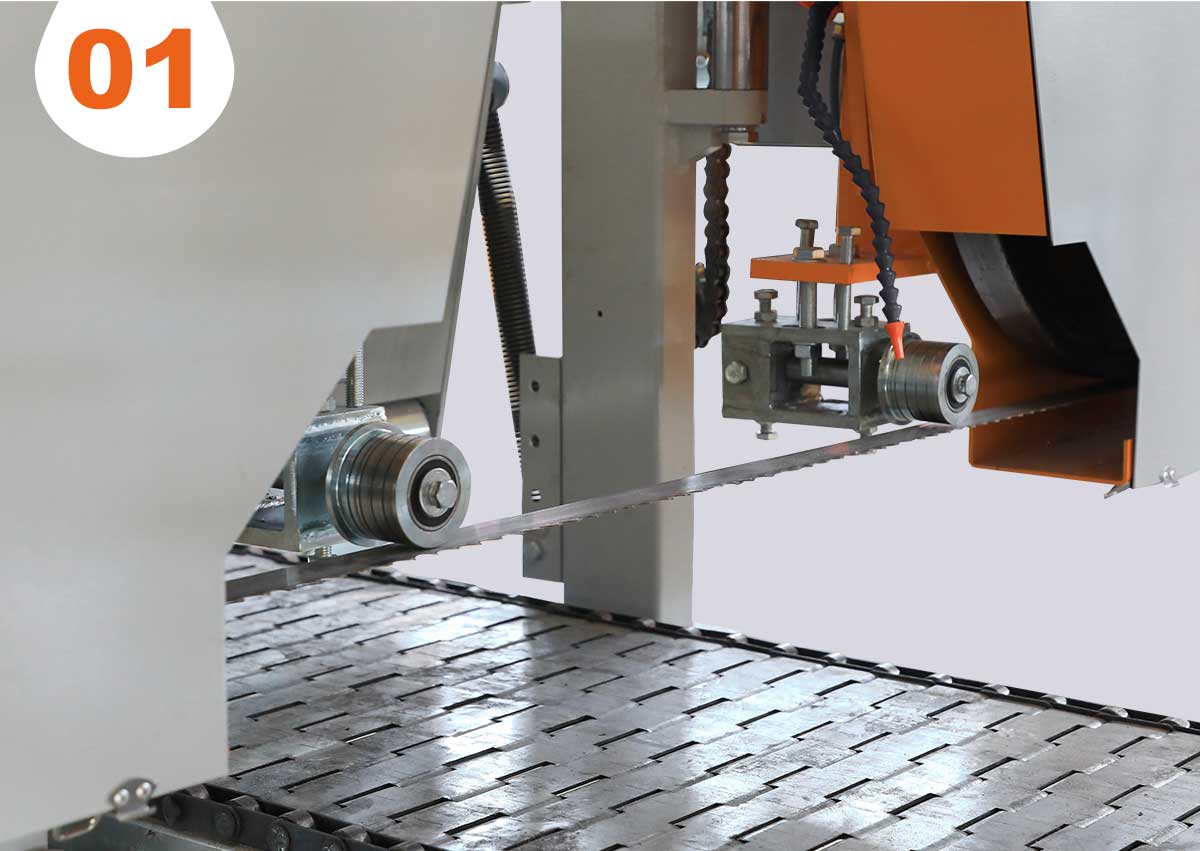
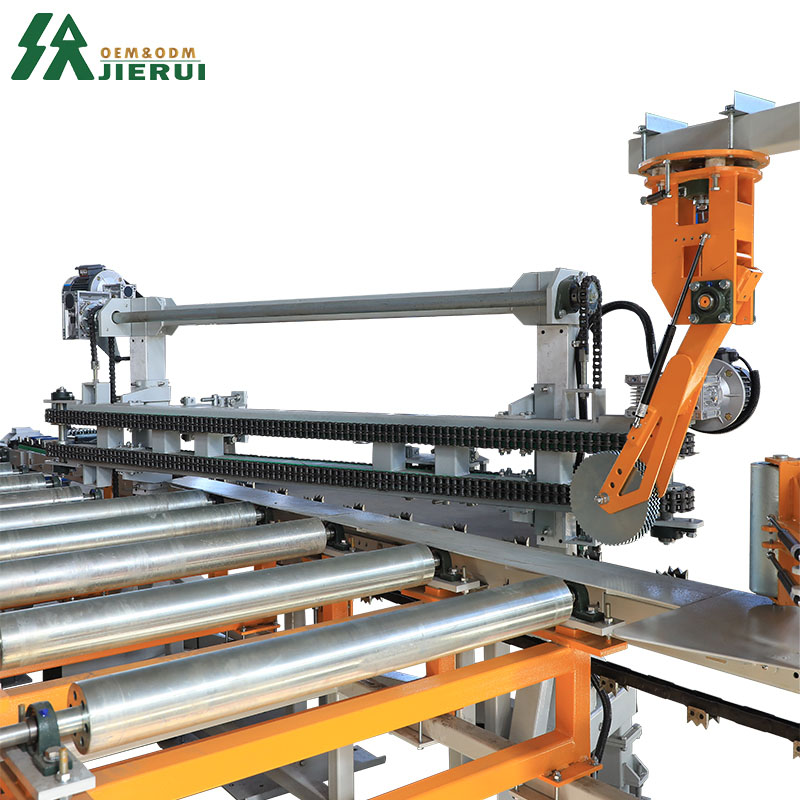
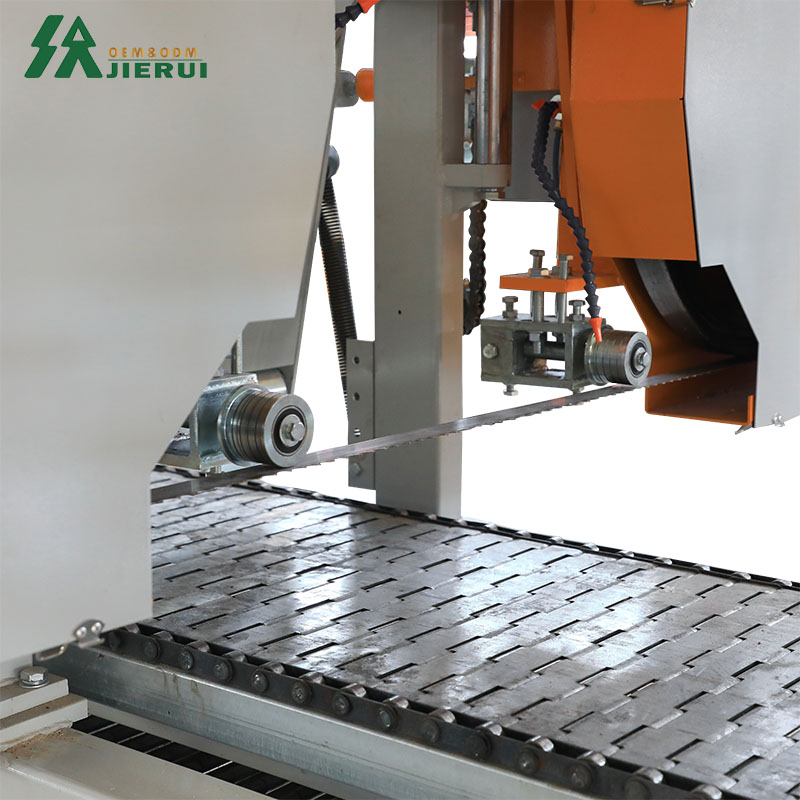
Saw blade roller guide device,Band saw blade cooling system
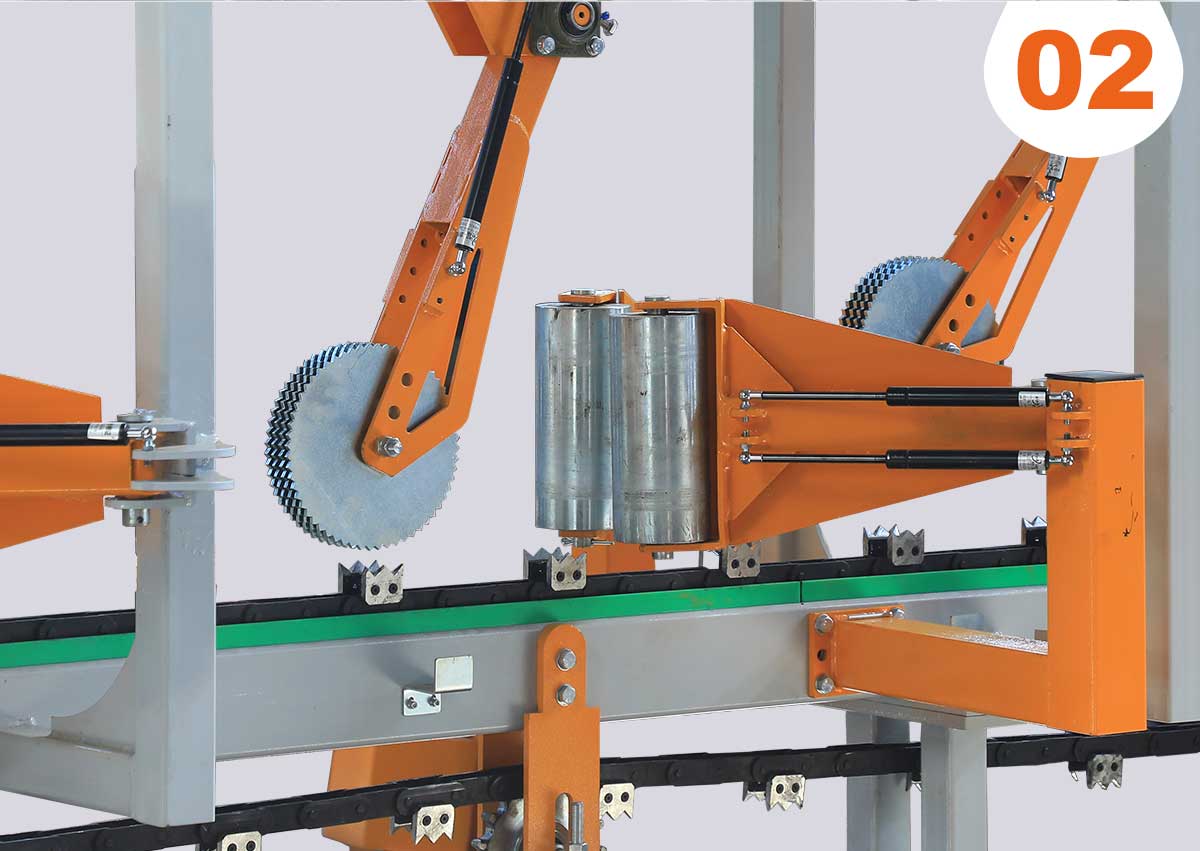
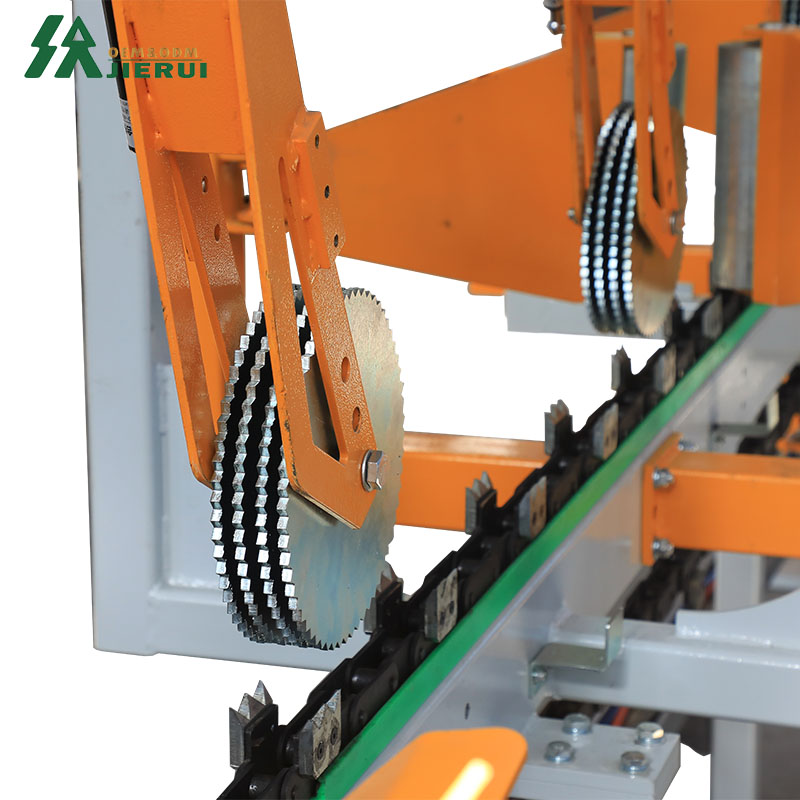
Log Press Wheel
The Log Press Wheel is a critical component in stabilizing and feeding logs through the saw during cutting. It ensures consistent contact between the log and the conveyor or saw blade, especially when dealing with irregularly shaped or uneven logs.
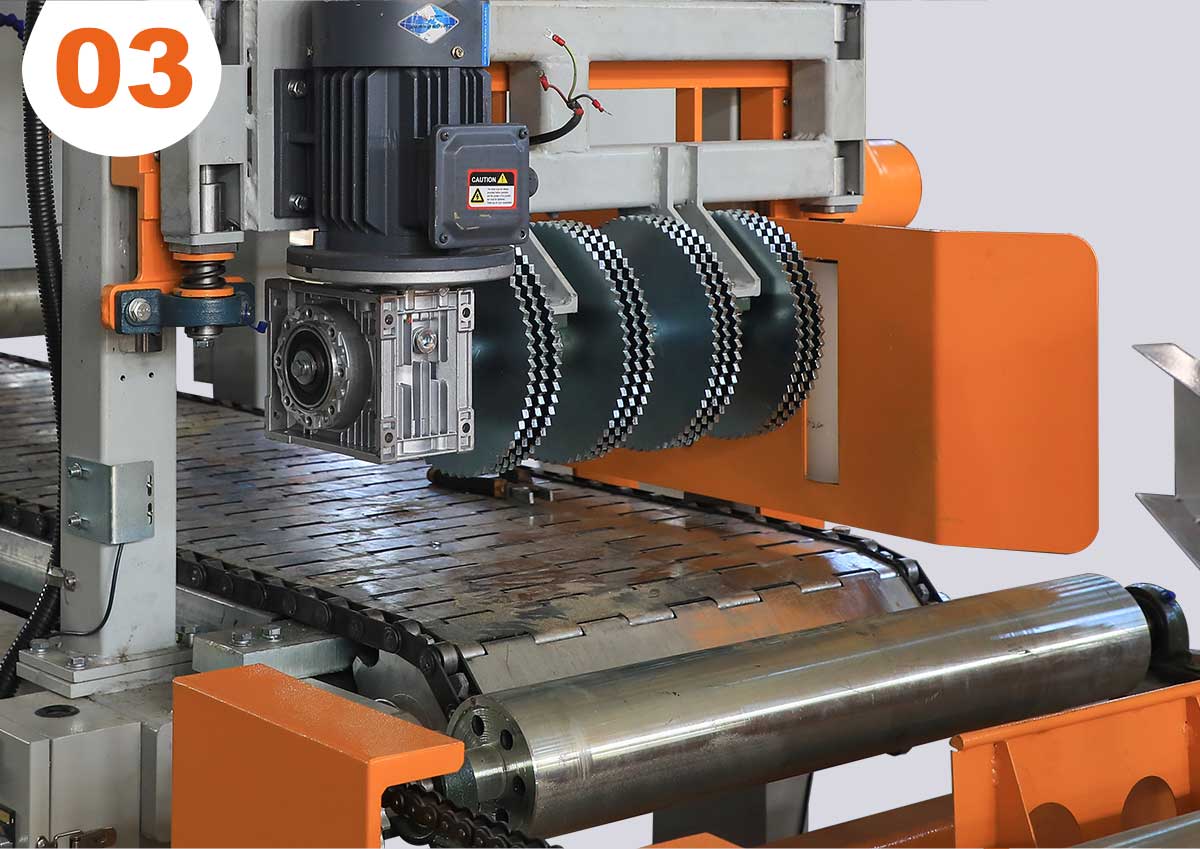
Automatic Log Feeding System
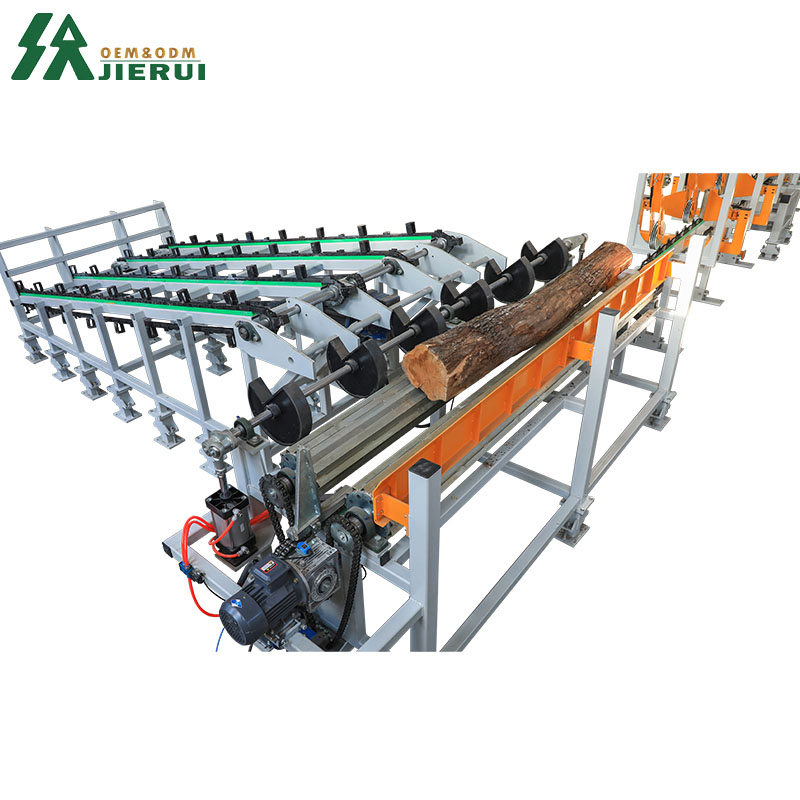
The Automatic Log Feeding System is a core feature of JIERUI’s high-efficiency sawmill lines. It ensures continuous, consistent, and safe log transportation from the infeed deck to the saw blade
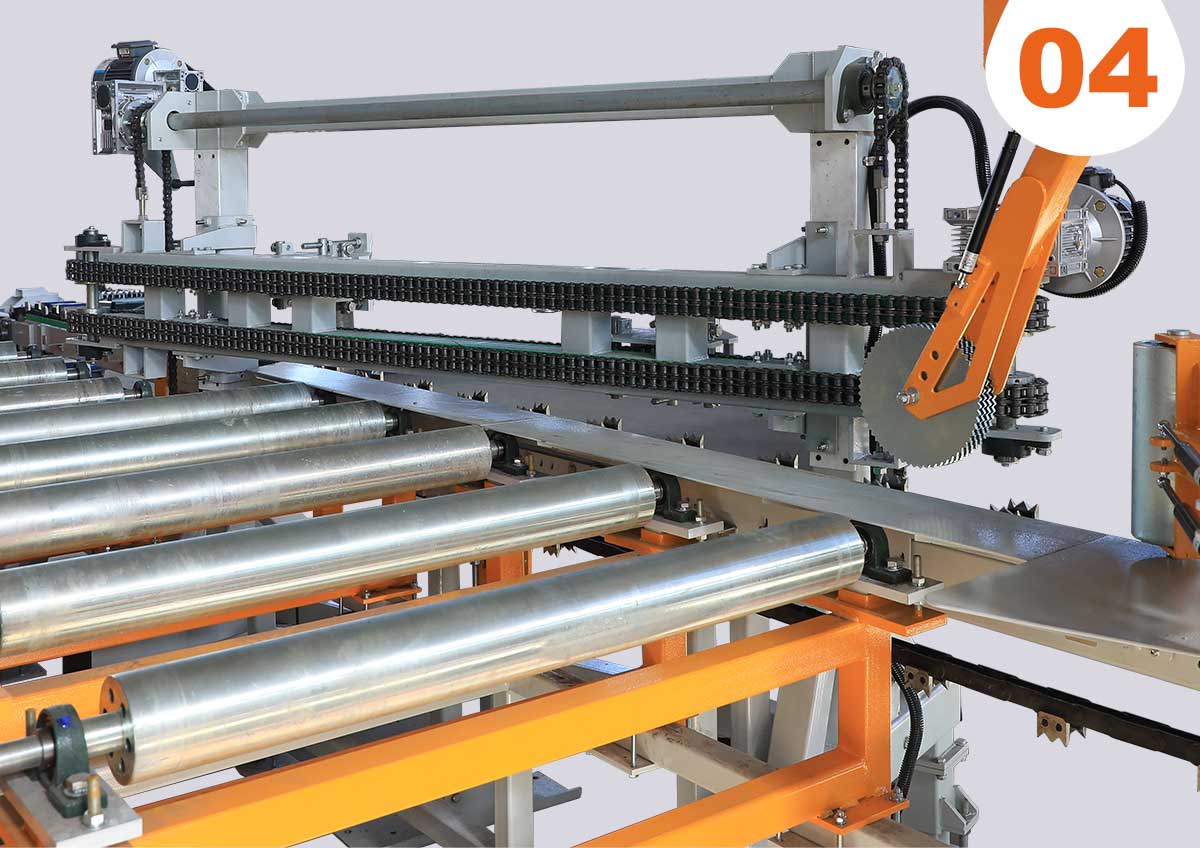
Bark Separator
The Bark Separator is an optional but valuable component in modern sawmill lines, designed to remove bark and loose debris from logs before or after cutting. This system improves saw blade longevity, cutting accuracy, and overall cleanliness of the production line—especially when processing raw, unpeeled logs.
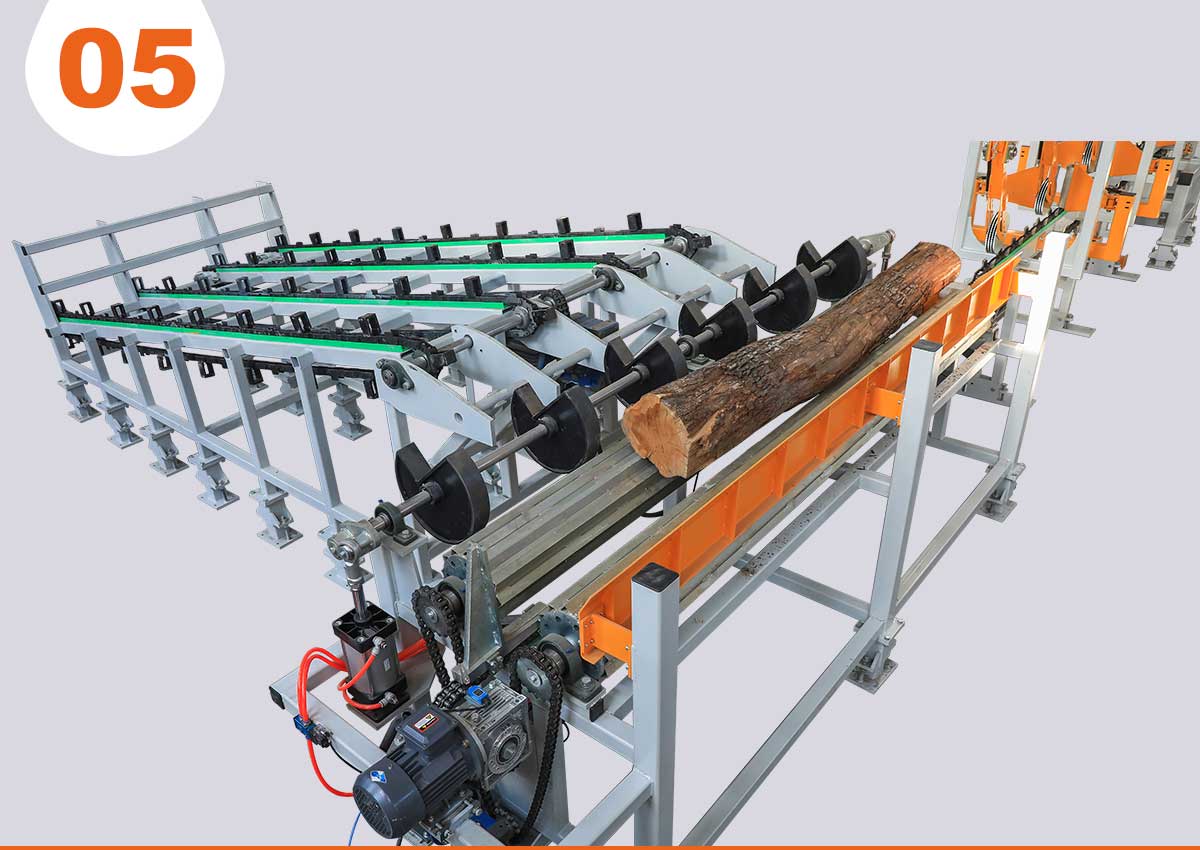
Log Loading Rack
The Log Loading Rack is the first step in an efficient, automated wood processing line. Designed for durability and continuous operation, it allows for easy storage, staging, and feeding of logs into the sawmill’s infeed system. Built to handle a variety of log sizes and lengths, the JIERUI Log Loading Rack ensures a smooth start to high-volume sawing operations.
Workflow
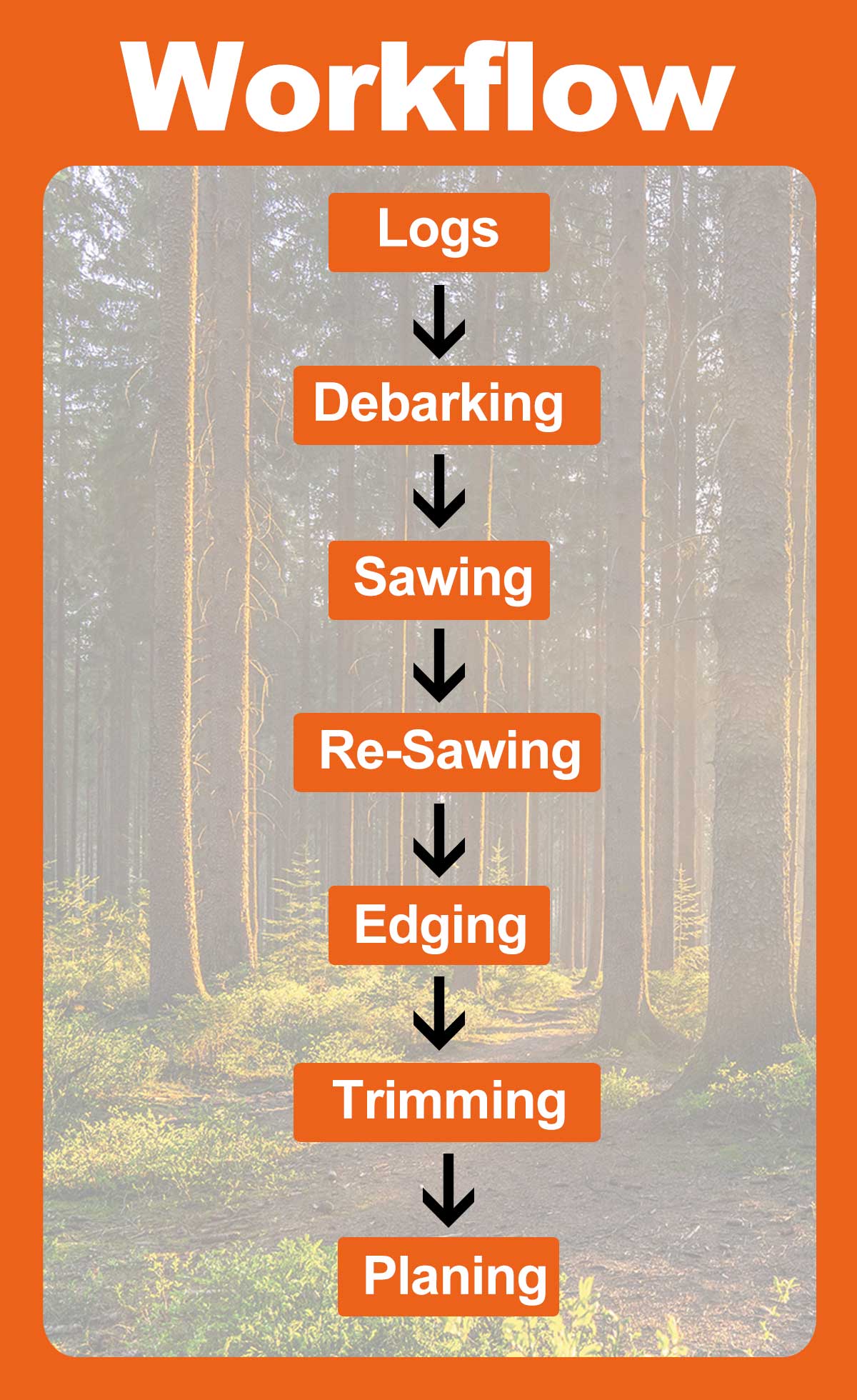
Sawmill Line Workflow: From Raw Logs to Precision Lumber
The JIERUI Industrial Sawmill Line follows a streamlined, high-efficiency workflow designed to transform raw logs into high-quality lumber through a series of automated and optimized stages. Each phase of the process is engineered for accuracy, yield maximization, and minimal waste.
1. Debarking
Remove the outer bark from logs to ensure clean, precise cuts and prolong the lifespan of saw blades.
2. Primary Sawing
Convert whole logs into rough-cut boards or billets—the first stage in lumber production.
3. Re-Sawing
Reduce the thickness or dimensions of the sawn boards to meet specific product size requirements.
4. Edging
Trim uneven or rough edges to produce straight, uniform boards suitable for further processing or sale.
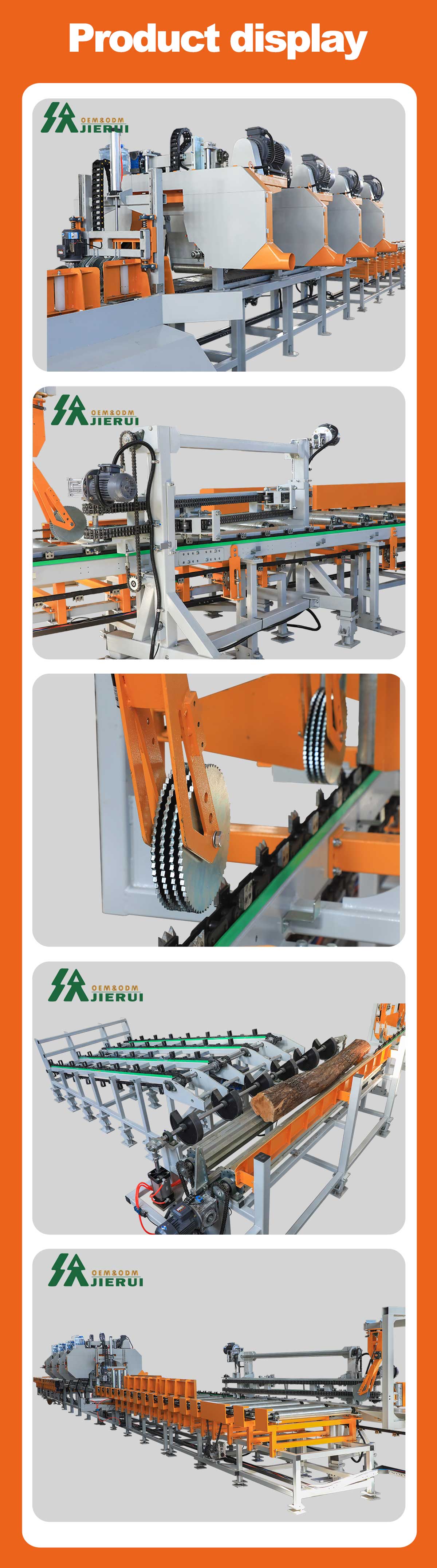
Product display

Come to us for pricing!
Contact us today for a free product brochure containing detailed product information, inspiration and insights.
Related Products
Related News
Submitted successfully
We will contact you as soon as possible